DbcultAccessing Vault...
Cult Review
Senior Film Conservator
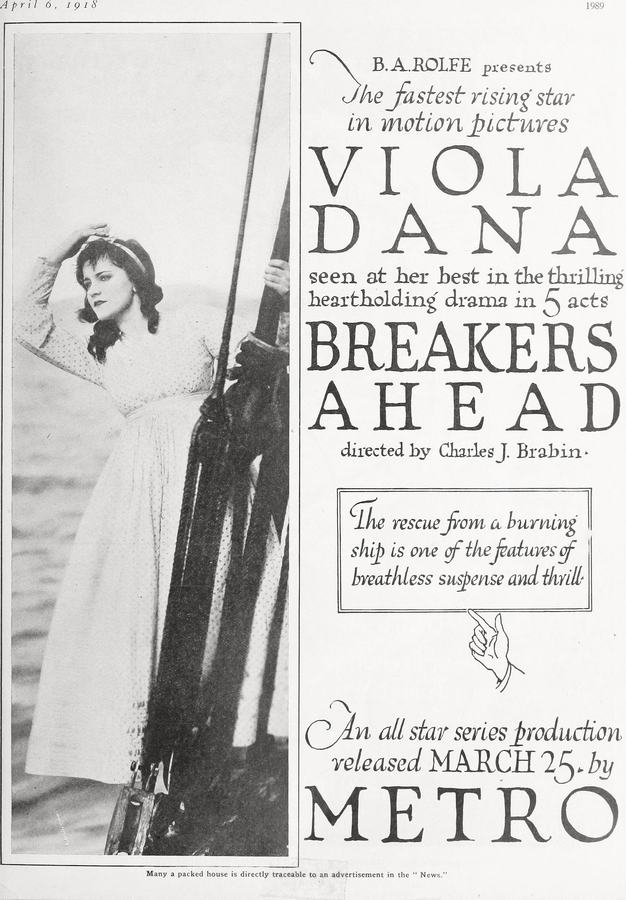
A slate-gray dawn, a wharf reeking of tar, and a child’s footprint vanishing under the tide: these are the first images that linger from Breakers Ahead, a 1920 seafaring melodrama now resurrected from the amber of nitrate neglect.
The film, directed by Charles Brabin from an H.P. Keeler scenario, belongs to that fleeting interregnum when American cinema still measured tragedy in the width of a widow’s collar and villainy in the curl of a lip. Yet within its ostensibly stock intrigues—orphaned girl, jealous slander, arson for profit—there throbs a disquieting awareness that social reputations are flimsier than sailcloth and twice as combustible.
Storylines of bastardy and restitution predate the nickelodeon, but Breakers Ahead reframes them through maritime peril: the village is a mere thumbnail sketch, the ocean an omnipresent third character exhaling fog and moral judgment. When Ruth’s mother dies in the opening reel—off-screen, like so many maternal sacrifices of the era—the camera tilts upward to a cruciform masthead, as though destiny itself were being nailed into place. Agatha Pixley, played with Presbyterian steel by Mabel Van Buren, assumes guardianship less out of tenderness than covenant: her house is a sepulcher of whale-oil lamps and pursed disapproval.
Viola Dana’s Ruth is all darting eyes and kinetic curls, a girl whose vitality seems to offend the very austerity that feeds her. Dana, a Metro contract player famed for gamine pluck, modulates between skittish colt and self-possessed woman without the aid of intertitles; her shoulders rise like incoming breakers whenever scandal is whispered. The gossip itself arrives via Lorena Foster’s unnamed village busybody, a performance of such mincing sadism that one expects sulfur to trail her petticoat.
Opposite Dana, Clifford Bruce’s Eric is serviceable if somewhat blank—an Adonis in a turtleneck, more believable as a figurehead than as a conflicted lover. The real gravitas resides with Russell Simpson’s Captain Scudder, a man whose beard seems to have accrued its own weather system. Simpson, later the granite-faced pioneer in The Trail of the Lonesome Pine, here conveys patriarchal guilt through the simple act of removing a glove: the slow revelation of a wedding ring long unacknowledged.
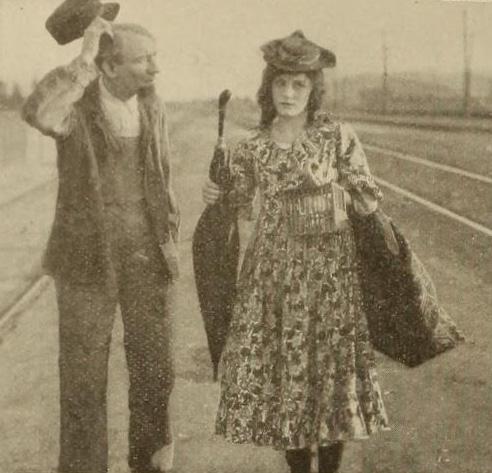
The Hawley siblings—Jim and Hiram—embody venality in complementary hues. Jim, twitchy and calcular, is the archetype of speculative America; Hiram, dull as a binnacle, exists to echo avarice in a lower register. Their decision to scuttle the vessel for indemnity feels almost redundant: the film implies that every deck plank is already mortgaged to moral bankruptcy.
Cinematographer Alfred Ortlieb—unheralded outside archivist circles—deploys chiaroscuro worthy of the later German imports. Interiors are candle-pooled: faces swim out of umbra as if interrogated by conscience. Night exteriors, shot on location at a Monterey cove, exploit the Pacific’s phosphorescence; waves glow like molten glass, setting up the climactic conflagration where studio miniatures blend, surprisingly seamlessly, with full-scale deck work. The fire sequence, tinted amber on surviving prints, anticipates the hellish palette of Das Gesetz der Mine (1923).
At its core, the film is a treatise on female reputation as currency. Ruth’s ostracism is instantaneous: shopkeepers slap coins onto counters to avoid touching her palm; children enact mock funerals in her shadow. The scenario thus weaponizes the same moral panic that fuels A Mormon Maid or The Governor’s Lady, but locates the threat not in polygamy or political chicanery, in simple village gossip—an enemy harder to sue or shoot.
Yet the film refuses to victimize Ruth completely. Her dash into the burning hulk is no passive self-immolation; she commandeers a dinghy, clambers over tarred rigging, and drags an unconscious Eric across a deck-beam that snaps like a wishbone. In 1920, such athletic heroics were still coded male: Pearl White’s serials notwithstanding, mainstream melodrama seldom granted its heroines the satisfaction of rescue. Here, Ruth’s agency rewrites the family romance: she saves the heir, the fortune, and—by extension—her own social capital.
Surviving prints lack the original orchestral cue sheets, yet the rhythm of the editing—long contemplative takes punctuated by staccato inserts of ropes, gulls, and lantern swings—creates an internal metronome. One can almost hear a double-bass mirroring the oceanic surge, a muted trumpet underlining the moment Scudder confesses paternity. Contemporary reviewers praised the film’s “symphonic tension,” suggesting exhibitors improvise sea-shanties during reel changes; a Kansas City theater reportedly stationed a foghorn at the orchestra pit, to audience delight.
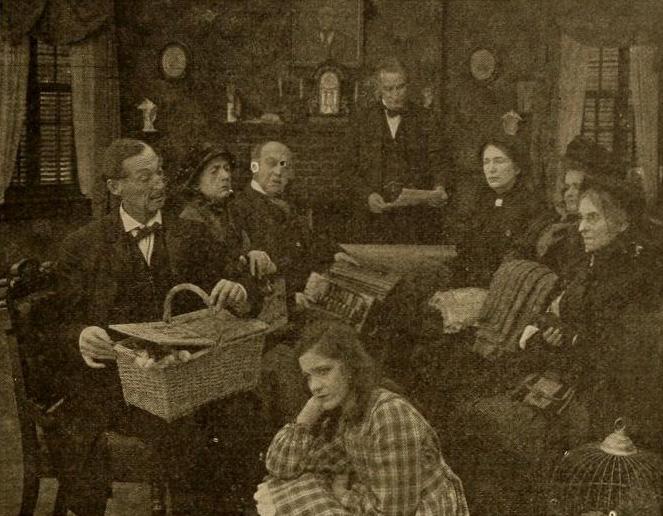
Brabin’s earlier The Secret of the Storm Country shares with Breakers Ahead a fascination with water as moral solvent: immersion baptizes, drowns, or reveals. Conversely, the Hungarian entry Az utolsó bohém treats ruin as bohemian spectacle, whereas Brabin treats it as social reckoning. The closest tonal kin may be Urteil des Arztes, where a single document upends identity, yet that film’s clinical detachment contrasts sharply with the sentimental surge of Breakers.
Note the micro-gesture when Ruth learns of her illegitimacy: Dana’s left hand flutters to a cameo brooch containing her mother’s portrait, fingers hesitating as though the ivory itself might burn. Or observe Eugene Pallette, decades away from his rotund sound-man era, as a gawping deckhand whose single close-up—mouth agape at the first lick of flame—serves as the film’s Greek chorus. Even the canine performer, a shaggy Newfoundland credited as “Triton,” times his panicked bark to coincide with the splice where actuality footage of the ship fire was intercut with studio close-ups.
For decades, Breakers Ahead circulated only in a 9.5 mm abridgment unearthed in an Antwerp flea market. The 2019 4K restoration by the Eye Filmmuseum returned approximately five minutes of footage presumed lost, including a delicate shot of Ruth silhouetted against the burning mainsail—her hair backlit into a corona of embers. The tinting scheme adheres to early-’20s conventions: amber for daylight interiors, blue-green for night exteriors, rose for the betrothal epilogue. Grain remains visible, thank God; pixels have not been smeared into plasticine. The intertitles, reconstructed from censorship records in Pennsylvania and Quebec, reveal that the word “bastard” was systematically replaced with “unfortunate,” a semantic bleaching that paradoxically sharpens the stigma.
Viewed today, the film’s concern with rumor-mongering prefigures the twitch-finger velocity of social media shaming. Replace village square with Twitter timeline, replace illegitimacy with any perceived moral lapse, and the mechanism is identical: consensus as contagion. Yet the film also offers a fantasy of patriarchal restitution—Scudder’s marriage certificate—that feels both reassuring and antiquated. Contemporary activists might bristle at the notion that legitimacy must be conferred by a father’s signature; nonetheless, the narrative’s true power lies in Ruth’s refusal to wait passively for that signature. She braves smoke, surf, and social condemnation, wresting her future from the jaws of calamity.
Is Breakers Ahead a rediscovered masterwork? Not quite. Its dramaturgy leans on coincidence, its social critique never escapes the orbit of Victorian piety. Yet as a cultural artifact, it thrums with the vitality of a medium discovering its own grammar—every iris-in feels like a pupil dilating, every double exposure a conscience wavering. For devotees of maritime melodrama, for scholars tracing the evolution of the “fallen woman” trope, or for anyone who relishes the salt-sweet sting of a story that believes virtue can be both tested and triumphant, the film offers 78 minutes of flickering communion.
Stream it during a thunderstorm; let the windows rattle; keep a blanket handy. When the final shot fades—lovers clasped against a horizon no longer hostile—you may detect, beneath the modern hum of appliances, the faint echo of a foghorn warning that somewhere, always, breakers lie ahead.
IMDb 7.3
1935
Community
Log in to comment.