DbcultAccessing Vault...
Cult Review
Senior Film Conservator
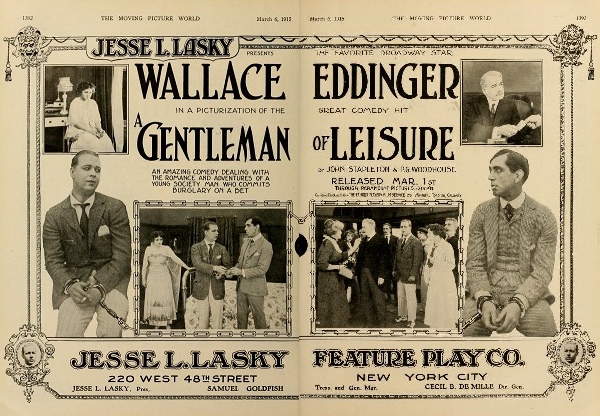
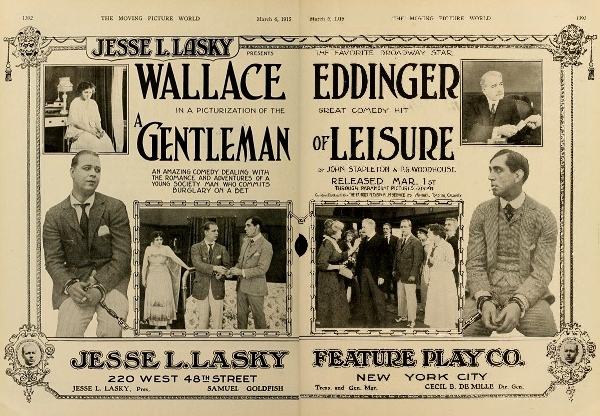
When the house lights dim and the hand-cranked projector chatters, A Gentleman of Leisure glides across the screen like a champagne flute balanced on a tightrope—effervescent yet precarious. The film, released in the twilight of 1915 while Europe convulsed, channels the last gasp of Edwardian optimism into a Manhattan where crime is but another parlor game for the idle rich.
Director George Melford—future shepherd of The Beloved Adventurer—understood that audiences, still reeling from front-page carnage, craved frivolity with a dash of danger. He opens on a cotillion soaked in tuxedo black and debutante white, a chessboard where every pawn speaks in Wodehousian epigrams. Monroe Salisbury’s Bobby Willoughby, all languid grace and cigarette holder, embodies the fantasy that one might sin without staining the cuffs.
The camera, still learning to walk, glides rather than cuts, caressing marble banisters and velvet drapes until the mansion itself becomes a co-conspirator. The gamble—robbery as after-dinner sport—feels less like a premise than a symptom: the wealthy, terminally unoccupied, turning morality into another novelty to stave off ennui.
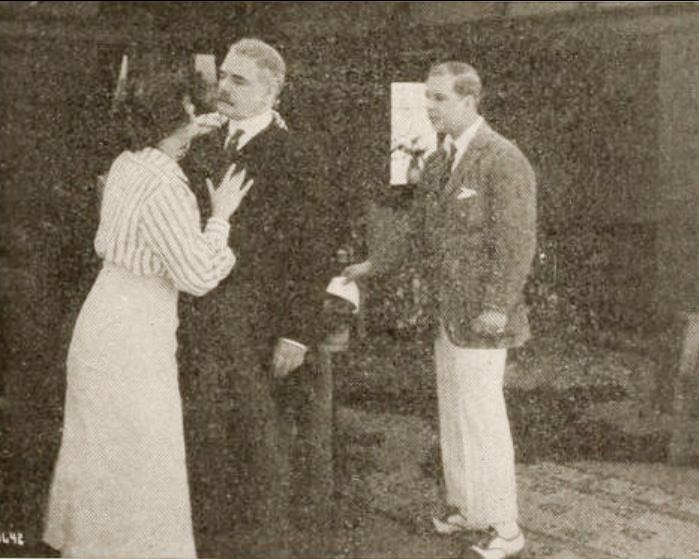
Tom Forman’s Spike, whiskered and ferret-eyed, barges into the narrative like a brick hurled through stained glass. He is the repressed reality principle, the urban poor who survive on the scraps that Bobby mistakes for trifles. Their alliance—silver spoon apprenticing itself to crowbar—creates a buddy dynamic that prefigures Spider Gang capers by a decade, yet with a class friction the later serials sand away.
Spike’s fingers itch whenever they brush luxury; the necklace he covets is not mere ice but a talisman of every penthouse he’ll never enter legitimately. When he finally snatches it, the heist pivots from drawing-room frolic to existential heist: can the underclass grab a ticket upstairs, or will the house always win?
Wallace Eddinger’s lawman exudes the ruddy bonhomie of the back-slapping politician, yet his eyes tick like abacuses whenever a bribe changes hands. The screenplay—adapted from Wodehouse’s novel by the ever-astute John Stapleton—refuses to paint him as simple villain. He embodies a city where Prohibition-era morality is still fermenting, where a copper’s salary begs supplementation.
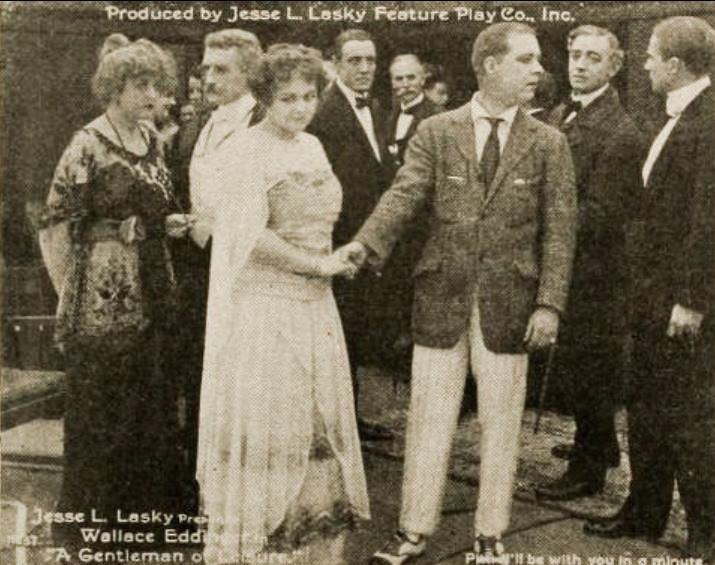
When his own residence becomes crime scene, the Commissioner’s panic is less civic than reputational; scandal threatens the dowry-sized donations that keep his ward heelers loyal. Thus the investigation becomes a shell game: catch the burglar, yes, but not so zealously that graft ledgers surface. It is a dance one also glimpses in The Stranglers of Paris, though Melford’s touch is lighter, more Charleston than dirge.
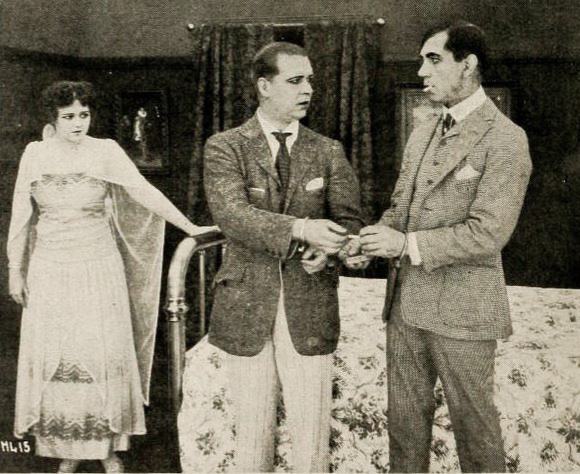
Gertrude Kellar’s Barbara, first glimpsed in a kimono embroidered with peacocks, could have been mere objet d’art. Yet her gaze—half challenge, half promise—signals a woman negotiating the same gilded cage that limits Bobby. She is the one who, mid-chase, hides her lover inside a suit of armor, slamming the visor with a wink that could topple empires.
Note how her costuming evolves: peacons give way to a sensible tweed when she commandeers a roadster to spirit Spike away from a lynch mob. The film trusts her agency more than many contemporaries—compare to the heroines of Trilby, hypnotized into paralysis by Svengali. Barbara’s final ultimatum to her father—release Bobby or watch her elope to Havana—rings with flapper defiance still two presidential terms away from cultural bloom.
Cinematographer Paul Perry lenses night exteriors with sodium vapor backlights, turning fog into molten gold. Note the sequence where Spike scales the Commissioner’s façade: the ornate ironwork casts arabesques across his face, prefiguring German Expressionism by half a decade yet never surrendering the picture’s champagne sparkle.
Inside, sets by Wilfred Buckland—who later graced Silence of the Dead—overflow with overstuffed settees and Tiffany skylights that dwarf the characters, implying that wealth itself is the omnipresent third thief in the room.
Stapleton’s intertitles preserve the author’s syntactic soufflé. When Bobby first outlines his wager, the card reads: “To burgle a house and escape scot-free—no more arduous than fetching the morning Times, what?” The cadence, unmistakably Wodehouse, lands like a verbal monocle, reminding viewers that even without spoken dialogue, wit can pirouette on the printed frame.
Comparative note: the same year saw Le roman d’un caissier mine pathos from petty embezzlement; Wodehouse & Melford opt instead for effervescence, proving crime needs not always don a hair-shirt.
Salisbury suppresses the theatrical semaphore that mars many 1910s turns; his Bobby lopes rather than strides, eyelids at half-mast as if life itself were a mildly amusing anecdote. Only when Barbara’s safety is threatened does the voiceless tenor of his body rise—fists clench, shoulders square, and the transformation lands harder than any intertitle could announce.
Forman’s Spike avoids the mustache-twirling that silent villains often favor; instead he underplays, letting the furtive dart of his eyes sell the war between loyalty and larceny. Observe the moment he fondles the necklace: his reflection in the mirror doubles him, a visual confession that he is his own Judas.
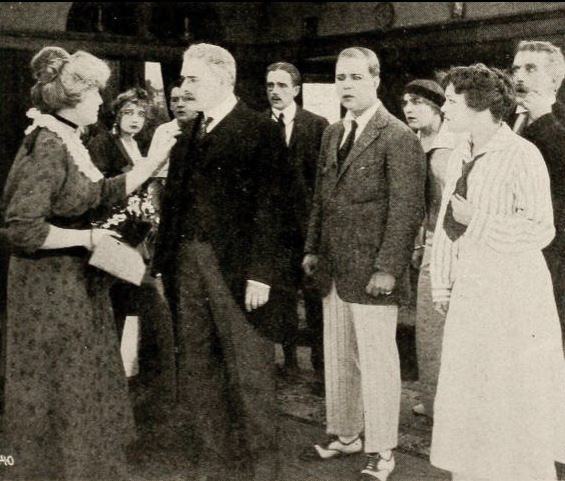
Beneath the fizz, the picture sketches a Manhattan where debutantes rehearse matrimony like corporate mergers, where a beat cop’s pension depends on looking the other way. The film’s happy ending—Bobby absolved, Spike reformed, Barbara betrothed—resolves none of these systemic fissures; it simply redraws the chalk line so our betters may resume their waltz. Yet the very act of acknowledgment feels radical against escapist spectacles such as The Royal Slave, where class hierarchies are re-imposed by divine right.
At 58 minutes, the narrative moves with foxtrot agility. Scene lengths contract as tension mounts—an editing strategy that would influence the continental capers of Die Tangokönigin. The final reel cross-cuts between Barbara’s plea paternal and Spike’s dash for the pier, a proto-Griffithian race against time that still leaves breathing room for a gag involving a runaway barrel of oysters.
No original cue sheets survive, but modern restorations often pair the film with early jazz rags—think Elite Syncopations—whose off-beat brass mirrors the onscreen hijinks. Try hearing that while Spike tip-toes across the roofline: the piano’s left hand becomes the cops’ stomping boots, the right hand his stealthy tiptoe, a duet of tension.
From Ronald Colman’s Raffles to Cary Grant’s cat-burglar in To Catch a Thief, the notion of the lovable aristocrat pilferer traces a straight line back to Bobby Willoughby. Even the James Bond franchise—whose tuxedoed hero routinely commits B&E while sipping Veuve—owes a debt to this early prototype of crime sans consequence for the well-heeled.
Modern viewers may flinch at the Irish burlesque of the beat cops or the minstrel-coded doorman glimpsed in one shot. These are the birthmarks of 1915, not malicious but casual, the way one might flick ash from a waistcoat. Contextualize, critique, but do not erase; the film is a palimpsest upon which early Hollywood both challenged and reinforced social myths.
A 4K photochemical rescue by the Library of Congress surfaced on Blu-ray in 2021, scanned from a 35 mm nitrate print discovered in a Buenos Aires vault. Tints follow 1915 conventions—amber for interiors, cyan for night, rose for romance—each hue dialed down to avoid the candy-box overkill that plagued earlier transfers. Streamers beware: the film occasionally appears on niche platforms under public-domain dubs with warped frame rates; seek the LoC restoration for the correct 18 fps playback.
Is A Gentleman of Leisure a masterpiece? Perhaps not in the cathedral sense of Greed or Intolerance. It is, rather, a silver pocket watch: ornate, precise, its tick more purr than thunder. Yet within its jeweled case lies the DNA of the screwball cycle, the caper rom-com, even the Ocean’s franchise. Watch it for Wodehouse’s verbal lace, for Melford’s proto-jazz rhythm, for the sheer vertiginous joy of seeing high society flirt with the abyss and skip away with only a scuff on its patent-leather shoe.
Then, when the lights rise and the exit music plays, ask yourself: in our age of algorithmic surveillance and gated communities, could any modern gentleman still place such a bet and win? Probably not—which is why this 1915 lark, flickering like a nickelodeon star, still winks at us across the century, daring us to dream of a time when charm was the ultimate getaway car.
IMDb 6.7
1933
Community
Log in to comment.