DbcultAccessing Vault...
Cult Review
Senior Film Conservator
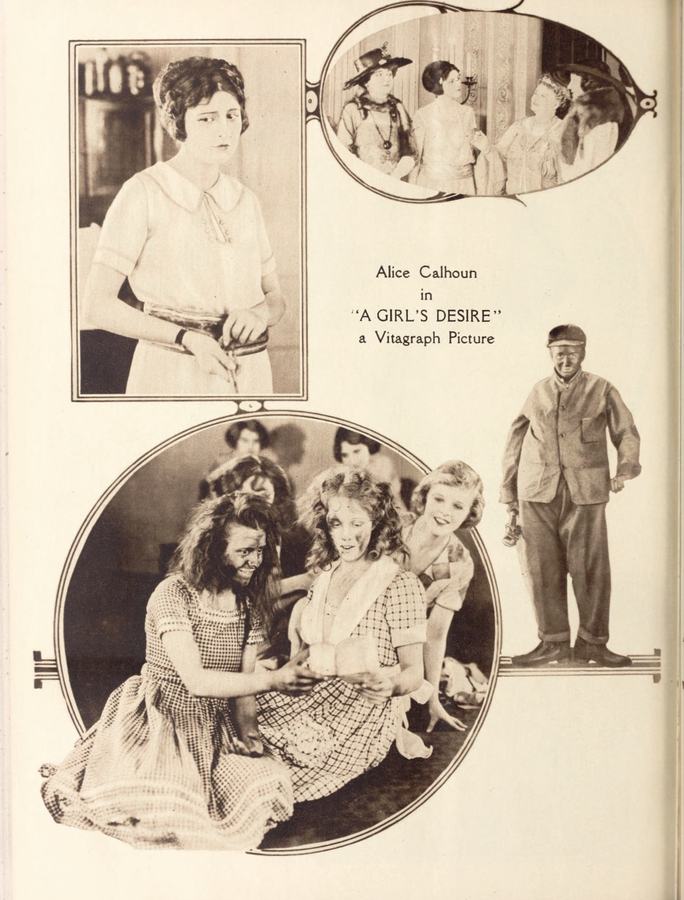
The cinematic landscape of A Girl's Desire is a rich tapestry woven from the threads of societal expectations, personal ambition, and the unrelenting pursuit of love and connection. As the narrative unfolds, the audience is transported to a world where the aristocracy's grandeur is matched only by the depths of their desperation. The character of Mrs. H. Jerome Browne, adeptly portrayed by Lydia Yeamans Titus, is a quintessential embodiment of this dichotomy - a woman driven by an insatiable desire to ascend the social hierarchy, yet bound by the constraints of her own making.
The introduction of Lady Dysart, played by Lillian Lawrence, adds a layer of complexity to the story, as her actions, though motivated by a desire to secure her son's future, serve as a catalyst for the events that follow. The sale of the Dysart castle's heirlooms, a decision born out of necessity, sets in motion a chain of events that will ultimately lead to the downfall of the carefully constructed facade. The character of Cecil, played by Frank Hall Crane, is a fascinating study in contrast - a man who, though aware of his true lineage, is willing to perpetuate a deception in pursuit of a advantageous marriage.
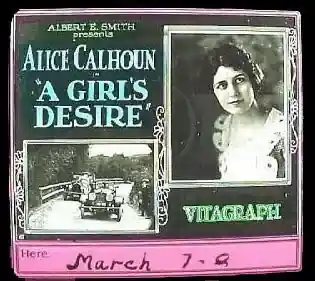
The arrival of Richard Jones, played by Warner Baxter, marks a pivotal moment in the narrative, as the truth begins to unravel and the characters are forced to confront the consequences of their actions. The dynamic between Jones and Elizabeth, played by Alice Calhoun, is particularly noteworthy, as their interactions serve as a catalyst for the young woman's growth and self-discovery. As the story reaches its culmination, the audience is left to ponder the implications of the characters' choices, and the true cost of their desires.
In terms of cinematic technique, A Girl's Desire is a notable example of the silent film era's ability to convey complex emotions and narratives through the use of visual storytelling. The film's use of dark orange hues, particularly in the scenes depicting the Dysart castle, adds a sense of grandeur and opulence, while the yellow tones used in the scenes set in America serve as a visual representation of the country's perceived promise and opportunity. The sea blue hues used in the film's final scenes, meanwhile, serve as a poignant reminder of the emotional turmoil that has unfolded.

When compared to other films of the era, such as A Society Exile and Snap Judgment, A Girl's Desire stands out for its thoughtful exploration of the human condition. The film's themes of love, deception, and self-discovery are timeless, and its use of visual storytelling serves as a powerful reminder of the medium's ability to convey complex emotions and ideas. In contrast to films like The Fighting Stranger and The Home Stretch, which rely heavily on action and spectacle, A Girl's Desire is a more contemplative, character-driven work, one that invites the viewer to reflect on the motivations and desires that drive us all.
Ultimately, A Girl's Desire is a film that will resonate with viewers who appreciate thoughtful, character-driven storytelling. The film's exploration of the human condition, coupled with its use of visual storytelling and cinematic technique, makes for a compelling and unforgettable viewing experience. As the credits roll, the audience is left to ponder the implications of the characters' choices, and the true cost of their desires, much like the protagonists of Beyond the Rocks and The Glorious Adventure. The film's themes and motifs also bear some resemblance to those found in After the War, The Inside of the Cup, and Torchy and Orange Blossoms, highlighting the timelessness and universality of the human experience.

IMDb 7.6
1924
Community
Log in to comment.