DbcultAccessing Vault...
6.8/10
Senior Film Conservator
A definitive 6.8/10 rating for a film that redefined the boundaries of cult cinema. Good Luck remains a cornerstone of transgressive art.
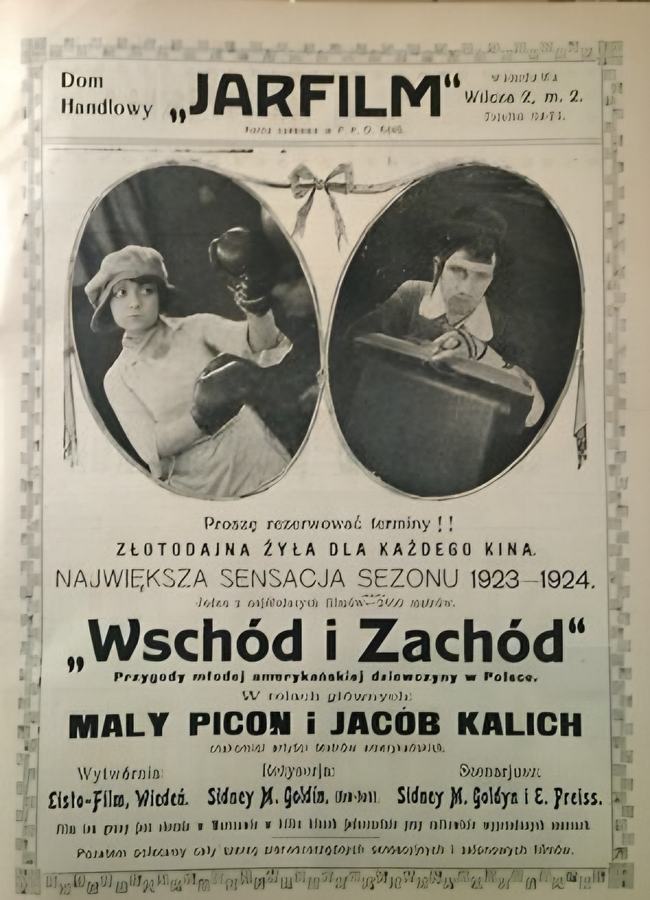
The silent era of the 1920s often finds itself pigeonholed into the binary of German Expressionism or Hollywood slapstick, yet Sidney M. Goldin’s Good Luck (1924) emerges as a fascinating third path—a piece of Yiddish-inflected cinema that bridges the gap between the Lower East Side’s grit and the pastoral mysticism of Eastern Europe. At the center of this whirlwind is the incomparable Molly Picon, an actress whose sheer physicality and rubber-faced expressiveness suggest a talent that could have easily rivaled the biggest stars of the era had the linguistic and cultural barriers been thinner. In this production, Picon isn't merely a performer; she is a force of nature, a personification of the 'New Woman' crashing headlong into the centuries-old traditions of Galicia.
The narrative architecture of Good Luck rests upon the shoulders of Morris Brown, a character whose moral compass is calibrated more by the odds of a card game than the tenets of the Torah. His return to the Old Country is not a pilgrimage of piety but a familial obligation that serves as the catalyst for a profound cultural clash. Unlike the somber tone found in After Six Days, Goldin opts for a levity that highlights the absurdity of the immigrant experience in reverse. Brown and his daughter Mollie are aliens in their own ancestral land, possessing a swagger and a skepticism that feel jarringly modern against the backdrop of Galician life.
Mollie Picon’s performance is a masterclass in controlled chaos. While many silent films of the time, such as Her Shattered Idol, relied on heavy melodrama, Picon leans into a vaudevillian energy that is both exhausting and exhilarating. She represents the American dream—loud, confident, and utterly unbothered by the judgmental whispers of the village elders. This is not the tragic heroine of That Sort; this is a woman who dictates the terms of her own engagement with the world.
The emotional pivot of the film occurs when Mollie meets her match: a yeshiva scholar whose intellectual rigor has, until now, been reserved for sacred texts. The transformation of this scholar—played with a delicate sensitivity that contrasts beautifully with Picon’s fire—is the film’s most radical element. In the context of 1924, for a scholar to forsake his tradition and join the secular world was a scandalous proposition. It mirrors the thematic weight of societal duty seen in Law of the Land, yet Goldin treats it with a romantic optimism that feels remarkably progressive.
"The scholar’s journey from the shadows of the synagogue to the bright, chaotic lights of Mollie’s world is a metaphor for the entire Jewish diaspora’s transition into modernity—a leap of faith that requires shedding one’s skin while hoping the soul remains intact."
This romantic subplot is handled with more nuance than the typical 'fish out of water' tropes found in Piccadilly Jim. Here, the stakes are existential. The scholar isn't just changing his clothes; he is dismantling his entire worldview. The chemistry between the two leads provides a warmth that anchors the film’s more broad comedic sequences, ensuring that the stakes remain human rather than merely satirical.
Director Sidney M. Goldin, a pioneer of Yiddish cinema, displays a keen eye for the textures of the shtetl. The cinematography captures the rustic beauty of Galicia with a documentarian’s precision, making the village feel like a living, breathing entity rather than a mere set. This attention to detail elevates Good Luck above the standard comedic fare of the mid-20s. There is a visual depth here that rivals the atmospheric density of The Winding Trail, though the intent is far more celebratory than somber.
The editing, too, deserves mention. The pacing of Mollie’s 'exuberant antics' is handled with a rhythmic precision that suggests a deep understanding of comedic timing. Goldin knows when to let the camera linger on a reaction shot and when to cut away to the broader chaos of the family wedding. This technical proficiency ensures that the film never feels like a filmed stage play, a common pitfall for early ethnic cinema. Instead, it feels like a genuine cinematic exploration of space and character, much like the stylistic flourishes found in Nye dlya deneg radivshisya.
When placed alongside other films of the era, Good Luck stands out for its refusal to pathologize the immigrant. In Fellow Citizens, the tension is often externalized through communal struggle, but in Goldin’s work, the tension is internal and familial. There is a lightness here that is absent in the gritty realism of The Cradle of Courage or the heavy-handed moralizing of The Woman Gives. Goldin is more interested in the joy of the synthesis—the moment where the American gambler and the Galician scholar can find common ground over a glass of schnapps and a shared love for a headstrong girl.
The film also avoids the caricature often found in works like His Muzzled Career. While the characters are archetypes, they are never stereotypes. Morris Brown’s gambling isn't a tragic flaw but a personality quirk that makes him human. The yeshiva students aren't monolithic relics of the past but young men capable of desire and change. This humanistic approach is what gives the film its lasting power, similar to the empathetic characterizations in Babicka.
Molly Picon’s contribution to this film cannot be overstated. Often called the 'Yiddish Queen of Second Avenue,' her performance in Good Luck serves as a vital record of her early genius. She navigates the film with a kinetic energy that recalls the best of the silent comediennes, yet she carries an added layer of cultural specificity that makes her unique. Her ability to blend the sophisticated wit of a Niniche with the raw, earthy humor of the Yiddish stage is unparalleled.
The film’s climax, centered around the family wedding, is a tour de force of ensemble acting. The cast, including notable figures like Jacob Kalich and Sigi Hofer, creates a tapestry of faces that feel authentic to the period. There is a sense of community that feels earned, making the scholar’s eventual departure all the more poignant. It isn't a rejection of his people, but an expansion of his world. This nuance is often missing in more traditional narratives like Marse Covington, which tend to favor rigid adherence to social hierarchies.
In the grand scheme of 1920s cinema, Good Luck is a vital artifact. It captures a moment in time when the boundaries of Jewish identity were being redrawn by the forces of migration and modernity. It lacks the cynicism of Whispering Smith and the melodrama of many of its contemporaries, opting instead for a vibrant, messy, and ultimately hopeful vision of the future. The film suggests that 'good luck' isn't something found in a prayer book or a deck of cards, but in the courage to embrace the unknown.
Final Verdict: A sparkling, irreverent, and deeply human comedy that showcases Molly Picon at the height of her powers. It is a mandatory watch for anyone interested in the evolution of ethnic identity on screen and a testament to the enduring power of silent storytelling.
IMDb 6.2
1930
Community
Log in to comment.