DbcultAccessing Vault...
4/10
Senior Film Conservator
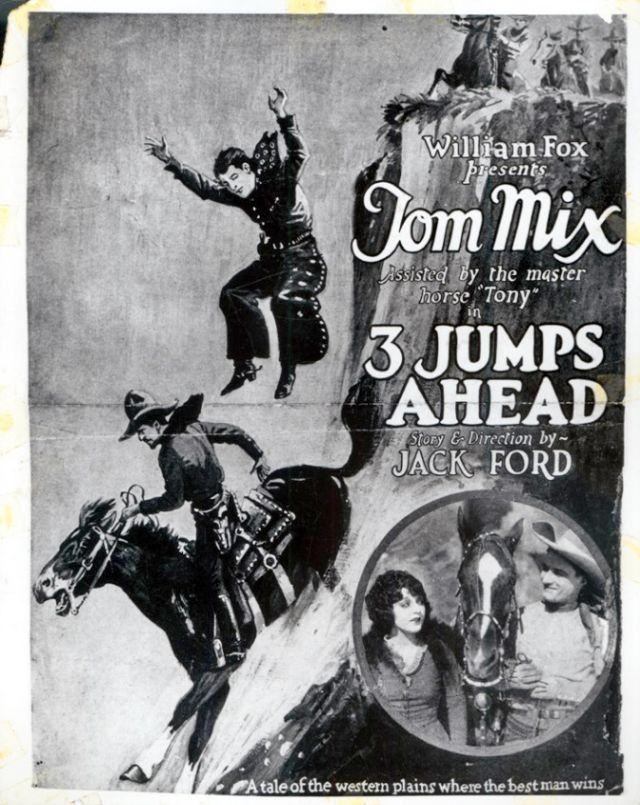
A definitive 4/10 rating for a film that redefined the boundaries of cult cinema. Three Jumps Ahead remains a cornerstone of transgressive art.
The year 1923 marked a peculiar zenith in the evolution of the American Western, a period where the rugged authenticity of the frontier began to meld with the burgeoning spectacle of Hollywood showmanship. At the center of this metamorphosis stood Three Jumps Ahead, a film that, despite its tragic status as a lost artifact of the Fox vault fire, continues to haunt the annals of cinema history. To discuss this work is to engage with a phantom, a celluloid ghost that exists now only in the fevered descriptions of contemporary critics and the evocative stills that survived the inferno. It represents a rare intersection of two titans: the flamboyant, death-defying Tom Mix and the burgeoning, austere vision of a young John Ford. While Ford is often associated with the sweeping grandeur of Monument Valley, his early collaborations with Mix, such as A Gun Fightin' Gentleman, reveal a director honing a specific type of kinetic storytelling that prioritized movement over melodrama.
The narrative architecture of Three Jumps Ahead is deceptively simple, yet it vibrates with a tension that many modern blockbusters fail to replicate. Steve McLean is not merely a hero; he is a man thrust into an ethical labyrinth. The capture of McLean and his uncle by outlaws serves as the inciting incident, but the true heart of the film lies in the encounter with John Darrell. Imagine the psychological weight of meeting a man who has lived in the shadow of his captors for two years—a duration that in the silent era felt like an eternity. Darrell’s escape isn't just a plot point; it is the catalyst for McLean’s moral degradation. The gang leader’s offer—freedom for the return of the fugitive—strips away the romanticism of the cowboy and replaces it with the cold reality of survival. This thematic grit is something Ford would later master, but here, it serves as a fascinating counterpoint to Tom Mix’s persona as the quintessential 'good guy.'
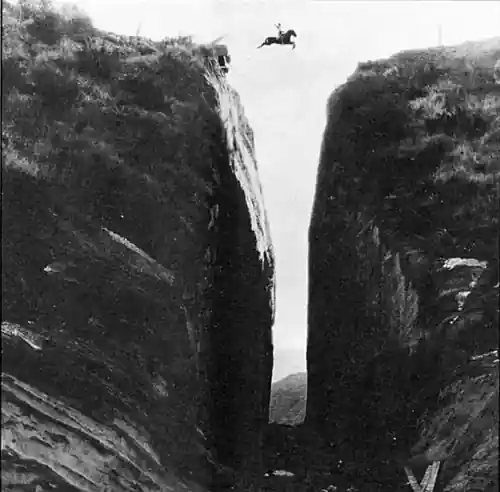
One cannot analyze this film without addressing the sheer physicality of the production. Mix was famous for eschewing stunt doubles, and Three Jumps Ahead featured what many considered his most perilous feat: a leap across a twenty-foot chasm on his legendary horse, Tony. This wasn't the staged, safe action of contemporary cinema; it was a visceral engagement with gravity. The 'three jumps' of the title were not mere flourishes but essential rhythmic beats in a story about crossing thresholds—physical, legal, and moral. While films like Buckshot John experimented with the grit of the outlaw life, Three Jumps Ahead elevated the Western to a form of high-stakes theater where the landscape itself conspired against the protagonist.
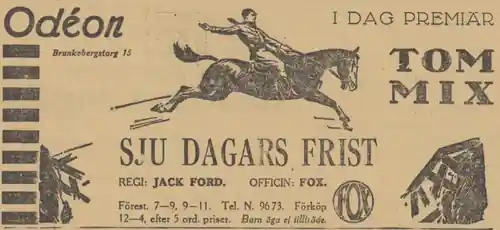
The relationship between Mix and Tony the Horse was perhaps the most significant partnership in early Western cinema. In Three Jumps Ahead, Tony is not a prop but a co-protagonist. The horse’s intelligence and agility were central to the film’s pacing. Every jump was a statement of defiance against the outlaws and the terrain. Comparing this to the more static dramas of the era, such as Niobe, one sees a radical shift toward a cinema of motion. Ford’s direction—even in this early stage—understood that the camera must move with the rider. There is a sense of breathless momentum that defines the chase sequences, a precursor to the stagecoach pursuits that would define Ford’s later career.
"The desert in Three Jumps Ahead is not a void, but a witness. It watches the betrayal of Darrell with a scorching, indifferent eye, forcing the viewer to confront the desperation of the frontier."
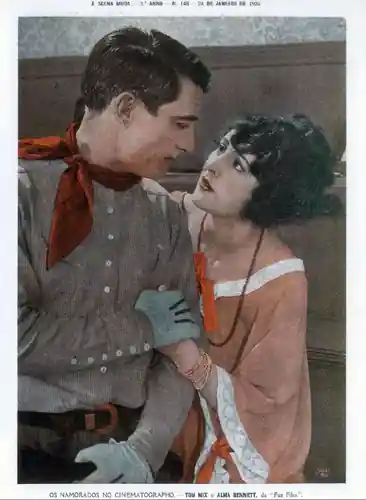
The supporting cast brings a surprising depth to what could have been stock characters. Margaret Joslin and Alma Bennett provide a necessary emotional grounding, though the silent era’s limitations often relegated female roles to the periphery of the action. However, the presence of Francis Ford (John’s older brother and a mentor) adds a layer of cinematic lineage to the project. The interplay between the McLean family and the captive Darrell echoes the domestic tragedies found in works like The Heart of Midlothian, where personal loyalty is pitted against the harsh dictates of the law—or in this case, the lawless.
It is a profound melancholy to realize that we may never again see the interplay of light and shadow across the canyon walls as captured by Ford’s cinematographer in this specific work. We are forced to rely on historical echoes. When we look at other films of the period, like the social drama Paid in Full or the whimsical Turning the Tables, we see a cinema trying to find its voice. Three Jumps Ahead had already found its roar. It was a film that understood the power of the visual over the textual. The dialogue intertitles were secondary to the sight of Mix silhouetted against a setting sun, a lone figure grappling with the weight of his uncle’s safety and Darrell’s life.
The film’s exploration of the 'captive' trope is also worth noting. Unlike At the Mercy of Men, which deals with captivity in a more melodramatic, European context, Three Jumps Ahead keeps its stakes grounded in the dirt and grit of the West. There is no divine intervention here, only the strength of one’s horse and the clarity of one’s aim. This pragmatism is what makes Ford’s early work so enduring. Even in a film designed as a vehicle for Mix’s stunts, the director manages to inject a sense of existential dread. The outlaw hideout is depicted not as a den of thieves, but as a liminal space where men lose their souls to the isolation of the wilderness.
As the narrative hurtles toward its climax, the moral ambiguity deepens. McLean’s pursuit of Darrell is framed not as a heroic quest, but as a tragic necessity. This subversion of the Western hero is a hallmark of the Fordian style that would later culminate in films like The Searchers. To see its embryonic form here is a revelation. While audiences of 1923 likely cheered for the stunts, the underlying narrative suggests a much darker commentary on the price of freedom. Is a man truly free if his liberty is bought with the blood of another? This question elevates Three Jumps Ahead above contemporary fare like Love's Protegé or the more simplistic The Miner's Curse.
The visual scope of the film, even as described in fragments, seems to have been immense. Ford used the vastness of the American landscape to dwarf his characters, a technique that emphasized their vulnerability despite their physical prowess. This use of space is reminiscent of the atmospheric depth in Trumpet Island, yet it is applied here to the unforgiving heat of the desert rather than the isolation of an island. The contrast between the open range and the claustrophobia of the outlaw camp creates a rhythmic pulse that keeps the viewer—and the characters—in a state of constant agitation.
From a technical standpoint, Three Jumps Ahead was a showcase for the Fox Film Corporation’s high production values. The lighting, designed to emphasize the harshness of the sun and the depth of the canyons, created a high-contrast world where there were no gray areas, only black shadows and blinding light. This visual binary mirrored the moral choices McLean had to make. While some might find the pacing of silent films slow, the accounts of this film suggest a work of relentless energy. It eschewed the theatricality of A Nagymama or the sentimentalism of The Little Girl Next Door in favor of a raw, unadorned realism.
Even the comedic elements, likely provided by the presence of Buster Gardner or the situational irony of the uncle’s predicament, were integrated into the tension rather than acting as mere diversions. This holistic approach to genre—where action, drama, and humor coexist within a unified atmosphere—is what differentiated a John Ford Western from the assembly-line productions of the time. It is the same sophisticated balance one finds in The Pinch Hitter, though applied to a much more dangerous and high-stakes environment.
In the absence of the actual film, we must reconstruct Three Jumps Ahead through the lens of its influence. It set a standard for equestrian stunts that would not be surpassed for decades. It solidified Tom Mix as a global icon and provided John Ford with the canvas he needed to experiment with the themes of loyalty and the frontier code. It is a tragedy that this work is not available for modern study, as it likely holds the key to understanding the transition from the 'old' Western of William S. Hart to the 'new' Western of the sound era. Compared to the nostalgic longing of Alt Heidelberg, Three Jumps Ahead was a film looking forward, pushing the boundaries of what was possible on screen.
Ultimately, Three Jumps Ahead remains a cornerstone of silent cinema, a testament to a time when movies were built on the literal sweat and blood of their stars. It reminds us that at its core, the Western is a genre of movement—the movement of a horse, the movement of a bullet, and the movement of a man’s soul from innocence to experience. While we may never witness the 'three jumps' with our own eyes, the legend of the film ensures that it will never truly be forgotten. It stands as a reminder that even in the most cynical of bargains, there is room for a spectacular, gravity-defying leap of faith. It is not just a story of a capture and a chase; it is a symphony of the American spirit, captured at twenty-four frames per second, now lost to the winds of time, yet eternally vivid in our collective cinematic memory.
Reviewer Note: This analysis is based on historical records, contemporary reviews from 1923, and surviving production stills, as Three Jumps Ahead is currently considered a lost film.
IMDb 6.7
1927
Community
Log in to comment.