DbcultAccessing Vault...
Cult Review
Senior Film Conservator
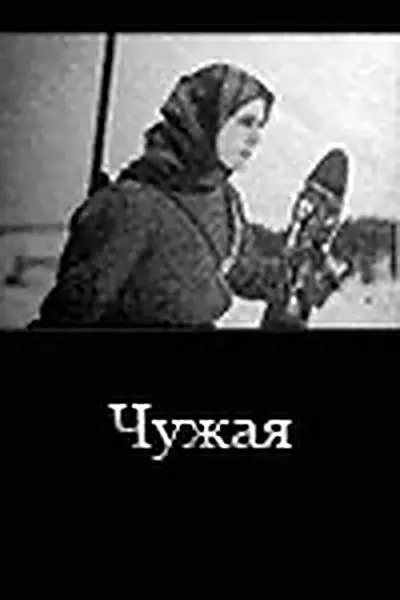
"Chuzhaya" is a hard sell for casual viewers in 2024. While it offers a glimpse into early Soviet filmmaking techniques and thematic preoccupations, its dramatic pacing and often stiff performances mean it struggles to hold contemporary attention. You should approach it as a historical artifact with flashes of visual interest, not a gripping narrative experience.
This film works primarily for dedicated cinephiles, those with a particular interest in silent era Soviet cinema, or scholars dissecting the evolution of visual storytelling. Anyone expecting a nuanced character study or propulsive plot will likely find it tedious.
Konstantin Eggert's 1927 drama, "Chuzhaya," attempts a powerful, if somewhat rudimentary, exploration of the outsider. It’s a film that carries the weight of its era, both in its artistic aspirations and its inevitable limitations. The narrative, centering on Vera, a woman cast into a hostile village, is a skeletal framework for themes of communal suspicion and individual struggle. Olga Zhizneva, as Vera, carries much of the film's emotional burden, often through expressionistic close-ups rather than subtle character work.
The film's visual language is its strongest suit. There are moments where the camera truly captures the oppressive atmosphere of the village, the wide-open spaces emphasizing Vera's isolation. Shots of the windswept plains and the rough-hewn faces of the villagers effectively convey a sense of a world resistant to change. You can feel the cold. This visual competence, however, often outpaces the dramatic heft of the scenes themselves. The narrative beats are telegraphed, the character motivations broad strokes rather than fine details.
The screenplay by Eggert and Georgiy Grebner is functional, laying out the conflict between Vera and her new surroundings in clear, almost didactic terms. There is little room for ambiguity. The villagers are suspicious, Vera is defiant, and Mikhail is torn. This simplicity can be frustrating for a modern audience accustomed to more complex characterizations. It feels less like a story unfolding and more like a thesis being argued.
Olga Zhizneva's performance as Vera is central. She projects a stoic resilience, her eyes often conveying a world of unspoken hardship. Yet, the acting style of the period, particularly in Soviet cinema, often favored grand gestures over internal turmoil. This can make Vera's plight feel more observed than truly felt. Pyotr Baksheyev as Mikhail, the conflicted fisherman, is similarly constrained. His internal struggle is conveyed through a series of pained looks and hesitant movements, but the emotional arc feels predetermined, not discovered.
The pacing is deliberate, to put it kindly. Scenes linger, sometimes without adding significant dramatic weight. This contributes to the film's overall stiffness. While some might argue this builds atmosphere, it often feels like a lack of editorial rigor. A tighter edit, even by silent film standards, could have sharpened its impact considerably. The film's early sections, establishing Vera's arrival and the village's initial reaction, drag. It takes too long for the central conflict to truly ignite.
One could argue that the film's starkness is a deliberate artistic choice, reflecting the harsh realities of the Soviet countryside. But even within that framework, there are moments that simply feel underdeveloped. The confrontation scenes, intended to be climactic, sometimes fall flat due to a lack of genuine build-up in the characters' emotional states. The hostility, while present, never quite boils over with the raw intensity one expects.
Cinematographically, "Chuzhaya" has its moments. The use of natural light and the wide shots of the landscape are genuinely striking. There's a particular sequence involving the fishing boats that has a rough, almost documentary-like quality to it, hinting at the potential for realism that the dramatic scenes often miss. These visual passages are where the film truly breathes. They offer a sense of scale and environment that the intimate character work struggles to match.
Being a silent film, the experience is heavily reliant on the quality of its accompanying score and the effectiveness of its intertitles. Without a robust, period-appropriate score, the dramatic gaps become even more apparent. The intertitles, while clear, often state emotions rather than allowing the actors or visuals to convey them, further contributing to the film's somewhat didactic feel. This directness, while common for the era, can feel patronizing.
"Chuzhaya" is a film best approached with academic curiosity rather than a hunger for entertainment. It's a challenging watch, its dramatic limitations often outweighing its flashes of visual merit. For those keen to trace the lineage of Soviet filmmaking or understand the nascent stages of its narrative conventions, there are lessons to be found. For everyone else, it’s a difficult recommendation. There are far more engaging silent films, even from the same period, that offer a richer, more satisfying viewing experience. For a more compelling early Soviet work, one might look to something like Turbina No 3, which manages to inject more dynamism into its industrial setting. Or, for a different flavor of early cinema, perhaps the American comedy Looking for Trouble offers a stark contrast in its approach to pacing and character. "Chuzhaya" remains a historical footnote, not a forgotten gem.
IMDb 6.2
1934
Community
Log in to comment.