DbcultAccessing Vault...
Cult Review
Senior Film Conservator
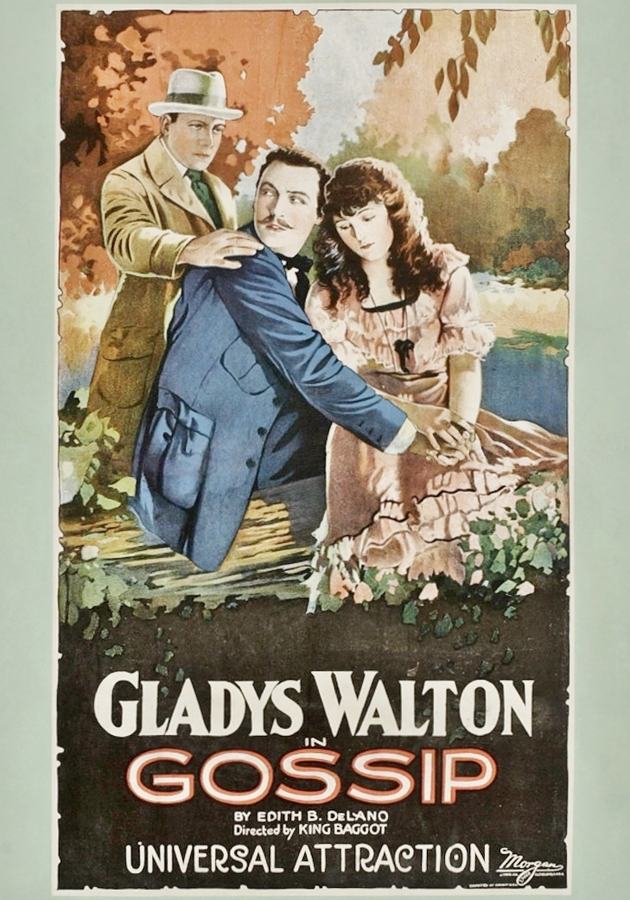
The flickering shadows of early 20th-century cinema often caught glimpses of societal anxieties, moral quandaries, and the enduring power of human connection. Among these celluloid relics, a film like Gossip emerges not as a mere historical curiosity, but as a surprisingly resonant narrative, a testament to the timeless appeal of a story where genuine character triumphs over hardened cynicism. Released in an era grappling with rapid industrialization and shifting social norms, this picture, penned by Hugh Hoffman and Edith Barnard Delano, offers more than just a simple romance; it presents a nuanced exploration of transformation, empathy, and the unexpected places from which true change can spring.
At the heart of Gossip lies Hiram Ward, portrayed with a compelling blend of sternness and underlying vulnerability by Ramsey Wallace. Ward is the quintessential industrialist of his time: a man forged in the fires of ambition, his worldview shaped by ledgers, production quotas, and the unyielding demands of commerce. His business, we are told, is in turmoil, beset by the familiar spectre of labor unrest. The film paints a vivid, albeit silent, picture of a man isolated by his own perceived strength, a figure whose interactions with his employees are dictated by pragmatism rather than understanding. His cynicism isn't a mere personality quirk; it's a defensive carapace, a shield against a world he perceives as inherently adversarial. This portrayal of the detached capitalist, struggling to connect with his workforce, was a prevalent theme in cinema of the period, reflecting genuine societal tensions. One might draw parallels to the industrial dramas of the time, where the plight of the worker and the moral awakening of the employer frequently provided dramatic fodder, though Gossip approaches this through a uniquely personal lens rather than overt political commentary. Wallace captures the essence of a man burdened by his own making, his stern visage hinting at a deep-seated weariness that no amount of material success can assuage.
The arrival of Caroline Weatherbee, brought to incandescent life by the remarkable Carol Holloway, is akin to a sudden burst of sunlight piercing through a grey industrial fog. She appears claiming a distant kinship, her Southern charm and unvarnished sincerity immediately setting her apart from the stark, business-like atmosphere of Ward's world. Holloway’s performance is a masterclass in silent film acting, conveying a depth of character through subtle gestures, expressive eyes, and an aura of genuine warmth. Caroline is not a firebrand; she is a gentle force, her enchanting personality radiating an authenticity that disarms even the most entrenched skepticism. Her approach to the brewing strike is not one of negotiation tactics or power plays, but of simple human connection – listening, understanding, and bridging divides with empathy. This is where Gossip truly distinguishes itself. It posits that the most intractable conflicts can sometimes be resolved not through force or intellect alone, but through the quiet, unassuming power of a truly kind spirit. Her presence is a stark contrast to the rigid formality surrounding Ward, a living embodiment of a different set of values, reminding one of the transformative power of a fresh perspective, much like the unexpected influence of the titular character in The Brat, who similarly disrupts a staid environment with her unconventional charm.
Caroline’s impact on the strike is nothing short of miraculous, a testament to the narrative’s belief in the inherent goodness of people when approached with respect. She doesn’t mediate in a formal sense; rather, her mere presence and genuine interest in the welfare of the workers create an atmosphere conducive to dialogue and resolution. The film subtly suggests that the employees’ grievances weren't solely about wages or conditions, but also about a lack of recognition, a feeling of being mere cogs in a machine. Caroline restores their humanity, and in doing so, facilitates a peaceful settlement. This element of the plot is particularly poignant, serving as a powerful counter-narrative to the often-depicted brutal realities of industrial disputes in cinema. It’s a vision of reconciliation achieved through a delicate balance of compassion and understanding, rather than brute force or economic leverage. The writers, Hoffman and Delano, craft a scenario that champions the softer virtues, proving that sometimes, the most effective solution is simply to treat others as human beings. This resonates with the social consciousness seen in films like To Him That Hath, which also explored societal inequalities and the potential for a more humane approach to economic strife, albeit often with a more dramatic, less subtly optimistic resolution.
Despite her transformative effect, Caroline finds herself ensnared by the very societal conventions she so effortlessly transcends. The fear of bringing scandal to Hiram – a man she has come to deeply respect, perhaps even love – weighs heavily upon her. This fear is not born of personal guilt, but of a profound awareness of how appearances and unconfirmed whispers could taint a man's reputation in the rigid social landscape of the era. Her decision to return to her Southern home is a poignant act of self-sacrifice, a quiet martyrdom for the sake of another's good name. It highlights the pervasive power of 'gossip' itself, the very title of the film, and how easily an innocent, benevolent presence could be misconstrued and used to undermine standing. This narrative thread speaks volumes about the societal pressures faced by women, particularly those who dared to step outside conventional roles or relationships. It mirrors the anxieties around reputation and social standing explored in films like His Wife's Good Name, where the fragility of a good reputation is central to the dramatic tension. Carol Holloway’s portrayal of this internal conflict is deeply moving, her farewell imbued with a quiet dignity that underscores the depth of her character and her selfless regard for Hiram.
Caroline's departure, intended to protect Hiram, instead serves as the final catalyst for his complete metamorphosis. Her absence leaves an aching void, revealing to him the true depth of her impact and the hollowness of his life without her genuine presence. The cynical businessman, once impervious to emotional appeals, now finds himself driven by an undeniable yearning. This is the film's most powerful character arc, depicting a man who sheds his hardened exterior not through dramatic confrontation, but through the subtle, persistent influence of a pure heart. His decision to follow her to her Southern home is a radical departure from his previous character, a deliberate choice to abandon the strictures of his Northern industrial world for a chance at true happiness. It represents a profound shift in values, prioritizing emotional fulfillment over material success or societal expectations. Ramsey Wallace conveys this transformation with commendable subtlety, his expressions gradually softening, his resolve shifting from business acumen to romantic pursuit. It’s a beautiful illustration of how love can compel individuals to transcend their ingrained patterns, much like the journey of self-discovery and love found in Kindred of the Dust, where characters also navigate societal judgment for the sake of authentic connection.
While Carol Holloway and Ramsey Wallace anchor the film with their compelling performances, the supporting cast undoubtedly contributes to the overall texture of Gossip. Albert Prisco, Gladys Walton, and Freeman Wood, though perhaps in less prominent roles, would have played crucial parts in building the world around Hiram and Caroline. In silent cinema, every actor's gesture, every facial expression, carried immense weight, contributing to the narrative without spoken dialogue. The effectiveness of the strike's resolution, for instance, would rely heavily on the believable portrayal of the workers' plight and their eventual acceptance of Caroline's influence. Similarly, the depiction of the social circles and the underlying 'gossip' that prompts Caroline's departure would require nuanced performances from those embodying the societal judgment. The collective effort of the ensemble, guided by the director's vision, would have been instrumental in creating a believable and emotionally resonant universe, allowing the central romance to flourish against a well-established backdrop of societal norms and expectations. This collaborative spirit is a hallmark of the era's filmmaking, where every player contributed to the silent storytelling, much like the intricate character dynamics observed in grander productions such as I tre moschettieri, where a large cast works in concert to build a world.
The credited writers, Hugh Hoffman and Edith Barnard Delano, deserve significant praise for constructing a narrative that, while seemingly straightforward, possesses considerable emotional depth and thematic richness. Their screenplay, adapted from an unspecified source or an original concept, skillfully navigates the often-treacherous waters of silent film storytelling. They understood the power of visual metaphor and character-driven conflict, eschewing overly verbose intertitles in favor of actions and expressions that speak volumes. The plot’s progression from industrial strife to personal redemption, punctuated by acts of selfless love, is elegantly structured. They managed to imbue the characters with believable motivations and an arc that feels earned. The choice to make 'gossip' a central, albeit unseen, antagonist is particularly astute, highlighting the destructive potential of rumor and societal judgment, a theme that remains relevant even today. The script's commitment to portraying a more gentle, empathetic resolution to conflict, rather than succumbing to melodrama or excessive villainy, sets it apart. It’s a testament to their craft that the story’s core message of connection and understanding shines through with such clarity, a narrative sophistication that stands alongside other well-crafted silent dramas like The Glorious Adventure, which similarly balances grand themes with intimate character journeys.
While specific directorial credits and details on cinematography are not provided in the synopsis, one can infer from the narrative's strength that the visual storytelling would have been paramount. Silent films relied heavily on expressive mise-en-scène, symbolic framing, and the nuanced interplay of light and shadow to convey mood and meaning. The contrast between the stark, perhaps smoky, industrial setting of Hiram's factory and the implied warmth and charm of Caroline's Southern home would have been visually emphasized, underscoring their disparate worlds and the journey Hiram undertakes. The intimate moments between Caroline and the workers, or the tender glances exchanged between her and Hiram, would have been captured with a sensitivity that allowed the audience to feel the burgeoning connection without a single spoken word. The film, in its quiet advocacy for empathy and genuine human interaction, speaks to a timeless truth. It suggests that even in the most cynical of environments, a single spark of kindness can ignite a profound transformation. This message, delivered through the evocative medium of silent film, continues to resonate, reminding us that the 'gossip' that truly matters is not the idle chatter of society, but the profound conversations of the heart. In an age often defined by noise, Gossip offers a compelling argument for the quiet power of authenticity.
The ultimate union of Hiram and Caroline is not merely a conventional happy ending; it represents a triumph of spirit over circumstance, of human warmth over cold calculation. It’s a narrative that champions the idea that true wealth lies not in material possessions or industrial might, but in the richness of human relationships and the courage to embrace vulnerability. The film, through its unassuming title, cleverly subverts expectations. It’s not about malicious whispers, but about the profound, sometimes silent, impact one individual can have on an entire ecosystem – an impact that transforms a hardened heart and brings peace to a troubled domain. Gossip, therefore, stands as a charming, insightful entry in the annals of silent cinema, a gentle reminder of the enduring power of kindness and the transformative journey of the human spirit. Its themes echo across time, making it a valuable piece for both film historians and anyone seeking a story of redemption and genuine connection.

IMDb 6.5
1923
Community
Log in to comment.