DbcultAccessing Vault...
Cult Review
Senior Film Conservator
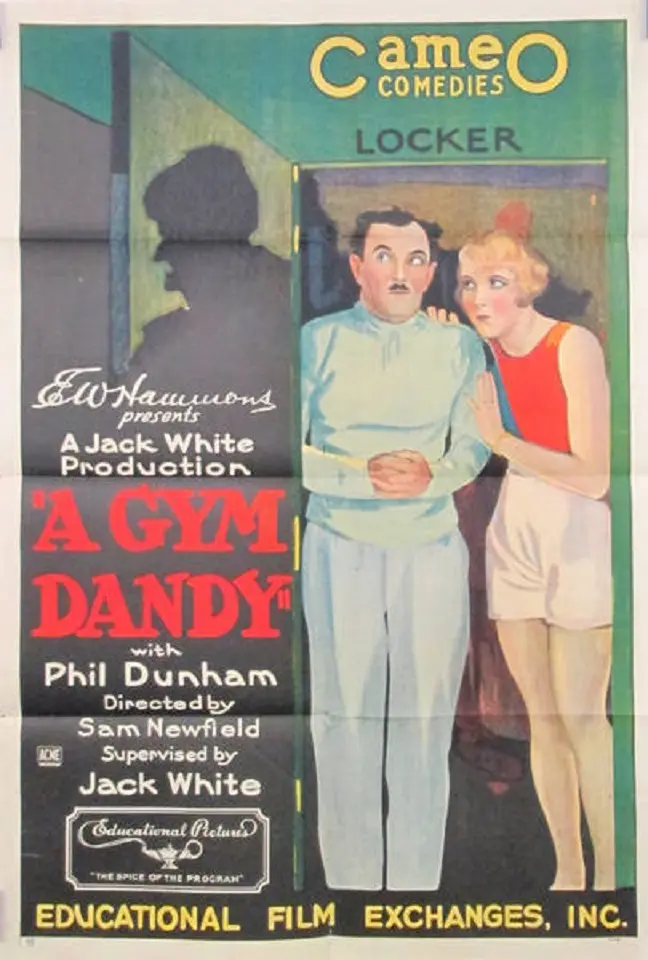
Does 'A Gym Dandy' still resonate with modern audiences, nearly a century after its release? Short answer: yes, but with significant caveats. This silent-era short offers a fascinating glimpse into the comedic sensibilities of its time, delivering a brand of physical humor that is both foundational to the genre and, at times, undeniably dated. It's a film for cinephiles, historians, and those with a deep appreciation for the roots of cinematic comedy, but it is emphatically not for viewers seeking contemporary pacing, complex narratives, or subtle wit.
If you can attune yourself to its rhythm and embrace its unpretentious charm, there's a genuine, if fleeting, pleasure to be found. It demands patience and an open mind, rewarding those who are willing to look past its technical simplicity to appreciate its historical significance and the raw talent of its performers. This is a film that asks you to meet it on its own terms, and in doing so, offers a unique window into a bygone era of filmmaking.
The world of silent cinema is often dismissed as a historical curiosity, a precursor to the 'real' movies. Yet, to do so is to overlook a rich tapestry of storytelling, innovation, and performance that laid the groundwork for everything that followed. 'A Gym Dandy,' while not a groundbreaking masterpiece, serves as a delightful miniature example of the era's unique strengths: visual storytelling, exaggerated physicality, and a universal language of emotion that transcends spoken dialogue.
The film's reliance on physical comedy, a staple of the period, is both its greatest asset and its most significant hurdle for modern viewers. Without dialogue, every gesture, every facial expression, and every pratfall carries the weight of the narrative. This demands a different kind of engagement from the audience, one that prioritizes observation and interpretation over passive consumption. It's an active viewing experience, almost like watching a live theatrical performance where the actors communicate solely through movement and mime. This immediacy, this raw, unfiltered connection between performer and audience, is something often lost in the more polished productions of today.
For those accustomed to the rapid-fire editing and dense exposition of contemporary cinema, 'A Gym Dandy' might feel glacially paced. However, this slower tempo allows for a deeper appreciation of the comedic timing and the intricate choreography of the physical gags. There's a certain elegance in its simplicity, a purity of intent that is refreshing in an age of overstimulation. It reminds us that laughter doesn't always require intricate plots or sophisticated punchlines; sometimes, a man tripping over a dumbbell is all it takes.
Let's cut directly to the core of 'A Gym Dandy' and its place in today's viewing landscape.
This film works because it delivers pure, unadulterated silent-era physical comedy with earnest performances from its leads, particularly Phil Dunham's committed portrayal of an underdog. It’s a valuable historical artifact and a charming example of the era’s lighthearted entertainment.
This film fails because its comedic beats are predictable by modern standards, its technical execution is rudimentary even for its time, and its narrative lacks any real depth or lasting impact beyond its immediate gags.
You should watch it if you are a student of film history, a fan of early cinema, or someone who enjoys simple, slapstick humor and can appreciate the foundational elements of comedy without expecting modern polish or complexity.
The direction in 'A Gym Dandy' is, by modern standards, rudimentary. It serves the story and the gags without drawing undue attention to itself. The camera is largely static, framing the action to allow the physical comedy to play out unobstructed. This isn't a criticism, but rather an observation of the prevalent style of the era. Directors often acted as choreographers, orchestrating movement within a fixed frame rather than manipulating perspective through dynamic camera work or editing.
The pacing is brisk for a silent short, moving from one comedic setup to the next with efficiency. There’s little time wasted on exposition or character development; the audience is immediately thrust into Percival’s clumsy attempts to impress Miss Legs. This relentless pursuit of the next laugh keeps the energy up, preventing the film from feeling stagnant despite its visual simplicity. One particularly effective sequence involves Percival’s disastrous attempt to lift weights, where the rapid-fire intercutting between his straining face and the wobbling barbells amplifies the comedic tension.
However, this simplicity can also be a double-edged sword. While it allows the gags to shine, it leaves little room for thematic exploration or emotional resonance. The film exists purely for entertainment, a fleeting distraction. It’s a testament to the power of pure slapstick, demonstrating that sometimes, the most effective comedy is the most straightforward. The director understood the assignment: make people laugh, and do it quickly.
Phil Dunham, as Percival Piffle, is the undeniable engine of 'A Gym Dandy.' His performance is a masterclass in silent-era physical comedy, combining earnestness with a rubbery physicality. Dunham’s ability to convey Percival’s desperate longing, his boundless optimism, and his inevitable humiliation through exaggerated facial expressions and precise bodily movements is truly commendable. He doesn't just play a character; he embodies a comedic archetype – the hapless romantic, the well-meaning fool. His struggles with the gym equipment, particularly a scene where he gets comically entangled in a rowing machine, are genuinely laugh-out-loud moments, showcasing his innate comedic timing.
Estelle Bradley, as Miss Lottie Legs, provides a charming counterpoint to Dunham's antics. Her role is less about broad comedy and more about reactive expressions and understated elegance. She is the object of Percival's affection, and her reactions – a polite smile, a raised eyebrow, a subtle look of concern – anchor the film's more outlandish moments in a semblance of reality. While not given as much opportunity for overt humor, Bradley's presence adds a necessary grace and believability to the romantic pursuit, preventing Percival's efforts from feeling entirely unmoored.
The supporting cast, though largely unnamed and serving as background fodder, contributes to the overall comedic atmosphere. Their reactions to Percival’s mishaps, often expressions of bewildered amusement or exasperation, amplify the humor. It’s a collective effort, where every player understands their role in building the comedic tableau. This ensemble work, even in a short film, is crucial. It works. But it’s flawed.
The cinematography in 'A Gym Dandy' adheres to the conventions of early 20th-century filmmaking. Shot on black and white film, the visual style prioritizes clarity and visibility of the action. There are no elaborate tracking shots or complex lighting schemes; instead, the camera is typically static, capturing the full scope of the comedic set pieces. This approach allows the audience to fully appreciate the physical comedy without distraction, much like watching a stage play.
The use of intertitles is sparse but effective, providing necessary dialogue or plot points without interrupting the visual flow. They serve as brief narrative pauses, guiding the audience through the story when visual cues alone might not suffice. For instance, an intertitle might declare Percival's intention to 'become a Hercules,' setting up the subsequent comedic failures. This balance between visual and textual information is a hallmark of successful silent filmmaking.
The tone of 'A Gym Dandy' is overwhelmingly lighthearted and farcical. It revels in innocent, good-natured humor, never veering into cynicism or mean-spiritedness. Even when Percival Piffle is at his most inept, the audience is invited to laugh with him, not solely at him. There's a fundamental sweetness to the film that makes it incredibly endearing, a quality often missing in the more cynical comedies of the modern era. This gentle approach to humor is a defining characteristic of many silent comedies, reflecting a different cultural sensibility.
The central theme, if one can extract it from the rapid succession of gags, is the classic comedic trope of self-improvement gone awry, and the misguided pursuit of love through superficial means. Percival believes he needs to transform his physical appearance to win Miss Legs, a relatable human folly. The film gently pokes fun at this idea, suggesting that authenticity and genuine connection are far more valuable than sculpted biceps. It’s a simple message, but an enduring one.
One could even argue that the film subtly critiques the burgeoning fitness culture of the early 20th century, which saw a rise in gym memberships and a focus on physical prowess. Percival's exaggerated efforts and comical failures could be seen as a humorous commentary on the absurdity of chasing an idealized physique. It’s an unconventional observation, perhaps, but one that adds a surprising layer of depth to what might otherwise appear to be a purely superficial comedy. The film, in its own way, is quite progressive in its gentle mockery of societal expectations.
Absolutely, but with a clear understanding of what you're getting into. 'A Gym Dandy' is a charming time capsule, a delightful piece of cinematic history that showcases the raw energy and foundational principles of silent comedy. It offers a unique opportunity to witness the origins of physical humor and appreciate the artistry of performers like Phil Dunham and Estelle Bradley, who communicated entire narratives without uttering a single word. It’s a quick, enjoyable diversion that provides genuine laughs, albeit of a particular vintage.
However, if you're looking for a film with a complex plot, deep character development, or cutting-edge special effects, this is not it. This film is best approached as an educational experience, a historical document, and a simple, unpretentious piece of entertainment. It requires an audience willing to engage with its particular style and pace. For those who appreciate the bygone era of silent cinema, 'A Gym Dandy' is a perfectly pleasant way to spend a few minutes.
'A Gym Dandy' is a delightful, if minor, entry in the annals of silent comedy. It offers a straightforward, laugh-out-loud experience that, while dated in its execution, remains charming due to the sheer earnestness of its performances, particularly from Phil Dunham. It won't redefine your understanding of cinema, nor will it linger in your memory as a profound artistic statement. Instead, it serves as a wonderful reminder of the simple, universal power of physical humor and the foundational artistry of the silent era. It’s a worthwhile watch for those who appreciate film as both art and history, a brief, joyous trip back to a time when a well-timed pratfall was all you needed to bring down the house. If you're looking for a more intense experience, perhaps consider a deeper dive into silent dramas like The Cost or the early animation of Feline Follies, but for a quick, wholesome laugh, 'A Gym Dandy' delivers exactly what it promises.
IMDb 6.2
1933
Community
Log in to comment.