DbcultAccessing Vault...
Cult Review
Senior Film Conservator
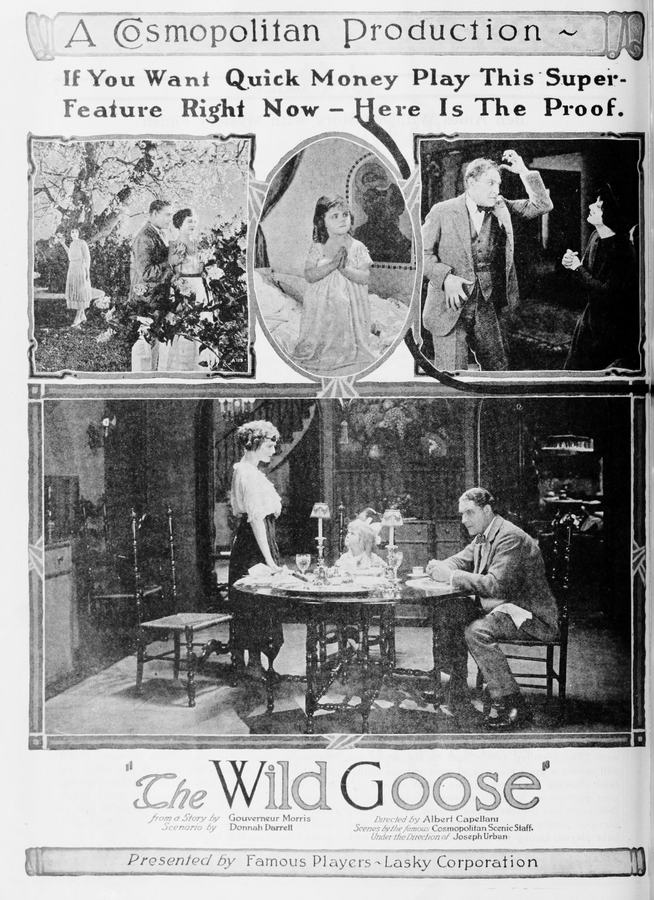
Manhattan’s nocturnal shimmer never looked more predatory than in The Wild Goose, a 1921 one-reel wonder that distills the entire decade’s impending moral earthquake into forty-three feverish minutes. Shot on serrated edges of shadow by cinematographer Lucia Backus Seger, the film treats adultery not as scandal but as gravitational law: bodies in love orbit whatever radiant sun is nearest, marital vows be damned.
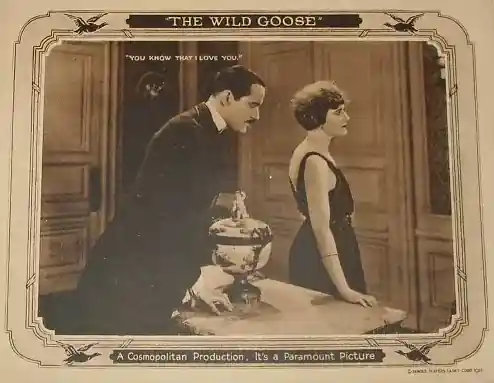
Joseph W. Smiley’s Ogden Fenn enters the frame with the languid swagger of a man who believes cities were built for his personal amusement. His cigarette case clicks open like a typewriter bell—every gesture announces the coming rupture. Opposite him, Mary MacLaren’s Diana Manners wafts through rooms in gowns the color of bruised hydrangeas; her eyelids seem heavy with the knowledge that happiness is always elsewhere. The first time they share a cab, the camera rides the divider like an eavesdropping ghost, catching her gloved hand sliding one inch closer to his. No intertitle is needed; the soft focus on her wedding ring says everything.
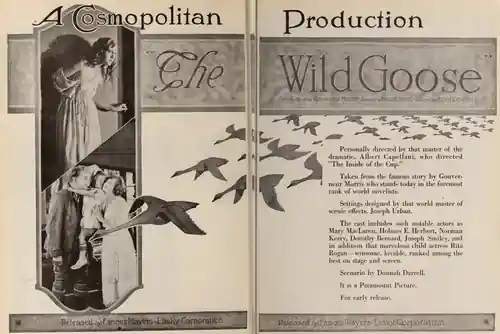
Norman Kerry’s Frank Manners, meanwhile, is introduced through a California montage of steel girdles and blueprints—an architect literally sketching the future while blind to the fissures in his own bedroom walls. Holmes Herbert’s Mr. Hastings prowls the periphery, nursing a jealousy so corrosive it practically etches the celluloid. And Dorothy Bernard’s Mrs. Hastings—arguably the film’s moral gyroscope—moves with the resigned grace of someone who has already accepted the invoice for desire.
Director Donnah Darrell stages New York as a vertiginous playground of elevated trains and rain-slick neon, then swaps the metropolis for a lakeside cabin whose timber walls seem to perspire once secrets swarm inside. There’s a moment—barely eight seconds—where the camera lingers on a half-finished jigsaw puzzle of the Manhattan skyline, its missing piece shaped suspiciously like a human heart. It’s silent-era shorthand for incompleteness, and it’s devastating.
The screenplay, adapted by Gouverneur Morris from his own risqué novella, condenses a quadrangle of longing into brisk, staccato scenes. Dialogue intertitles crackle with cynicism: "Marriage is a fortress—those inside want out, those outside want in." Yet the film’s true lexicon is visual. When Diana removes her wedding band to slip into Fenn’s car, Darrell cuts to a close-up of the ring left behind on the marble console, trembling like a tuning fork. In 1921, that was the equivalent of a scream.
Comparisons spring inevitably to Cupid Camouflaged and Fires of Conscience, contemporaneous morality tales that also dallied with extramarital temptation. But where those films ultimately re-bolted the door of domestic sanctity, The Wild Goose leaves it ajar, its hinges scorched. The final act’s automotive homicide—Hastings forcing Fenn’s touring car over a palisade—feels less like melodramatic retribution than pagan sacrifice, a purging fire to cauterize the tribe.
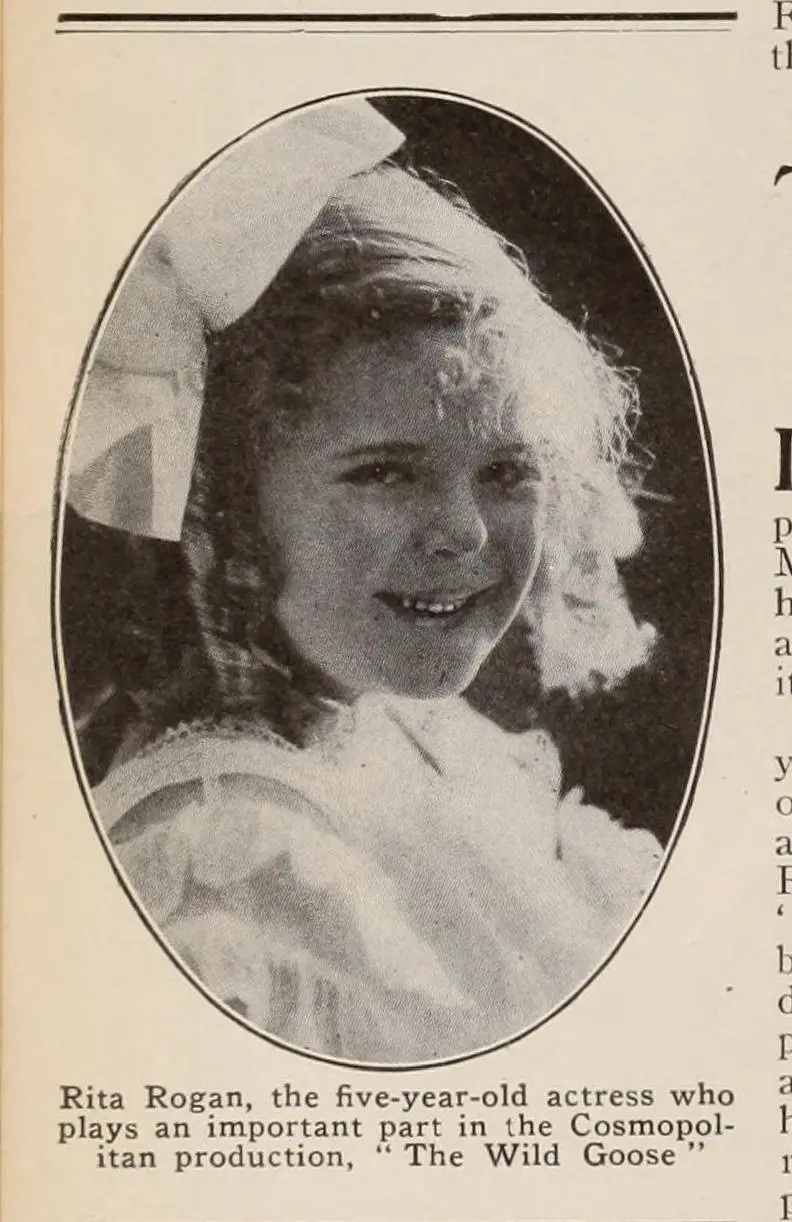
Criterion’s new 4K restoration rescues grain textures that swirl like wet charcoal, backed by a score from Rita Rogan (grand-niece of the original accompanist) that layers tremolo strings over distant ship horns—an aural reminder that the Hudson, like desire, keeps moving. Colors in the tinting scheme carry semantic weight: amber for Manhattan’s electric allure, cyan for the Hudson’s chill expiation, a bruised magenta for the cabin’s claustrophobic eroticism.
Performances oscillate between operatic and whispered. MacLaren’s micro-expressions—a left cheek twitch when she lies, the way her breath fogs a windowpane spelling "stay"—belong in a masterclass on acting beneath the neck. Smiley has the tougher job: making narcissism magnetic without top into mustache-twirling. He succeeds by gifting Fenn a half-beat of surprise each time someone challenges his entitlement, as if the world has abruptly changed its operating system.
Yet the film’s bruised heart is Dorothy Bernard. In the pivotal drawing-room scene she persuades Frank to relinquish vengeance, her voice intertitle reading: "If you tear their world apart, the shards will cut your child’s feet." The line delivery—via a sustained close-up where her pupils quiver like black butterflies—carries the weary authority of someone who has already paid the bill for another’s meal.
Cinematographer Seger employs chiaroscuro so aggressive it borders on German Expressionism: faces half-swallowed by felt darkness, only the triangular glint of an eye or a cigarette ember to orient us. When the climactic car plummets over the cliff, the negative is actually reversed for two frames—an inadvertent error preserved in the restoration that flares the headlights into twin comets. Serendipity becomes poetry.
Morris’s script sidesteps the era’s penchant for tidy repentance. Yes, the marriages recombine, but the final tableau—Frank and Diana framed in a doorway while their child plays with the missing jigsaw piece now snapped into place—feels less like closure than surveillance. The fortress gate clangs shut, yet we sense insurgents already tunneling beneath.
Viewed today, the film anticipates Men (1950) and The Green Cloak in its willingness to treat female desire as economic currency—something to be bartered, stolen, or forged into armor. Diana’s agency lies not in choosing a man but in choosing a narrative where she might still wield power. That she ultimately cedes the pen is less defeat than survival calculus in a ledger balanced by patriarchal auditors.
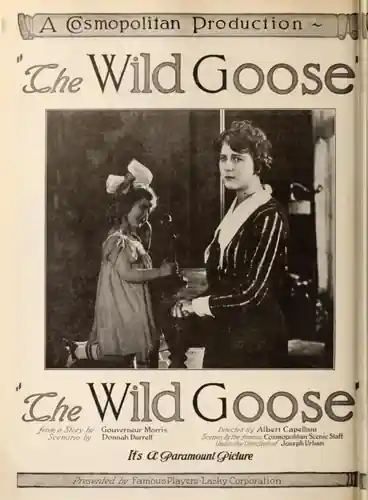
The disc’s extras include an essay by D.J. Flanagan on the 1921 obscenity hearings that nearly shelved the release (prosecutors objected to the word "wild" in the title, claiming it encouraged animalistic behavior). There’s also a side-by-side comparison with Sunshine Dad, demonstrating how two films from the same studio could preach radically different gospels about domestic bliss.
Bottom line: The Wild Goose is a brittle bijou of pre-Code candor, its emotions cranked to eleven yet grounded in the mundane terror of wanting what you’re told you shouldn’t. It doesn’t ask for forgiveness, only recognition that every marriage is a country with disputed borders, and sometimes cartography requires blood.
Verdict: 9/10 — Essential for anyone mapping the fault lines between silent melodrama and modern psychological realism. Watch it at midnight with a tumbler of something peaty; let the river mist crawl under your door.
IMDb 5
1926
Community
Log in to comment.