DbcultAccessing Vault...
Cult Review
Senior Film Conservator
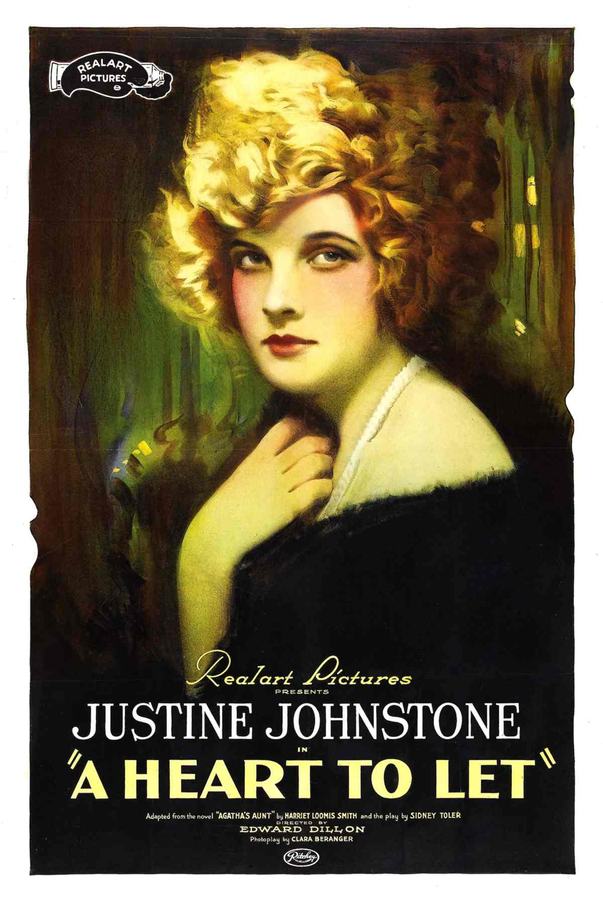
A Heart to Let unfolds like a watercolor painting—delicate, deliberate, and alive with the suggestion of deeper hues. It is a film that thrives in the liminal spaces between truth and illusion, where every character is both architect and prisoner of their own narratives. The 1930s setting, draped in the melancholy of the Depression era, amplifies the tension between material loss and emotional gain, a duality that pulses through every frame.
Agatha Kent (Elizabeth Garrison), the film’s emotional core, is a figure of contradictions. Her inheritance of the southern mansion—a relic of genteel decline—grants her both autonomy and isolation. The house, with its creaking floors and peeling wallpaper, becomes a metaphor for her double life: a caretaker to her blind boarder Burton Forbes (Thomas Carr), while secretly embodying the very woman he believes her to be. This duality is rendered with such subtlety that even the most jaded viewer is drawn into the web of mistaken identities. It is a masterclass in underplaying, where Garrison’s micro-expressions—a flicker of guilt, a suppressed smile—reveal more than dialogue ever could.
Burton’s journey, by contrast, is a study in transformation. His blindness, both literal and metaphorical, initially positions him as a figure of vulnerability, but it is his emotional myopia—his inability to see Agatha’s true self—that drives the narrative. Thomas Carr’s performance is a study in restraint; his voice, soft and halting, mirrors the fragility of a man adrift after a broken engagement. The restoration of his sight, triggered by a stock market windfall, is not merely a plot device but a symbolic reckoning. It forces Burton to confront the reality of his feelings, a reality he had previously interpreted through the lens of pity and gratitude.
The supporting cast—particularly Winifred Bryson as the Irish maid—adds texture to the film’s gothic atmosphere. Bryson’s character, though relegated to the shadows of the narrative, embodies the quiet resilience of the era’s working class. Her interactions with Agatha, often steeped in veiled warnings, serve as a counterpoint to the central romance. Meanwhile, the stock market subplot (a nod to the era’s economic anxieties) is handled with surprising nuance. Unlike the ham-handed morality tales of contemporaries like For Liberty, this film treats financial fortune as a fickle muse, its reversals underscoring the theme of impermanence.
Cinematographically, the film leans into chiaroscuro lighting, casting Agatha in pools of shadow as she navigates the mansion’s halls. This visual motif mirrors her moral ambiguity—she is both heroine and deceiver, a duality that the camera lingers on with almost voyeuristic curiosity. The use of wide-angle shots emphasizes the isolation of the manor, its vastness a reflection of the emotional distance between characters. In one particularly striking sequence, a candlelit dinner becomes a tableau of tension: Agatha’s hand hovers over a letter, the flame flickering in time with her heartbeat. It is a moment of near-silence, where the score—a faint piano melody—subsides to let the audience feel the weight of her decision.
The film’s pacing, though deliberate, is never sluggish. Each scene is a puzzle piece, building toward the cathartic climax where Burton chooses Agatha over his former fiancée. This resolution, while satisfying, avoids the saccharine pitfalls of lesser romances. Instead, it is grounded in the characters’ growth: Burton’s realization that love is not a transaction but a mutual surrender, and Agatha’s acceptance that authenticity, not deception, is the foundation of trust. The final shot—a slow zoom on the mansion as dawn breaks—suggests renewal, a quiet hope that the estate, like its inhabitants, has been reborn.
Comparisons to The Pest are inevitable, given the era’s penchant for light-hearted romances. Yet A Heart to Let distinguishes itself through its emotional gravity and thematic depth. While it lacks the slapstick levity of Are Floorwalkers Fickle?, it compensates with a haunting introspection that lingers long after the credits roll. The dialogue, penned by the formidable trio of Sidney Toler, Clara Beranger, and Harriet Loomis Smith, is taut and evocative, blending period-appropriate formality with a modern sensibility for subtext.
What elevates A Heart to Let beyond its peers is its exploration of identity. Agatha’s dual role is not merely a narrative contrivance but a commentary on the performative nature of gender and class in the 1930s. By donning the guise of her aunt and a servant, she gains agency in a society that otherwise constrains her. This theme resonates powerfully in a modern context, positioning the film as a precursor to the gender-bending tropes of later cinema. The irony that Burton’s restored sight allows him to see her true self—only after he has fallen in love—adds a bittersweet layer to the romance. It is a love story not of convenience but of revelation, where the act of seeing is as transformative as the act of being seen.
The film’s soundtrack, a mix of piano and string arrangements, is another standout element. It underscores the emotional tenor of each scene without overwhelming it. In contrast to the bombastic scores of Masked Ball, this score is understated, its quiet beauty mirroring the film’s focus on internal conflict. The use of diegetic sounds—clock ticks, rustling curtains—heightens the gothic atmosphere, turning the manor itself into a character of sorts.
Performances across the board are exemplary. Elizabeth Garrison’s portrayal of Agatha is a masterclass in emotional nuance, her ability to convey conflict through a single glance a testament to her craft. Thomas Carr, as Burton, balances vulnerability with stoicism, his voice and demeanor evolving seamlessly as his character awakens from his metaphorical blindness. Even the bit players, such as Justine Johnstone’s disapproving neighbor, add dimension to the story, their brief appearances hinting at a world beyond the manor’s confines.
The film’s pacing, while deliberate, may test the patience of modern audiences accustomed to rapid cuts and constant action. Yet this measured tempo is precisely what allows the relationships to breathe, the subtext to simmer. The third act, in particular, is a masterstroke of tension, as the stakes escalate without a single explosion of conflict. A Heart to Let understands that drama lives in the pauses, the unspoken, the glances exchanged over a shared cup of tea.
In terms of historical context, the film reflects the anxieties of its time. The stock market subplot, while a convenient plot device, subtly critiques the precariousness of wealth in an era of economic instability. It also serves as a foil to the central romance, suggesting that material fortune is fleeting while emotional connection endures. This theme is echoed in the fate of Burton’s former fiancée, whose return is less a threat than a narrative device to test the strength of his commitment to Agatha.
Ultimately, A Heart to Let is a film that rewards close attention. Its layers of meaning, from the gothic setting to the intricate character dynamics, invite repeat viewings and scholarly dissection. While it may lack the spectacle of The Years of the Locust, it makes up for it in emotional resonance and artistic cohesion. It is a testament to the power of cinema to capture the complexity of the human heart, even within the constraints of a 1930s studio system.
For those seeking a modern comparison, look no further than Souls on the Road, which similarly grapples with the intersection of identity and love. But A Heart to Let remains unique in its ability to balance gothic elegance with emotional rawness, a rare blend that cements its status as a hidden gem of pre-Code Hollywood.
IMDb 7.2
1918
Community
Log in to comment.