DbcultAccessing Vault...
Cult Review
Senior Film Conservator
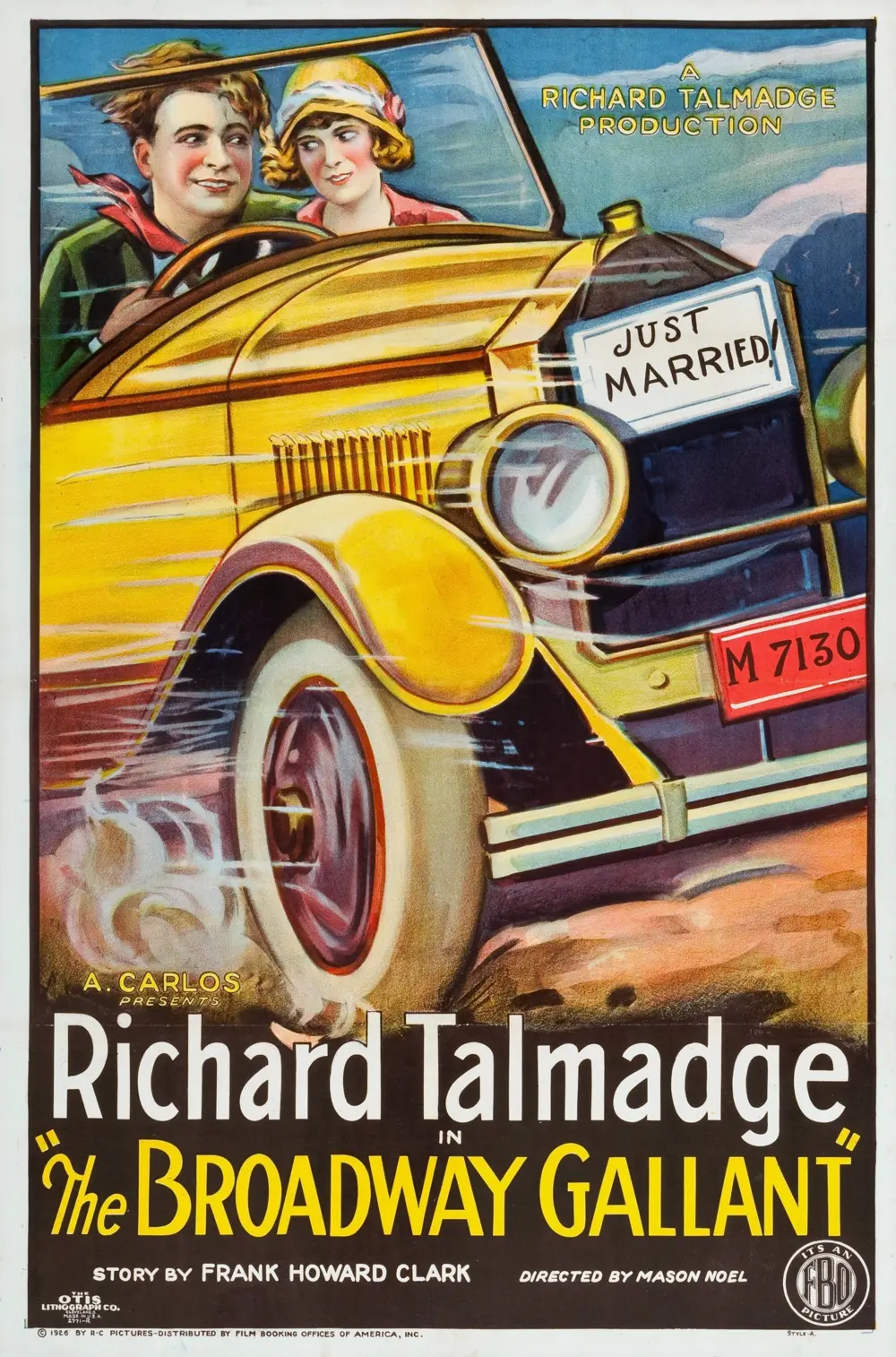
Short answer: yes, but only if you value physical performance over narrative complexity. This is a film for fans of early stunt-work and athletic leading men, but it is definitely not for those who require a modern, fast-paced thriller with airtight logic.
The Broadway Gallant represents a specific era of cinema where the 'action star' was beginning to find his footing, separate from the slapstick of Keaton or the swashbuckling of Fairbanks. It is a gritty, albeit simple, story about financial predation and the resilience of a man who refuses to be a pawn.
This film works because Richard Talmadge brings a kinetic energy to the screen that few of his contemporaries could match, making even the most mundane escape scenes feel vital.
This film fails because the central conflict relies on a highly specific and somewhat dated legal loophole regarding estate guardianship that feels more like a plot convenience than a genuine threat.
You should watch it if you are a student of silent film history or if you want to see a leading man who performs his own hair-raising stunts without the safety nets of the modern era.
The plot of The Broadway Gallant centers on Jack Peasley, a man who embodies the 'corrupt guardian' trope with a sneering efficiency. Played with a calculated coldness by Jack Richardson, Peasley isn't just a thief; he's a gambler who lost with someone else’s money. The specific use of worthless railroad stock as the catalyst for the drama is a fascinating reflection of the era's economic anxieties.
When Red Sweeney, the swindler, explains the 'marriage loophole,' the film shifts from a drama about embezzlement into a high-stakes social trap. The scene where Peasley and Sweeney conspire in a smoke-filled room is a masterclass in silent-era villainy. Their movements are jagged and predatory. They aren't just characters; they are personifications of the greed that would eventually lead to the real-world market crashes just a few years later.
Unlike the more domestic dramas of the time, such as Josselyn's Wife, The Broadway Gallant keeps its stakes firmly in the realm of the public and the financial. The threat isn't just a broken heart; it’s total destitution and the loss of agency for Helen Stuart.
Richard Talmadge is the heart of this production. Often overshadowed by the bigger names of the 1920s, Talmadge was a stuntman first and an actor second. This shows in every frame. As Monty Barnes, he initially plays the 'restless young man' with a certain lightness, but when the plot thickens, his physicality takes over.
There is a specific sequence where Monty must navigate a series of obstacles to reach Helen. It isn't just a walk; it’s a choreographed display of gymnastics. He leaps over railings and scales walls with a fluidity that makes modern CGI look stiff. It’s raw. It’s impressive. It works. But it’s flawed by the film’s tendency to stop the plot dead just to show off his latest backflip.
Compared to the more grounded performances in films like The Ragamuffin, Talmadge feels like he belongs in a different genre entirely. He is a superhero before the term was popularized. His performance is less about internal monologue and more about how his body occupies the space around him.
The direction by the production team is functional, if not revolutionary. The pacing in the first act is somewhat sluggish as it establishes the complicated financial ties between Peasley and the Stuart estate. However, once the marriage plot is set in motion, the film picks up a frantic speed that mirrors Monty’s own restless nature.
One unconventional observation: the film treats the 'marriage' as a prison sentence. In many films of this era, marriage is the ultimate goal, the 'happily ever after.' Here, it is a tool of subjugation. This cynical view of the institution provides a sharp edge to an otherwise standard action-adventure. It’s a surprising bit of grit for 1926.
The cinematography by the uncredited cameramen is standard for the mid-20s, favoring wide shots that allow Talmadge to showcase his stunts. There are few close-ups, which unfortunately distances us from Helen’s emotional turmoil. Cecile Cameron does her best with the role, but she is often relegated to the background while the men fight over her checkbook.
In the landscape of 1926, The Broadway Gallant sits somewhere between the high-budget spectacles and the 'Poverty Row' quickies. It lacks the polish of a major studio release but makes up for it with sheer audacity. If you look at Gridiron Glory, you see a similar focus on athletic prowess, but The Broadway Gallant feels more urban and dangerous.
The film also shares some DNA with The Firing Line in its exploration of social duty and the expectations placed on young heirs. However, where those films might lean into the romance, this film leans into the chase. It is a movie that understands its audience wants to see a man jump off a building, and it delivers that with a straight face.
There is a moment in the final third where Monty has to escape a room through a high window. Most actors would have used a cut or a double. Talmadge does it in one continuous shot, swinging from a light fixture and propelling himself through the frame. It is a moment of pure cinema that justifies the price of admission alone. It’s not just a stunt; it’s a declaration of character. Monty Barnes isn't just a 'gallant' by name; he is a man of action.
Pros:
Cons:
Monty Barnes is referred to as the 'Broadway Gallant' because of his reputation as a spirited, restless young man-about-town in New York's theater district. While the name implies a superficial playboy, the film uses it ironically to show that his true 'gallantry' comes from his physical courage and his willingness to protect Helen Stuart from her corrupt family. He transforms from a socialite into a literal savior through his athletic feats.
"The Broadway Gallant is a fascinating artifact of a time when the human body was the most impressive special effect in Hollywood. While the story is a bit of a relic, Richard Talmadge’s performance is a timeless display of athletic grace."
Ultimately, this is a film that deserves more than to be a footnote in the history of silent cinema. It lacks the emotional depth of something like Ostap Bandura, but it makes up for it with pure, unadulterated energy. It’s a B-movie with an A-plus physical performance at its center.
If you can get past the creaky plot mechanics and the standard 'damsel in distress' tropes, you will find a film that is surprisingly modern in its cynicism toward financial institutions and its celebration of the individual hero. It isn't a masterpiece. It’s a thrill ride. And sometimes, that’s exactly what the doctor ordered.
IMDb —
1914
Community
Log in to comment.