DbcultAccessing Vault...
Cult Review
Senior Film Conservator
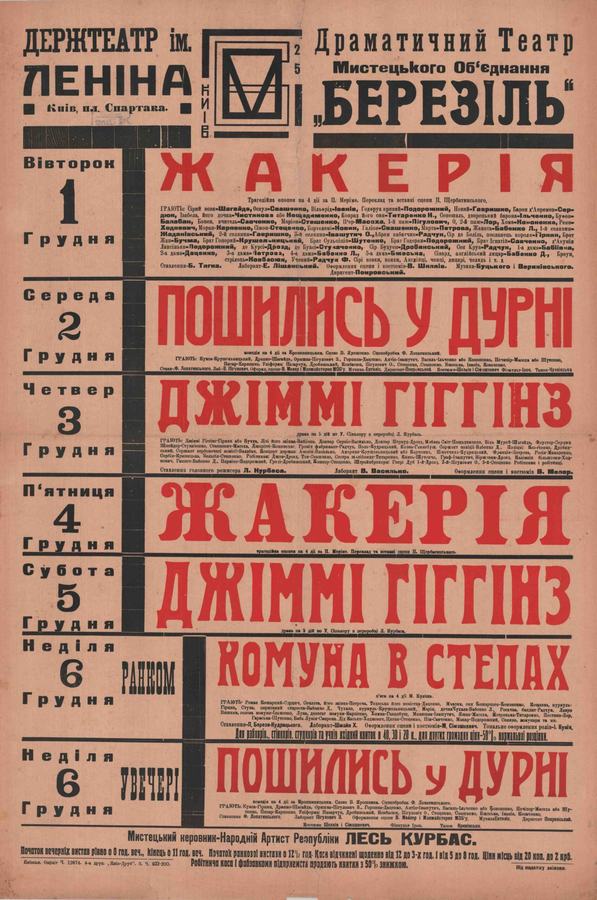
In the pantheon of early 20th-century cinema, few figures loom as large or as tragically as Les Kurbas. His 1923 work, Dzhymmi Hihhins, represents a radical departure from the burgeoning Hollywood tropes of the era, offering instead a visceral, cerebral exploration of class warfare through the lens of a global conflagration. This was not cinema intended for passive consumption; it was a weapon of intellectual provocation, designed to be projected as an integral component of a live theatrical performance. By melding the ephemeral energy of the stage with the static permanence of film, Kurbas created a hybrid form that remains revolutionary even by contemporary standards.
To understand Dzhymmi Hihhins, one must first grasp the philosophy of the Berezil Theatre. Kurbas was not merely a director; he was an architect of the soul, seeking to 're-transform' the audience's perception of reality. Unlike the more conventional approaches seen in Diane of Star Hollow, which adhered to traditional narrative arcs, Kurbas utilized the camera to dissect the social fabric. The film serves as the 'background component'—a visual subtext that provides the historical and emotional weight for the actors on stage. It is a dialogue between the macro-scale of geopolitical shifts and the micro-scale of individual suffering.
The choice of Upton Sinclair as a source material was no coincidence. Sinclair’s socialist leanings provided the perfect ideological scaffolding for Kurbas’s aesthetic experimentation. The character of Jimmy Higgins is the quintessential 'everyman,' a figure whose journey from a naive worker to a war-torn husk mirrors the disillusionment of an entire generation. While films like The Silent Battle explored conflict through the lens of espionage and individual heroism, Dzhymmi Hihhins treats war as an impersonal, industrial process—a factory that consumes human lives to produce profit for the elite.
The most striking feature of the film is its structural duality. Kurbas employs a technique of rapid, rhythmic montage to contrast the 'two worlds.' On one side, we see the high society of the American East Coast—glittering ballrooms, overflowing champagne, and the effortless grace of those who have never known hunger. These scenes are shot with a certain soft-focus elegance, highlighting the artificiality of their existence. On the other side, the reality of the front line is rendered in stark, abrasive detail. The mud of the trenches, the mechanical roar of the tanks, and the contorted faces of the dying create a visual cacophony that punctures the bourgeois fantasy.
This juxtaposition is far more aggressive than the subtle thematic shifts found in The Poppy Trail. Kurbas isn't interested in nuance; he is interested in the truth of the contradiction. The 'reality of war' is shown as the engine that powers the 'reality of high society.' Every silk gown is paid for with a gallon of blood; every toast to victory is echoed by a scream in No Man’s Land. The film forces the viewer to reconcile these two disparate images, creating a psychological tension that is never fully resolved.
As both writer and lead actor, Les Kurbas imbues Jimmy Higgins with a kinetic energy that is almost exhausting to behold. His performance is a masterclass in expressionist acting. In the early scenes, his movements are broad, hopeful, and synchronized with the machinery of the shipyard. He is a part of the collective, a cog in the wheel of progress. However, as the war takes hold, his movements become erratic, fragmented, and haunted. The synchronization is broken. He is no longer a man; he is a ghost inhabiting a world that has discarded him.
This descent into madness is handled with a sophistication that rivals the psychological depth of The Midnight Bride, yet it carries a heavier political weight. Higgins’s trauma is not merely personal; it is systemic. When he is tortured for his socialist beliefs by the very military he was forced to serve, the film reaches a fever pitch of indignation. The camera work becomes claustrophobic, trapping the viewer in Higgins’s cell, forcing us to witness the betrayal of the democratic ideals he was told he was fighting for.
Technically, Dzhymmi Hihhins was light-years ahead of its time. The use of the 'kino-insert'—filmed segments meant to be played during a play—was a precursor to modern multimedia installations. Kurbas understood that cinema possessed a unique ability to manipulate time and space in ways that the stage could not. By integrating film, he could transport the audience from a New York living room to the battlefields of France in a heartbeat. This fluid transition between mediums created a sense of global interconnectedness, emphasizing that the decisions made in the boardrooms of the wealthy had immediate, lethal consequences on the other side of the planet.
While contemporary films like The Light in the Clearing focused on rural morality and clear-cut ethics, Kurbas embraced the moral ambiguity of the modern age. His use of double exposures and superimposed imagery creates a phantasmagoria where the faces of the dead haunt the feasts of the living. It is a visual representation of a guilty conscience, a haunting that refuses to be silenced by the signing of a peace treaty.
It is a profound tragedy of film history that much of the original footage of Dzhymmi Hihhins has been lost to the ravages of time and political censorship. Yet, the fragments that remain, combined with the detailed scripts and production notes of the Berezil Theatre, allow us to reconstruct its monumental impact. It stands as a testament to the brief, shining moment of the Ukrainian 'Executed Renaissance,' a period where art was allowed to be dangerous, experimental, and uncompromisingly honest.
Comparing this work to the lighthearted nature of Top o' the Morning or the rugged naturalism of While the Billy Boils highlights just how far Kurbas was willing to push the medium. He wasn't interested in entertainment; he was interested in enlightenment. The film’s rhythmic editing influenced the likes of Eisenstein and Vertov, establishing a grammar of montage that would define Soviet cinema for decades to come.
The 'high society' depicted in the film is not merely a collection of wealthy individuals; it is a symbol of an entropic system. Kurbas portrays them as vampires, feeding on the labor and the lives of the working class. Their laughter is hollow, their conversations are trivial, and their disconnect from the suffering of the masses is absolute. In contrast, the 'reality of war' is portrayed with a brutalist honesty. There are no heroes in the trenches of Dzhymmi Hihhins, only victims. This erasure of the 'war hero' trope was a radical act of subversion, challenging the very foundations of nationalist propaganda.
Even in the smaller-scale dramas like Edgar's Feast Day or the comedic stylings of Los que ligan, one rarely finds such a blistering critique of the social order. Kurbas uses the character of Jimmy to show how the individual is crushed by the weight of these two opposing realities. Jimmy’s socialist ideals are his only shield, but even they are battered by the sheer scale of the inhumanity he witnesses.
The conclusion of the film—and the accompanying stage play—was designed to leave the audience in a state of shock. There is no neat resolution, no happy ending where the worker triumphs and the rich are punished. Instead, there is a haunting realization that the cycle of violence and exploitation is self-perpetuating. The 'broken coin' of the economy, much like the plot of The Broken Coin, is a puzzle that cannot be solved within the existing framework of society.
Kurbas’s work is an insinuation, a whisper that grows into a roar, much like the thematic progression in Insinuation. It suggests that the only way to escape the duality of war and decadence is a total transformation of the human spirit. The film is a 'checkmate' to the complacency of the viewer, a tactical move in a much larger intellectual game, echoing the strategic maneuvers of The Checkmate.
Whether compared to the stark landscapes of Finlandia or the energetic pacing of Let's Go, Dzhymmi Hihhins remains an outlier. It is a film that refuses to be categorized, a piece of art that demands to be felt in the marrow of one's bones. It explores the 'wife's money' in a literal and metaphorical sense—the capital that drives the world—much like the domestic conflicts in His Wife's Money, but it elevates these concerns to a global stage.
In the final analysis, Dzhymmi Hihhins is more than a relic of a bygone era. It is a mirror held up to our own world, where the disparity between the 'high society' of the global north and the 'war reality' of the global south continues to define our existence. Les Kurbas may have been silenced by the Soviet regime, but his vision—fractured, avant-garde, and fiercely intelligent—continues to flicker in the dark, a reminder of what cinema can achieve when it dares to be more than just a dream.
IMDb 5
1932
Community
Log in to comment.