DbcultAccessing Vault...
Cult Review
Senior Film Conservator
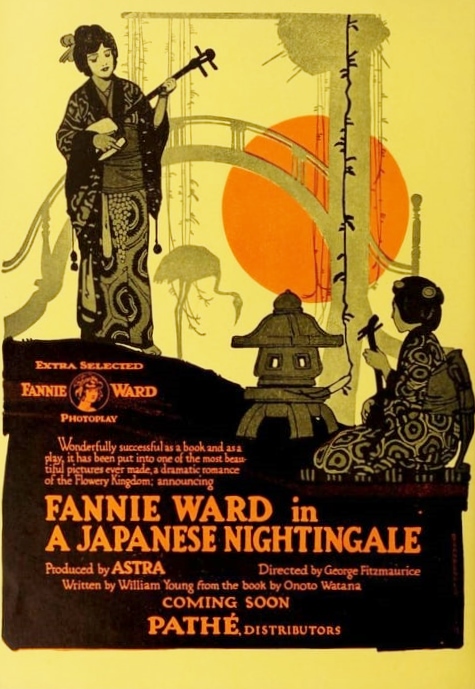
Spindrift incense curls across the frame even before we read the intertitle, as if the celluloid itself exhales a Meiji-era sigh.
Viewing A Japanese Nightingale a century after its whisper-quiet debut is akin to stepping on a Tatami mat worn gossamer-thin: every straw seam tells of footfalls long gone, yet the tremor underfoot feels intransigently modern. Director William Young, aided by scenario sorcerers Jules Furthman and Ouida Bergère, stitches a narrative kimono whose outer layer is pulp—runaway bride, murderous fixer—but whose lining shimmers with proto-feminist defiance and racial unease that prefigure today’s discourse on agency and appropriation.
Shot during the medium’s awkward adolescence—post-tableau, pre-expressionist—the film’s surviving tinting leans on nocturnal cerulean and arterial amber. These washes do more than mask nitrate decay; they sculpt emotional tectonics. When Yuki slides open the shōji to flee her betrothal, the frame swims in sea-blue darkness, her silhouette a cut-out of rebellion. Moments later, Baron Nekko’s palatial lair throbs with orange lamplight the shade of molten bronze, a visual cue that greed is literally being smelted on-screen. The palette prefigures the saturated moral binaries of Black Friday and the chiaroscuro psychosis of The Black Box, yet remains uniquely indebted to ukiyo-e woodblocks—each shot could be cropped into a Hiroshige snow scene.
Casting Caucasian silent-star Fannie Ward as Yuki courts today’s accusations of yellow-face, but 1918 audiences read her as cosmopolitan verisimilitude: the Western woman who could embody the Orient without the stigma of actual otherness. Ward’s performance is all porcelain minimalism—eyebrows like brushed kanji, wrists that articulate longing more fluently than her intertitles. When she kneels to pour sake for Baron Nekko, her spine arcs in a bow so rigid it vibrates with withheld rage; the micro-tremor in her sleeve is a semaphore of resistance that needs no translation.
Opposite her, Yukio Aoyama as the brother dances between Meiji stoicism and New-World bewilderment; his gait on American soil in the expository flashback feels borrowed from Fairbanks, yet once home he folds back into the cadence of Noh restraint. The tension between these performance vocabularies—Western semaphore versus Eastern containment—creates an uncanny frisson that no fully assimilated cast could replicate.
W.E. Lawrence’s John Bigelow is less a character than a geopolitical thesis in three-piece serge. He enters the narrative clutching a Baedeker and a consular badge, emblems of extraterritorial confidence. His courtship of Yuki is filmed mostly in American-set interiors—missionary furniture, globe, portrait of Wilson—signaling that even in love he annexes foreign space. Yet the script slyly undercuts his savior aura: once the marriage certificate vanishes, John’s legal protection evaporates, reducing him to a trembling supplicant in a land where his passport is suddenly parchment-thin. The film thus anticipates post-colonial critique decades before academic theory coined the term.
Whereas Baron Nekko embodies feudal lechery, Ido is modernity’s parasite—part marriage agent, part hedge-fund ghoul. Furthman’s script gifts him a proto-noir interiority: he breaks the fourth wall in a chilling iris close-up, confessing to the camera his terror of insolvency. His theft of the certificate is not merely plot lubricant; it is the moment administrative violence weaponizes intimacy, a theme revisited in the bureaucratic nightmares of Exile and Odette.
His eventual contrition—delivering the parchment like a penitent samurai returning a severed head—collapses the East-West moral binary the film has flirted with. Evil is not cultural but economic, the script insists; redemption, though melodramatic, is class-based solidarity.
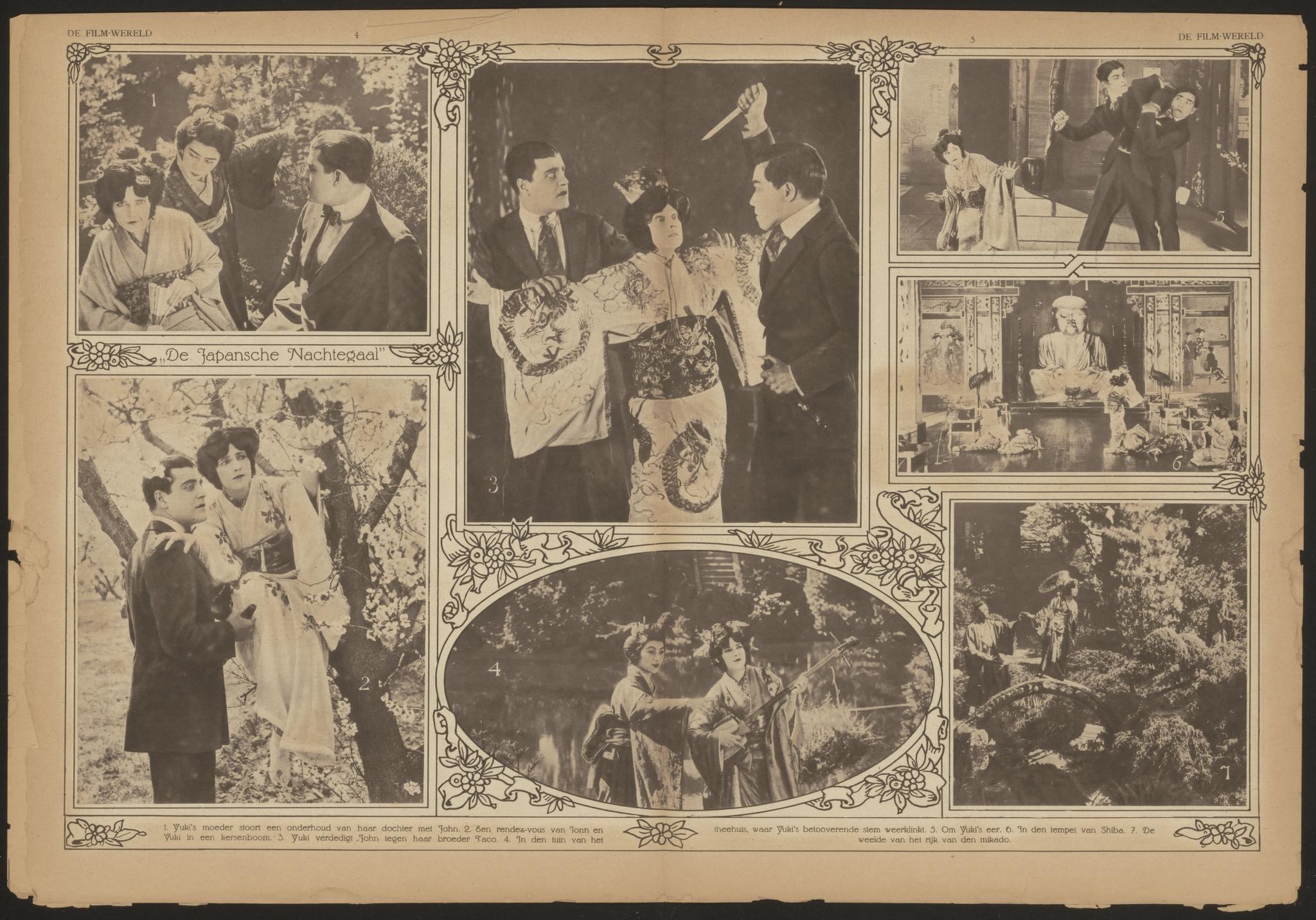
The movie maps Yokohama as a palimpsest: pleasure quarters superimposed on treaty-port concessions. Yuki’s flight traces a cartography of female peril—through lanterned alleyways where paper advertisements for rubber goods flutter like wounded butterflies, past the foreign cemetery where Occidental ghosts whisper impropriety, into the consulate whose very bricks promise juridical sanctuary yet fail her. Each location is introduced with a superimposed postcard, then revisited under duress, the repetition implying that every picturesque nook contains a trapdoor to tragedy—a device echoed in the cyclical domestic hell of Her Father’s Son.
We never witness the blade meet flesh; instead Young cuts to the Baron’s koi pond blooming crimson, a visual metaphor so elegant it skirts censorship and anticipates Hitchcock’s shower sequence. The absence of gore amplifies psychological dread—imagination sketches atrocity far sharper than any prosthetic. Censors of 1918, already jumpy after World War I pacifist reels, demanded the tinting of that pond shot be limited to three seconds. Surviving prints retain the crimson flash like a wound flickering under a strobe.
Though originally accompanied by a live orchestra blending koto motifs with Sousa marches, no score survives. Contemporary exhibitors recommended alternating between Saint-Saëns’ Introduction and Rondo Capriccioso during courtship scenes and Weber’s Dies Irae for Ido’s nocturnal prowls. I propose a modern reclamation: invite a shō performer to punctuate the reels with breathy bamboo drones, then drop into Coltrane’s Alabama during the certificate theft, letting free-jazz saxophone embody the dissonance of legalized love rent asunder.
A Japanese Nightingale shares DNA with Pinocchio’s obsession of puppets cutting their strings, yet its stakes are corporeal, not wooden. Its bureaucratic theft of identity dovetails with The Rainbow Trail, while its geisha milieu prefigures the orientalist seductions of Le diamant noir, though without the latter’s diamond-cold cynicism.
The closing intertitle declares: “Love, once paper-bound, becomes sword-proof.” Yet the film knows such assurances are gossamer. Yuki’s smile as the reinstated certificate flutters like a wounded crane is less triumph than exhaustion; her eyes seem already to gaze past the reel, past the century, asking whether legal validation sanctifies what the heart already knows. In that unanswered stare lies the picture’s modernity—a recognition that institutions, whether marriage or empire, remain paper predators until conscience, not parchment, secures dignity.
Nitrate decomposition has claimed Reel 3; the koi-pond crimson survives only in a 1923 Pathescope for home libraries, itself scarred by vinegar syndrome. Current digital restorers at Tokyo’s National Film Archive are employing machine-learning bloom-reconstruction to hallucinate the missing frames, though purists decry the interpolation as algorithmic kabuki. My stance: embrace the lacunae. Let the screen gutter into darkness where the emulsion once lived; let the audience lean forward, like kabuki spectators filling silence with kakegoe calls, stitching narrative from absence.
Despite its casting contortions and pulp arteries, A Japanese Nightingale soars on the thermals of visual poetry and proto-feminist bile. It is less a relic than a prophecy—a tremulous antecedent to the globalized melodramas streaming on today’s platforms, reminding us that love’s legitimacy has always been contested terrain, and that the paper which sanctions it can be weaponized, forged, or reclaimed by those bold enough to wrest agency from the brokers of destiny.
For further explorations of orientalist fantasy, see critiques of Beautiful Lake Como, Italy and Herod; for narrative DNA on stolen identities, consult The Fatal Card and Milestones of Life.
IMDb —
1922
Community
Log in to comment.