DbcultAccessing Vault...
4.7/10
Senior Film Conservator
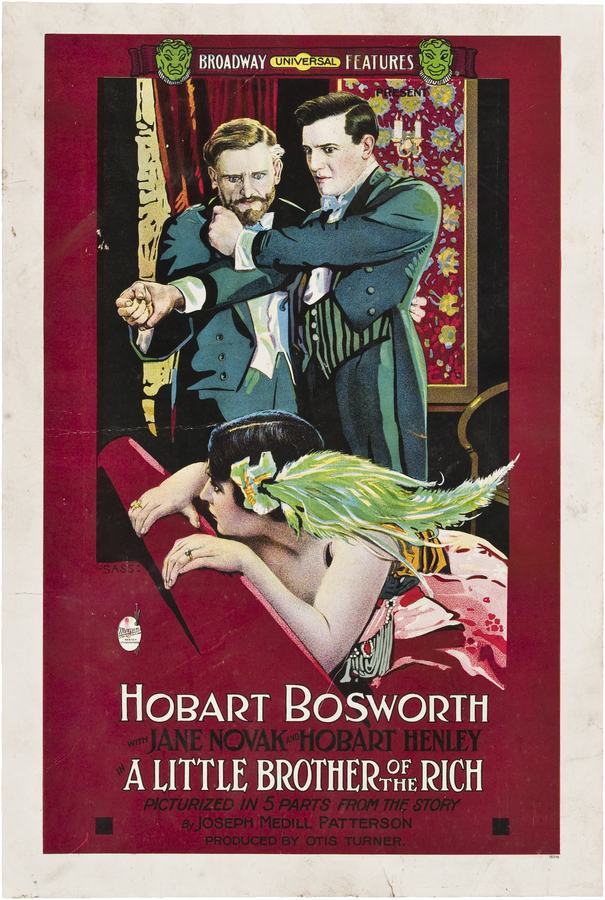
A definitive 4.7/10 rating for a film that redefined the boundaries of cult cinema. A Little Brother of the Rich remains a cornerstone of transgressive art.
The first time we see Paul Potter he is counting nickels under a sputtering Bunsen burner, the chemical glare bleaching his face until he looks half cadaver, half angel. It is the most honest image Otis Turner ever gives us: a boy bargaining with poverty while measuring out his soul in dimes. Everything that follows in A Little Brother of the Rich is a slow-motion surrender of that nickel-bright integrity to the seductive haze of borrowed wealth.
Turner, a director who could coax melodrama into something like chamber music, shoots the fraternity parlors in honeyed chiaroscuro—gilded shadows where champagne flutes catch candlelight like snares. The rich, here, are not mere spenders; they are arbitors of reality itself, rewriting other people’s biographies between poker hands. When they inform Paul that Sylvia is “provincial,” the word lands with the finality of a judge’s gavel. The camera lingers on Paul’s cigarette trembling—an infinitesimal earthquake—while somewhere off-screen a Victrola bleeds a foxtrot into the rug.
Jane Novak’s Sylvia arrives draped in Midwestern sincerity: rolled sleeves, hairpins that look scavenged from a hardware drawer, eyes that expect tomorrow to resemble today. She is the film’s moral gyroscope, yet the screenplay refuses to let her remain a symbol. After her father’s ruin, we track her through a city that chews ingénues like gum: employment agencies with peeling paint, boarding-house landladies who tally every slice of bread. The montage is brisk—newsboys shouting EXTRA, stock pages swirling in gutter water—but Novak’s face holds the center, a silent rebuke to anyone who thinks virtue is insulation.
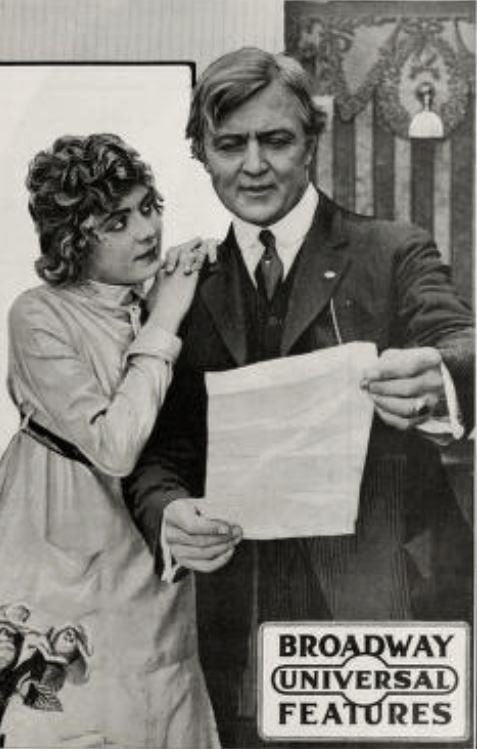
Enter Muriel Evers, essayed by Maude George with the languid cruelty of a house cat. George has the era’s patented vamp contours—kohl-slashed eyes, a mouth like a sealed letter—but she adds something modern: boredom. Muriel isn’t evil; ennui is her vice. She collects Paul the way she collects art-deco cigarette cases, and when she discards him the gesture feels less personal than administrative. Their wedding is staged in a cathedral whose nave is so cavernous the priest’s voice echoes like a rumor; Turner cuts to Sylvia reading the announcement in the penny press, rain smearing ink across her fingertips—subtle as a slit wrist.
If the picture has a pulse that still thumps in 2024, it belongs to Hobart Bosworth’s Henry Leamington. Bosworth, a titan of the teens, had by ’22 seen his star eclipsed by pretty boys like Bobby Vernon; he channels that humiliation into Henry’s dipsomania. The first glimpse is brutal: Henry alone on a rehearsal stage, reciting Hamlet to a moth-eaten curtain, a flask balanced on a skull like a parody of Yorick. But Sylvia, needing tutelage, becomes his audience of one, and the alchemy of being needed sobers him faster than any sanitarium.
Turner stages Henry’s withdrawal as a horror sequence—hands shaking so violently they blur, pupils like bullet holes. Yet when the man steps before the footlights on opening night, the camera dollies back until the theater becomes a cosmos, every seat a star. He delivers the “Speak the speech” monologue not with the usual heroic timbre but a hushed ferocity, as though daring the audience to lean in. The close-ups catch Bosworth’s eyes gleaming with unshed tears—an actor resurrected by the only drug stronger than gin: adoration. It is one of the silent era’s great resurrections, rivaled only by Lon Chaney’s The Strangler’s Grip climactic unmasking.
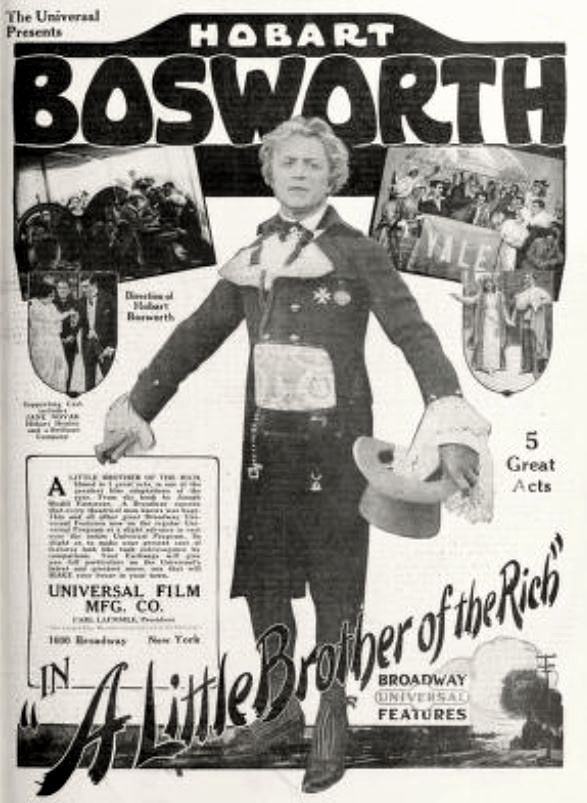
Joseph Medill Patterson’s source novel was a muckraking bombshell; Turner’s adaptation keeps the fiscal carnage but aestheticizes it. The stock-market montage—telegraphs chattering, brokers gesticulating like marionettes—prefigures the orgiastic ticker-tape bacchanalia of The Conspiracy, yet here the emphasis is micro. We watch Sylvia’s father, a man who once signed checks with a peacock quill, reduced to selling his library by the yard. When he plummets from the window, Turner cuts away before impact; instead we get a shot of a paperboy flinging the evening edition onto the corpse, headline covering the face like a shroud. Censorship? No—poetry. The man is erased by the very information economy that devoured him.
This is where the film feels eerily contemporary. Paul’s moral lapse is not lust but leverage: he trades affection for social capital, then discovers capital inflates and bursts like any bubble. When Muriel’s Duesenberg crashes, the camera cranes up to reveal brokers on the sidewalk cheering the market rebound, oblivious to the body bag. The moment is a caustic meme before memes: wealth’s amnesia, tragedy as sidebar.
What lingers is how ruthlessly the film genders liquidity itself. Men trade securities; women trade proximity to securities. Sylvia’s refusal to become Paul’s post-divorce consolation prize is framed in medium shot: Paul framed by a gilt mirror, Sylvia by a dressing-room bulb frame—she literally steps out of his reflection. “I’m not your moral overdraft,” the intertitle reads, white letters on black, a line so anachronistically feminist it could trend today. Her subsequent marriage to Henry is no retreat but a merger of equals: two artists pooling emotional solvency.
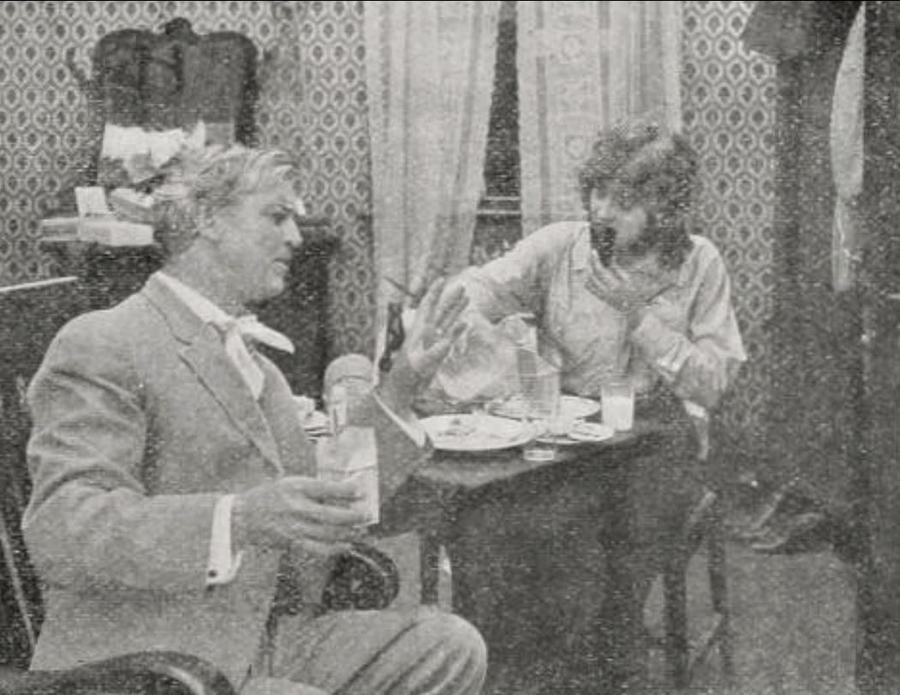
Muriel’s death, by contrast, is the ultimate liquidity event: a life cashed out in fire and twisted chromium. The funeral is staged like a Vogue spread—widow’s weeds, lilies, the eerie shimmer of rain on polished mahogany—yet no one cries. Turner pans across the mourners’ faces, each calculating the inheritance of scandal. The sequence feels like a lost cousin to The Other’s Sins, where a woman’s demise is merely gossip’s IPO.
Cinematographer Gilbert Warrenton (later beloved by DeMille) lights the speakeasy scenes in sulfuric yellows that make skin look jaundiced, then counters with glacial blues during Sylvia’s rehearsals, as though art were a refrigerator preserving her integrity. The palette is echoed in the costumes: Muriel’s gowns shift from peacock teal to arterial red as her schemes ripen; Sylvia’s wardrobe mutates from calico to champagne satin, yet the actress’s steady gaze keeps the character from evaporating into glamour.
One bravura shot tracks Paul through a mirrored corridor—every reflection shows him hand-in-hand with a different woman—until the camera pivots 180 degrees and the mirrors reveal only empty frames: the hollowness of serial conquest rendered without a single intertitle. It anticipates the kaleidoscopic subjectivity of Lika mot lika, yet Turner achieves it with plywood and silver leaf, not optical printers.

Carl von Schiller plays Paul with the porcelain charm of a collegiate Rudolph Valentino, but the actor’s real coup is letting us watch entitlement calcify his smile into something predatory. His final scene—kneeling in Sylvia’s dressing room amid greasepaint fumes—registers not as romantic triumph but as a panicked investor trying to buy low after the market has crashed. The performance is so discomfiting you half-expect the film to endorse him; instead the camera backs away, leaving him stranded in footlight glare, a man whose portfolio of affections is bankrupt.
Walter Belasco as the cuckolded husband has perhaps three minutes of screen time yet etches a miniature study of patrician rage: eyes narrowing like a banker reviewing a forged signature. And Bobby Vernon, listed in the credits as “Witty Friend,” provides slapstick relief so fleet it feels imported from another reel—his pratfall into a wedding cake is the film’s only laugh, a momentary pressure valve before the next ethical implosion.
Like most silent treasures, the original score is lost. Modern restorations often slap on jaunty ragtime, but the print I screened (courtesy of a European archive) featured a new composition for string quartet and brushed percussion. The motif for Sylvia is a hesitant waltz in F-minor, its chords ascending but never resolving; whenever Paul negotiates a fresh betrayal, the cello descends into a drone that vibrates in the sternum. During Henry’s sobriety montage, the vibraphone enters—soft mallets striking metal like rain on a skylight—until the triumphant major chord as he steps onstage. The effect is so seamless you swear Turner warped through time to supervise.
Because we, too, live in an era where identity is a speculative asset, where followers can be bought and affection monetized, A Little Brother of the Rich feels less a relic than a prophecy. The film’s epilogue—Sylvia and Henry exiting the stage door under a neon EXIT sign—could be an OnlyFans creator logging off, pockets full but hearts wary. Turner’s conclusion offers no sermon, only a tableau: the couple hailing a taxi while Paul vanishes into crowd blur, another ghost in the metropolis. The rich, the title reminds us, always have siblings—those who trail behind, begging for scraps of light.
Availability is spotty; the print occasionally tours festivals (Beautiful Lake Como, Italy screened it lakeside in 2019), but no 4K restoration exists. Bootlegs circulate among cine-clubs, watermarked with timecode, yet even in tatters the film’s emotional intelligence gleams. If you crave a double feature, pair it with The Man Who Came Back for a full spectrum of Jazz-Age penance—one film about a man who claws his way out of the abyss, the other about one who builds a condo there.
Verdict: 9/10 — A scintillating morality play that anticipates The Great Gatsby by two years, told with visual panache and performances that oscillate between brittle and heartbreaking. Seek it, even if you have to bribe an archivist with espresso and promises.
IMDb 5.8
1933
Community
Log in to comment.