DbcultAccessing Vault...
Cult Review
Senior Film Conservator
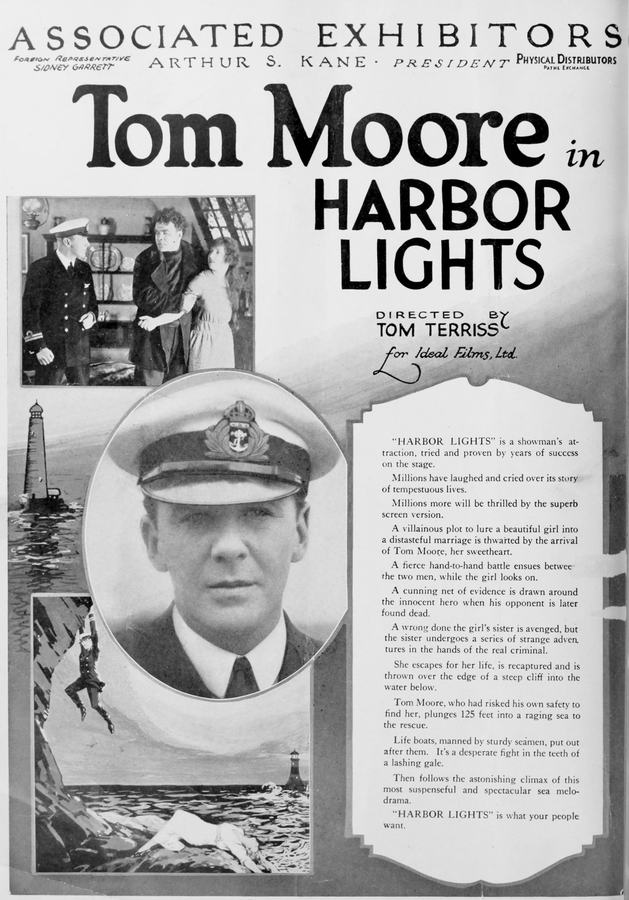
Stepping back into the nascent years of cinema, one often encounters narratives painted with broad, dramatic strokes, where the battle between good and evil is stark, and moral ambiguity is a luxury rarely afforded. Such is the enduring charm and, at times, the quaint simplicity of films like 'The Harbour Lights.' Released in an era when the moving picture was still finding its voice, this melodrama, adapted from a popular stage play, plunges viewers into a world where heroism is quickly met with perfidy, and justice is a commodity fiercely fought for. It’s a testament to the power of storytelling that even without synchronized dialogue, the emotional resonance of such a tale could captivate audiences, drawing them into a vortex of intrigue and despair, ultimately culminating in a cathartic resolution.
The film, a product of the collective narrative genius of Henry Pettitt, Eliot Stannard, and George R. Sims, unfolds with a precision that belies its silent nature. These writers, seasoned in crafting compelling theatrical experiences, brought a robust structural integrity to the cinematic adaptation. They understood the mechanics of suspense, the power of a sympathetic protagonist, and the necessity of a truly despicable antagonist. Their combined efforts ensured that 'The Harbour Lights' wasn't just a series of events, but a meticulously constructed emotional journey, designed to elicit strong reactions from its viewers. The narrative hinges on Lieutenant Harry Nelson, portrayed with earnest conviction by Tom Moore, a figure of unwavering rectitude and courage. His character embodies the ideal of the early 20th-century hero: honorable, selfless, and resolute in the face of adversity. Moore's performance, reliant entirely on physicality and facial expression, communicates a profound sense of duty and burgeoning affection, making his eventual plight all the more poignant.
At the heart of the maelstrom is Lina Nelson, the heiress, brought to life by Annette Benson. Benson, with her delicate features and expressive eyes, perfectly encapsulates the vulnerability and eventual resilience of a woman caught in a perilous predicament. Her character is not merely a damsel in distress; she represents the innocent victimization that often fuels the melodrama, a catalyst for the hero's actions and the villain's machinations. The initial premise is straightforward: a wicked squire, embodied with chilling effectiveness by Percy Standing, seeks to exploit Lina for her inheritance. Standing's portrayal of the antagonist is a masterclass in silent villainy; his sneering expressions and menacing gestures leave no doubt as to his nefarious intentions. He is the archetypal cad, a figure designed to draw the audience's ire, making his eventual comeuppance all the more satisfying. This dynamic, a virtuous hero defending a beleaguered heiress from a wicked squire, is a trope as old as storytelling itself, yet 'The Harbour Lights' executes it with a freshness that speaks to the enduring power of these fundamental human conflicts.
The turning point, the incident that catapults the narrative from a simple rescue mission into a labyrinth of legal peril, is the framing of Lieutenant Nelson for murder. This plot device, while common in the genre, is handled with a particular potency here. The squire's cunning manipulation of circumstances, his ability to twist truth into a damning lie, creates an almost unbearable tension. The audience, privy to Nelson's innocence, is compelled to watch as the legal net tightens around him, a feeling of helplessness mirroring the hero's own. This sense of impending doom, of a noble character being unjustly persecuted, is what gives 'The Harbour Lights' its dramatic heft. It’s not just about who done it, but how justice, or the lack thereof, can be manipulated by those in power, a theme that resonates even today.
The supporting cast further enriches this dramatic tapestry. Judd Green, Mary Rorke, A.B. Imeson, Gerald McCarthy, Isobel Elsom, Gibson Gowland, Jeff Barlow, and Gordon Begg each contribute to the film's immersive atmosphere. While silent cinema often relied on exaggerated expressions, the ensemble here manages to convey a range of emotions with a subtlety that transcends mere pantomime. Judd Green, for instance, might play a loyal friend whose silent support speaks volumes, or a conflicted witness whose internal struggle is etched upon his face. Mary Rorke's presence, perhaps as a wise matriarch or a concerned villager, adds a layer of community and consequence to the unfolding events. Each actor, through their gestures, their gazes, and their carefully choreographed movements, breathes life into their respective roles, making the world of 'The Harbour Lights' feel lived-in and authentic despite the absence of spoken dialogue.
Comparing 'The Harbour Lights' to other contemporary works of the era reveals both its adherence to popular tropes and its unique strengths. While films like Don't Marry for Money explored the perils of transactional relationships and Double Crossed delved into themes of mistaken identity and betrayal, 'The Harbour Lights' maintains a laser focus on the purity of heroism against the backdrop of systemic injustice. Its narrative is less about the complexities of social contracts and more about the primal struggle for truth and vindication. The dramatic stakes, the clear delineation between good and evil, and the ultimate triumph of virtue align it with the sensibilities of popular entertainment of the time, yet its execution elevates it beyond mere pulp.
The cinematography, though perhaps rudimentary by today's standards, played a crucial role in conveying the story's emotional arc. Close-ups would emphasize a character's anguish or determination, while wider shots would establish the setting, be it the bustling docks or the austere courtroom. The use of light and shadow, a powerful tool in silent cinema, would undoubtedly have been employed to heighten dramatic tension, casting the villain in ominous darkness or illuminating the hero in moments of profound moral clarity. Imagine the scene where Nelson is framed: the flickering shadows, the furtive movements of the squire, the unsuspecting hero's obliviousness – all contributing to a sense of impending doom that title cards alone could not achieve. The visual language of silent film required actors and cinematographers to work in concert, creating a tapestry of images that communicated without words, a skill that is often overlooked in our sound-dominated cinematic landscape.
The narrative’s progression, while adhering to the conventions of melodrama, avoids becoming entirely predictable through its sustained emotional intensity. The writers, Pettitt, Stannard, and Sims, understood the necessity of peaks and troughs, building suspense only to offer momentary reprieves, before plunging the audience back into the heart of the conflict. This ebb and flow of tension is what keeps viewers invested, even when the broader strokes of the plot are familiar. The audience is not merely watching a story unfold; they are experiencing it alongside the characters, their hopes and fears intertwined with those on screen. This engagement is a hallmark of effective melodrama, a genre often unfairly dismissed as simplistic but which, at its best, taps into universal human emotions.
In the grand tapestry of early cinema, 'The Harbour Lights' finds its place alongside films that explored similar themes of moral struggle and societal pressure. While not as avant-garde as something like The Monster of Frankenstein, which pushed the boundaries of genre and special effects, 'The Harbour Lights' instead focused on the more grounded, albeit heightened, realities of human conflict. It shares a certain thematic kinship with films like Heroes of the Street, which often celebrated the everyday courage of ordinary individuals, or even The Girl Who Came Back, where characters often sought redemption or vindication against overwhelming odds. The universal appeal of a wronged hero fighting for justice is a thread that runs through many films of this period, offering audiences a clear moral compass in uncertain times.
The film's enduring message, that truth and integrity will ultimately prevail, is delivered with a conviction that speaks to the optimistic spirit of the era. Despite the dark twists and turns, the audience is guided towards a resolution where the villain is exposed, and the hero's name is cleared. This narrative arc, while seemingly simplistic to a modern, jaded sensibility, was profoundly satisfying for audiences who sought moral clarity and escapism in their entertainment. The power of 'The Harbour Lights' lies not in its groundbreaking techniques, but in its masterful execution of a timeless story, leveraging the unique strengths of silent cinema to create a compelling and emotionally resonant experience.
The performances by Tom Moore and Annette Benson are particularly noteworthy for their ability to convey complex emotions without dialogue. Moore’s stoicism, punctuated by moments of tender vulnerability, creates a hero who is both aspirational and relatable. Benson’s portrayal of Lina is not passive; she evolves from a victim to a figure of quiet strength, her silent defiance speaking volumes. Percy Standing’s squire, on the other hand, is a study in unadulterated villainy, his every gesture dripping with malice. These performances, honed through years of stage work and early film experience, demonstrate the incredible talent required to command the screen in the silent era, where every flicker of an eye, every subtle shift in posture, had to carry the weight of dialogue.
The film's exploration of justice, or its perversion, is a theme that has permeated cinema throughout its history. From the earliest melodramas to contemporary legal thrillers, the struggle of an innocent person against a corrupt system remains a potent dramatic engine. 'The Harbour Lights' taps into this universal fear of wrongful accusation, making Lieutenant Nelson's fight for vindication deeply personal and compelling. It reminds us that while the tools of storytelling may change – from title cards to CGI – the fundamental human dramas of love, loss, betrayal, and redemption remain constant, providing the bedrock for narratives that continue to resonate across generations.
In conclusion, 'The Harbour Lights' stands as a robust example of early 20th-century melodrama. Its narrative, penned by a trio of accomplished writers, delivers a potent blend of heroism, villainy, and injustice. The compelling performances by Tom Moore, Annette Benson, and Percy Standing, supported by a capable ensemble, ensure that the emotional core of the story remains vibrant. While it may not possess the experimental flair of some of its more audacious contemporaries, its strength lies in its confident execution of a classic tale, reminding us of the enduring power of clear moral narratives and the timeless appeal of a hero's struggle against overwhelming odds. It serves as a fascinating window into the cinematic sensibilities of its time, a silent testament to the enduring human fascination with tales of courage, sacrifice, and the ultimate triumph of light over darkness.
IMDb —
1925
Community
Log in to comment.