DbcultAccessing Vault...
Cult Review
Senior Film Conservator
Spoilers swarm like chlorine gas—inhale at your own risk.
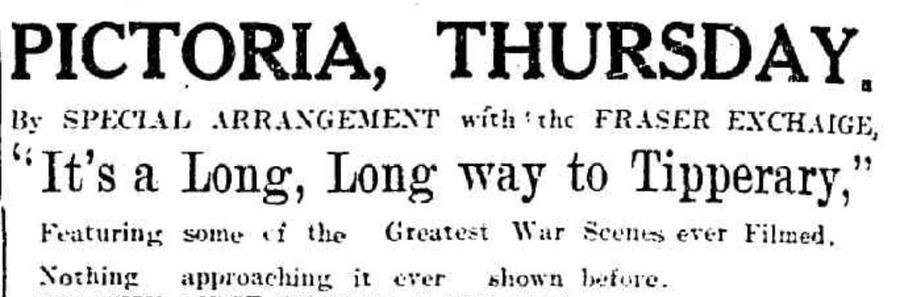
There is a moment—eighteen minutes in, if your print hasn’t warped—when the camera tilts up from a trench ladder and catches a scrap of sky so blue it feels like treason. That cerulean rectangle is the first map coordinate the film grants us that isn’t measured in body-lengths. Everywhere else, distance collapses: the three-day march from Tipperary to the front line is compressed into a jump cut that feels like a bayonet between the ribs. Director-scenarist Adele Inman (also the star, also the ghost who haunts the negative) refuses the audience the comfort of a establishing shot. Instead we tumble, disoriented, into a labyrinth where signposts are written in shrapnel and the only compass is a half-remembered waltz.
Compare this to The Midnight Wedding where space is velvet-draped and logically Euclidean; here, geography is a wound that keeps reopening. The same muddy track serves as a lovers’ lane, a funeral procession, and a military supply road depending on how the smoke drifts. When Inman’s bride—never named beyond “the girl from the County Clare” in the intertitles—tramps through this quagmire, her boots seem to drag entire parishes behind her. Each step is a palimpsest of emigration: the Atlantic in one direction, the Somme in the other, both promising much the same outcome.
Silent-era acting often tilts toward kabuki semaphore; Inman instead weaponizes micro-movement. Watch her left thumb rub the inside of her wedding ring—still there though the spouse is officially “missing” —a twitch that recurs whenever an artillery barrage approaches. By the fifth iteration the gesture has become a Morse code the viewer can read: incoming grief, prepare to duck. Her cheekbones, dusted with talc to mimic trench pallor, catch the guttering candlelight like broken porcelain. Inman knows the camera is a microscope trained on the human soul, and she offers up capillaries for inspection.
This is leagues away from the athletic exuberance of Salomy Jane or the balletic lyricism of Balletdanserinden. Inman’s body is a battlefield upon which historical forces conduct polite genocide. When she finally allows herself a full-throated scream—silent, of course, yet somehow you can hear it—it rips through the celluloid like a shell through a tarpaper billet.
Because the film is mute, every sonic absence becomes a thunderclap. The famous tune—It’s a long long way to Tipperary—is never played diegetically; instead we see only the chapped lips of soldiers mouthing the refrain while a medic sutures a thigh. The spectator becomes an unwilling accompanist, humming inside the skull. This negative-space melody grows more insistent each time a chorus forms, until the absence is louder than any orchestra. Contrast with Atop of the World in Motion, which drowns its imagery in jaunty ragtime; here, silence is a predator that eats the soundtrack alive.
Crucifixes proliferate: carved into rifle stocks, tattooed on forearms, improvised from bandage scissors and twine. Yet the film denies any resurrection narrative. A priest—eyes like bullet holes—administers last rites to a boy who sits up minutes later, only to be shot by a firing squad for “desertion via miracle.” The camera lingers on the boy’s open mouth as if expecting a dove to fly out; instead, mud dribbles in. If The Sign of the Cross flirts with martyrdom as erotic spectacle, Tipperary presents sainthood as unpaid overtime.
Archival notes insist the original release had no stencil-color, yet the monochrome greys ache toward chromatic hallucination. When chlorine gas rolls across the frame, the image seems to turn sickly chartreuse even though the tint is only in your optic nerve. Later, a flare bursts and the screen momentarily feels arterial red, though the print remains slate. This synesthetic trickery positions the viewer as chemical casualty: eyes watering, throat burning, memory tinted by trauma. It’s a sleight-of-hand more unsettling than the hand-painted devils in Mohini Bhasmasur.
Inman the scenarist refuses the binary of home-front versus battle-front. Women dig graves; men knit socks for corpses. A supply clerk performs Hamlet in drag to an audience too lice-ridden to applaud; Ophelia’s bouquet becomes a prop of barbed wire. The bride’s wedding dress—smuggled inside a medical satchel—reappears as a surrender flag, then as a shroud, then as a sail for a raft made of ration crates. Each transformation is filmed in a single unbroken take that feels like a lifetime. Compare the gender play in The Girl from Outback, where cross-dressing is comic relief; here, it is the last life-vest ideology can grab before drowning.
The film loops on itself like a Möbius strip. A watchtower clock shatters; its hands keep spinning, superimposed over later scenes as a ghostly watermark. Calendar pages tear but always show the same date: July 1, 1916, the Somme’s dawn, though the narrative claims to span years. Viewers emerge unsure whether they have watched 90 minutes or an eternity. This temporal sabotage rivals the death-march repetition in The Great Leap: Until Death Do Us Part, yet where that film announces its existential thesis, Tipperary sneaks chronocide in through the sprocket holes.
Traditional narrative would grant the bride a climactic reunion—alive, mutilated, or corpse. Instead the husband evaporates into bureaucratic fog: “Regret to inform you that the status of Private —— remains under review.” The blank space where a name should be becomes the film’s true protagonist. Inman films this absence in negative space: an empty bunk, a dented tin cup, a letter addressed to a cipher. The viewer begins to suspect the husband was never more than a collective hallucination shared by men who needed something to whistle toward. In that sense the film predates the post-war disillusionment of My Official Wife by several blood-soaked years.
A Keystone-esque cook chases a runaway potato downhill, slips, and lands upside-down in a stewpot. Laughter catches in the throat when the camera tilts down to reveal the stew is being served to men whose jaws have been shot away. This is slapstick rendered in cadaverous chiaroscuro, closer to the mortuary absurdity of Keystone Comedies when viewed through the lens of mustard gas. The sequence lasts perhaps forty seconds yet metastasizes across the remainder of the film; every gag thereafter carries the aftertaste of broth and morphine.
Inman never lets the audience forget that filming is an act of scavengery. The camera watches a medic amputate a leg; when the limb drops, the lens tilts to catch the splash, then lingers on the face of the photographer who must decide whether to help or keep cranking. We see the shot being spliced into the finished reel, reminding us that atrocity and entertainment share the same umbilical. This self-reflexivity feels modern, almost essay-film, yet it emerges in 1914, the same year Huo wu chang was still treating the camera as omniscient deity.
Financiers appear only once: three men in bowler hats, inspecting the front as if it were a mining claim. They discuss tonnage of lives versus tonnage of coal, then tip their hats to the bride as she staggers past carrying a stretcher. The moment is brief, but it pins the entire war to a ledger sheet. Viewers of The Banker’s Daughter will recognize the genealogy of capital, yet here the critique is surgical rather than sentimental: a quick incision, no anesthesia, infection guaranteed.
Irish soldiers fight under the Union Jack while Dublin plans insurrection; the film registers this contradiction in stray details—a green flag hidden inside a khaki greatcoat, a sergeant who speaks Gaelic only when counting casualties. The empire’s periphery bleeds at the center. Inman juxtaposes this with glimpses of Indian sepoys and Senegalese tirailleurs, all fodder for the same mincing machine. The mosaic anticipates the global collage of Protea II but with a rawer wound, untreated by later colonial nostalgia.
The word honor appears on an intertitle, superimposed over a corpse whose face has been eaten by rats. The letters wobble, as though even the text is nauseated. Subsequent mentions—spoken by officers, whispered by mothers—carry the same metallic taste. By the time a general delivers a graveside oration about “the honor of the fallen,” the term has become a communicable disease. Inman inoculates the viewer by saturation: say the word until it sheds meaning and reveals the bare teeth beneath. Similar semantic disintegration haunts Ein Ehrenwort, yet that film still clings to redemption; Tipperary lets the infection run until the patient is cold.
The bride stands on a quayside, troopships receding into a fog that might be chemical, might be mere Atlantic weather. She raises her hand—not in farewell but to shield her eyes from a sun we cannot see. The camera holds, holds, holds until the image burns white. Then the footage ends, the reel flaps against the gate, and the viewer realizes the silhouette left behind is their own reflection in the screen’s lingering glow. No closing intertitle, no The End, only the mechanical whirr of your own projector—be it digital or mnemonic—demanding you crank the next frame. In that suspended moment, the film completes its true objective: to ship the war back home, undeclared, unpaid, unending.
Verdict: A pulverizing anti-epic that makes The Lipton Cup look like a tea commercial. Seek any surviving print; if none exists, dream one and be haunted.
IMDb 5.1
1916
Community
Log in to comment.