Summary
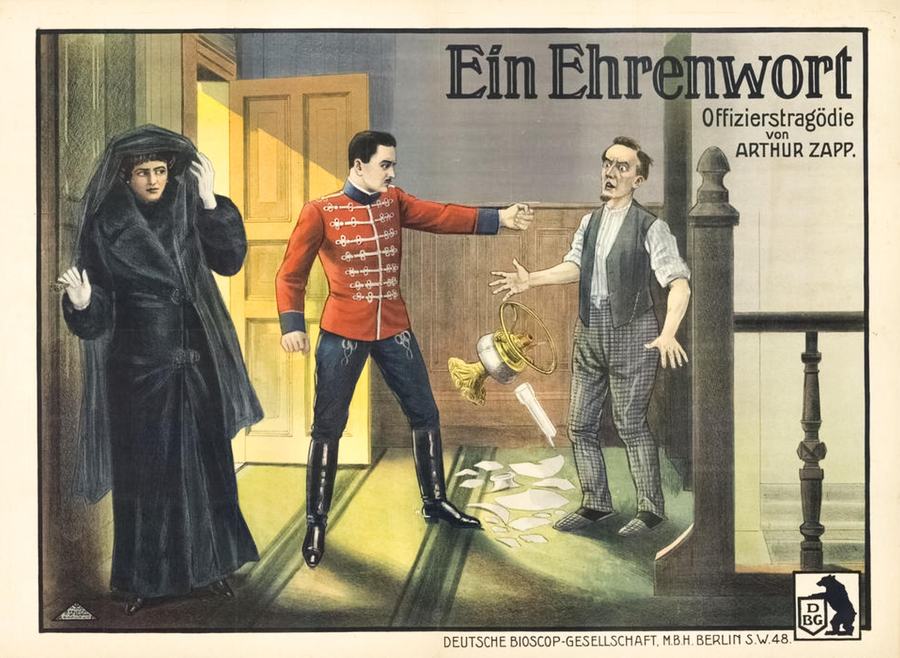
In the somber tapestry of early German cinema, "Ein Ehrenwort" unfurls a compelling narrative of profound personal sacrifice and an unyielding commitment to an oath. The incandescent Henny Porten embodies Elsa, a young woman whose life takes an irreversible turn when her impetuous younger brother, Karl, becomes inadvertently embroiled in a fatal street altercation. Driven by an almost primal devotion and a desperate desire to safeguard Karl's precarious future, Elsa pronounces a solemn 'Ehrenwort' – a word of honor – to shield him from the grave consequences of his actions. This sacred vow compels her to deliberately obfuscate the truth during the subsequent investigation, subtly diverting suspicion towards herself and away from her sibling. The ensuing drama meticulously charts Elsa's agonizing descent into societal ostracism, her once-pristine reputation irrevocably stained by rumor and insinuation. Her fiancé, a man of law and principle, grapples with the gnawing conflict between his unwavering faith in her character and the accumulating weight of circumstantial evidence. Meanwhile, Karl, consumed by a suffocating guilt, repeatedly attempts to confess, only to be silenced by Elsa's resolute adherence to her 'Ehrenwort,' insisting on bearing the crushing burden alone. The film masterfully builds tension through the relentless pursuit of a skeptical inspector and the machinations of a cunning rival, culminating in a poignant revelation where Karl, unable to endure his sister's protracted suffering, finally shatters his silence. Elsa's name is ultimately cleared, yet the narrative refrains from a simplistic triumphant conclusion, instead offering a bittersweet reflection on the indelible scars left by such a profound act of loyalty and the intricate interplay between love, truth, and societal judgment.
Review Excerpt
"
In the nascent years of German cinema, a period often overshadowed by later artistic movements, emerged a film that, even in its fragmented memory, speaks volumes about the era's dramatic sensibilities and the magnetic power of its stars. Ein Ehrenwort, a title steeped in the very essence of its narrative, stands as a testament to the profound emotional depth achievable within the silent medium. At its heart lies the luminous Henny Porten, an actress whose expressive capabilities transcende..."