DbcultAccessing Vault...
Cult Review
Senior Film Conservator
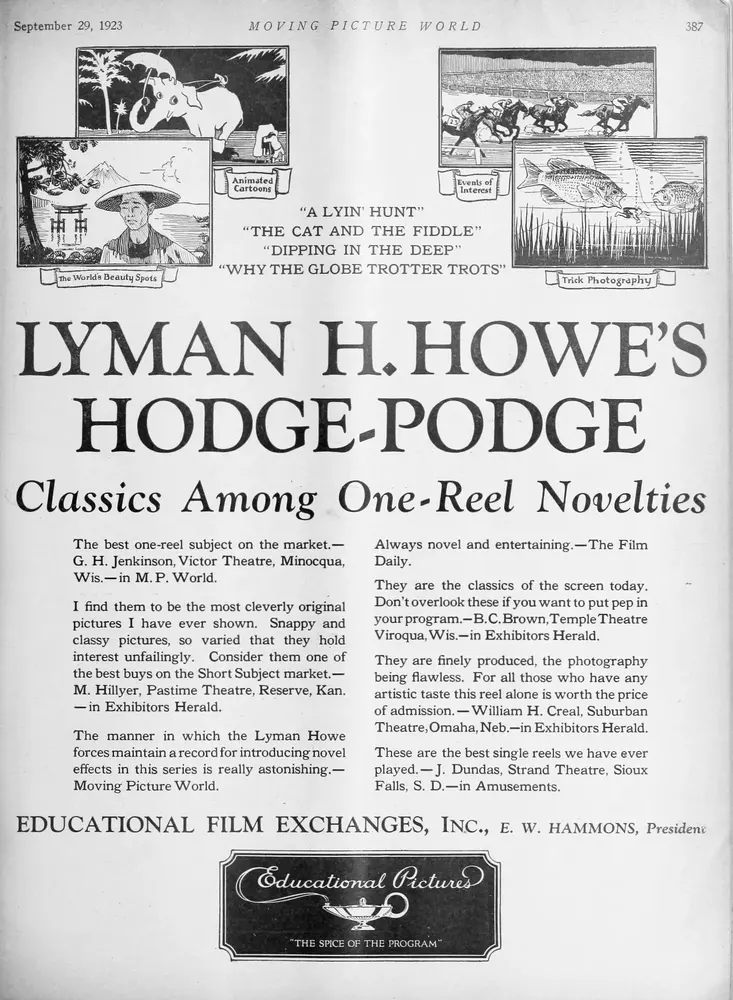
In the pantheon of silent-era short subjects, A Lyin' Hunt stands as a fascinating artifact of 1927, a year that saw the twilight of pure silence and the dawn of synchronized sound. This film, a masterclass in the economy of visual storytelling, navigates the treacherous waters of farcical deception. While contemporary audiences might view the 'jungle comedy' genre through a lens of historical distance, one cannot ignore the sheer kinetic brilliance required to execute such a relentless barrage of physical humor. The film operates on a frequency of pure movement, where the dialogue—relegated to sparse title cards—takes a backseat to the expressive geometry of the human body in distress.
The structural integrity of A Lyin' Hunt relies heavily on the 'escalation principle.' Much like the rhythmic pacing found in Kill or Cure, the narrative doesn't merely present a problem; it compounds it with astronomical fervor. Our protagonist, a man whose reputation is built on the quicksand of hyperbole, finds himself thrust into a wilderness that is as unforgiving as it is artificial. The 'jungle' here is a character in itself—a labyrinth of foliage and hidden traps that mirrors the protagonist's own tangled web of lies. This use of environment as a catalyst for comedic anxiety is a trope we see refined in other works of the era, such as the rustic perils of Jess of the Mountain Country, though here the stakes are traded for laughs rather than melodrama.
The central conceit—a hunter who is anything but—allows for a sophisticated subversion of the heroic myth. In the 1920s, the explorer was a figure of reverence, but A Lyin' Hunt strips away the khaki-clad dignity to reveal a shivering, resourceful coward. This deconstruction is not unlike the social unmasking found in Le secret de Polichinelle, where the tension between public persona and private reality provides the primary engine for the plot. The film excels in the 'near-miss' choreography, a staple of the period that requires millisecond-perfect timing from both the actors and the camera operators.
Visually, the film employs a high-contrast palette that favors the starkness of the outdoor (or simulated outdoor) lighting. The shadows of the 'jungle' are deep and ink-like, providing excellent cover for the various animal-based gags that define the second act. The interaction with the 'wildlife'—often a mix of trained animals and actors in rather obvious costumes—adds a layer of surrealism that borders on the avant-garde. This whimsical approach to zoological danger can be compared to the chaotic energy of Roars and Uproars, another film that understood the inherent hilarity of man’s failed dominion over nature.
The editing in A Lyin' Hunt is surprisingly modern in its brevity. There is a palpable lack of the 'theatrical linger' that plagued many early shorts. Instead, the director opts for rapid-fire cuts that emphasize the protagonist's disorientation. When the 'lion' appears, the camera doesn't just show us the beast; it captures the frantic, wide-eyed terror of the hunter, creating a subjective experience that pulls the viewer into the farce. This subjective camera work was a burgeoning technique at the time, often used to greater dramatic effect in European imports like Der violette Tod, but here it serves the altar of the belly laugh.
At its core, the film is a critique of posturing. The protagonist's 'lies' are not merely for personal gain but are an attempt to conform to a societal expectation of ruggedness. We see similar themes of identity and performance in The Raggedy Queen, where class and appearance dictate the character's journey. However, while A Lyin' Hunt remains firmly in the realm of comedy, there is a subtle undercurrent of pathos. The hunter's desperation to maintain his facade is almost tragic, reflecting the era's obsession with 'manliness' in the wake of global upheaval. This thematic depth elevates it above mere slapstick, placing it in conversation with more serious explorations of social roles, such as those found in Fräulein Julie.
The supporting cast, though often overshadowed by the lead's physical antics, provides the necessary 'straight-man' foil that allows the comedy to land. The skepticism of the onlookers acts as a surrogate for the audience, grounding the absurdity in a recognizable social reality. This dynamic is essential for farce; without a baseline of normalcy, the deviations into madness lose their impact. We see this balance expertly maintained in international comedies of the time, such as the Turkish production Leblebici Horhor, which also utilized broad character archetypes to navigate complex social situations.
Technically, A Lyin' Hunt demonstrates the peak of silent film craftsmanship. By 1927, filmmakers had mastered the art of visual shorthand. They no longer needed to explain every motivation; a raised eyebrow or a frantic dash across the frame sufficed. The use of depth in the frame—placing threats in the background while the protagonist remains oblivious in the foreground—shows a sophisticated understanding of spatial storytelling. This technique was also being used to build suspense in mystery films like Das verschwundene Haus, proving that the language of cinema was becoming universal across genres.
Furthermore, the film's pacing is a testament to the rigorous standards of the 1920s studio system. Every frame is utilized; there is no 'fat' on this narrative. The transition from the setup to the confrontation is seamless, avoiding the clunky exposition that often marred earlier attempts at long-form comedy. When compared to the more languid pacing of a drama like The Broken Gate, the sheer velocity of A Lyin' Hunt is breath-taking. It is a film designed to be consumed in a communal setting, where the laughter of the crowd feeds back into the energy of the screening.
When we look back at the legacy of such shorts, we must acknowledge their influence on the subsequent 'talkie' comedies. The physical language established here became the foundation for the legends of the 1930s. The 'hunt' motif itself would be revisited countless times, but rarely with the same earnestness of artifice found here. The film shares a certain DNA with The Wood Nymph in its use of the 'natural' world as a stage for human folly, though it lacks the ethereal qualities of the latter, preferring instead the grit and sweat of the chase.
Interestingly, the film also touches upon the concept of the 'wanted' individual—not by the law, but by the expectations of his peers. This 'social fugitive' status is a lighter version of the themes explored in Wanted at Headquarters, where the pressure of external forces drives the character to extreme measures. In A Lyin' Hunt, the extreme measure is simply trying to survive a day in the woods without being eaten or exposed as a fraud.
The film's aesthetic, while constrained by the technology of its time, possesses a clarity that is often missing from modern digital comedies. There is a tangible weight to the props, a realness to the dust kicked up during a chase, and a genuine sense of peril in the stunts. This tactile quality is something it shares with other visual-heavy films like Carmen or the atmospheric The Lady of the Photograph. It reminds us that cinema, at its heart, is the art of capturing light and movement to evoke an emotional response—in this case, the joyous release of laughter.
In conclusion, A Lyin' Hunt is more than just a relic of a bygone era; it is a vibrant, pulse-pounding example of how comedy can serve as a mirror to our own insecurities. It takes the grand myths of the early 20th century and reduces them to a series of pratfalls, reminding us that the greatest 'hunt' is often the one we conduct against our own hubris. Whether it's the protagonist dodging a literal lion or metaphorically dodging the truth, the film captures the universal human experience of being 'out of one's depth.'
For those interested in the evolution of the genre, comparing this to the gritty realism of Die Schmuggler von San Diego offers a stark contrast in how 1920s filmmakers handled the concept of 'adventure.' One seeks to thrill through danger, while the other—our subject—seeks to thrill through the mockery of that very same danger. A Lyin' Hunt remains a quintessential piece of silent cinema, a loud and boisterous shout from a world that had not yet found its voice, but had certainly found its funny bone.
IMDb 6.2
1923
Community
Log in to comment.