DbcultAccessing Vault...
Cult Review
Senior Film Conservator
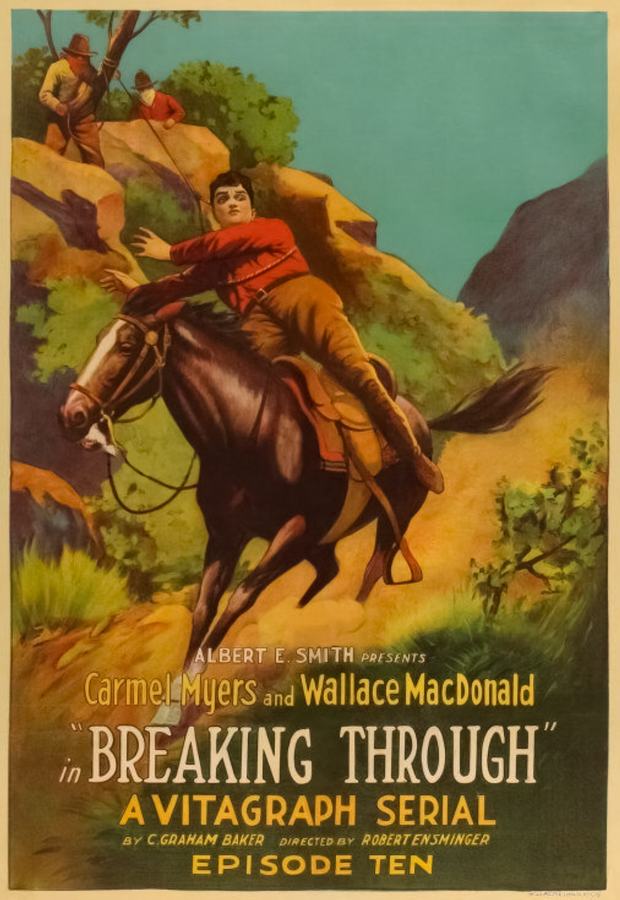
In the pantheon of early twentieth-century cinema, few locales offered as much raw, unadulterated conflict as the Alaskan frontier. Breaking Through (1921) is not merely a film; it is a cinematic testament to the era of expansion, a time when the geography itself was considered a character to be conquered. Unlike the more domestic melodramas of its time, such as His Youthful Fancy, this production leans into the jagged edges of survival. The plot, penned with a sharp eye for tension by C. Graham Baker, centers on a high-stakes race against the calendar. Our heroine, portrayed with a resolute dignity by Carmel Myers, finds her entire future tethered to a single track of steel. If the railway from her mine to the coast is not completed within a rigid timeframe, she loses everything. It is a premise that transforms logistics into high drama, making the act of track-laying feel as perilous as any gunfight.
The visual language of the film is one of stark contrasts. The white expanse of the Alaskan snow acts as a blank slate upon which the black soot of progress is smeared. The direction manages to capture the sheer scale of the undertaking. When we compare this to the intimate, often claustrophobic tension found in The She Wolf, we see a shift toward the epic. Breaking Through utilizes the wide frame to emphasize the loneliness of the endeavor. The engineer, played by Wallace MacDonald, isn't just a romantic lead; he is the embodiment of the era's faith in technocracy. He represents the belief that with enough ingenuity and grit, the very bones of the earth can be reshaped to serve human necessity.
Wallace MacDonald brings a specific brand of rugged capability to the role of the engineer. His performance lacks the performative dandyism often seen in silent leads, opting instead for a grounded, physical presence. He moves with the weight of a man who understands the structural integrity of a bridge and the volatility of dynamite. Opposite him, Carmel Myers provides the emotional heartbeat of the film. While the script could have easily relegated her to the role of the 'damsel in distress,' Myers imbues the character with a palpable sense of ownership. This isn't just property she is fighting for; it is her legacy. Her performance echoes the nuanced desperation found in Shoes, though transposed from urban poverty to frontier stakes.
The supporting cast, featuring stalwarts like Martha Mattox and William McCall, creates a textured world. There is a sense of a community built on the edge of the world, where every hand is needed and every failure is catastrophic. The antagonism in the film is not always found in a singular villain, but in the environment itself and the legal machinations that seek to exploit the heroine's precarious position. This thematic depth elevates the film beyond a simple 'Western' and into the realm of an industrial thriller, a precursor to the corporate-stakes dramas we see in modern cinema.
What strikes the modern viewer most is the pacing. C. Graham Baker understood that the 'race against time' is the most effective engine for narrative momentum. Every scene feels like a brick being laid in a larger structure. We see the physical toll of the work—the freezing conditions, the mechanical failures, the sabotage. This focus on the process of labor is something that silent cinema did exceptionally well, often better than the talkies that followed. In films like The Right of Way, we see moral redemption through action, and Breaking Through follows this trajectory. The completion of the track is not just an economic victory; it is a moral one.
The cinematography, though limited by the technology of 1921, is surprisingly inventive. The use of natural light in the Alaskan exteriors provides a documentary-like quality to the proceedings. There is a sequence involving a bridge crossing that rivals the tension found in much later action cinema. The camera lingers on the precariousness of the structure, making the viewer feel the vibration of the locomotive as it tests the limits of the engineer's calculations. It is this commitment to the physical reality of the setting that prevents the film from feeling like a mere stage play captured on celluloid.
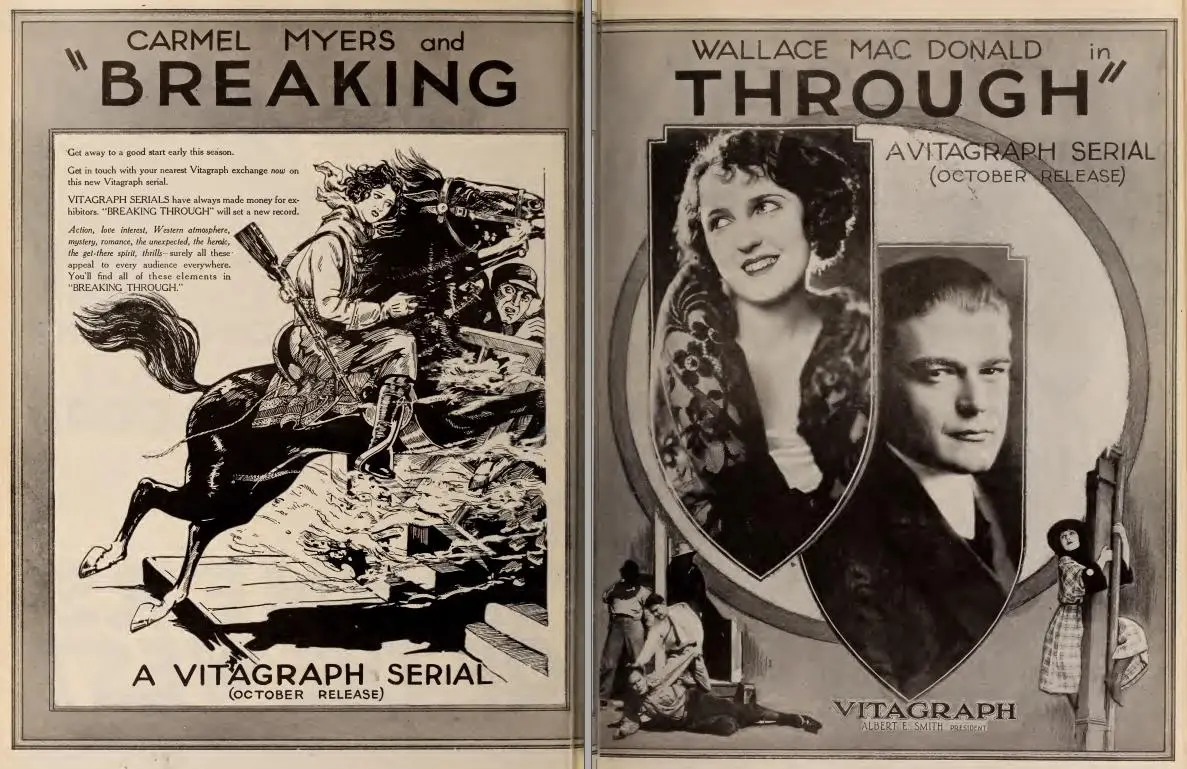
Beyond the immediate thrills, Breaking Through touches on the anxiety of the early 20th century regarding land rights and the encroachment of corporate interests. The heroine's struggle is emblematic of the small landholder fighting against the encroaching tide of larger, more anonymous forces. This theme is a recurring motif in the era, seen in different guises in films like The Co-respondent or even the social critiques of Anna Karenina. In the frozen North, these conflicts are stripped of their polite societal veneers and reduced to their most basic elements: who has the steel, and who has the time?
The film also negotiates the gender dynamics of the frontier with a surprising amount of nuance. While the engineer is the 'fixer,' the heroine is the 'driver.' She is the one who initiates the fight and maintains the vision. This partnership, born of necessity rather than mere romantic whimsy, provides a refreshing backbone to the story. It avoids the sentimental trappings of Hearts Are Trumps, opting instead for a relationship forged in the crucible of shared labor and common enemies.
As we look back at Breaking Through from a century's distance, its power remains in its sincerity. It does not wink at the audience or rely on the hyperbolic artifice that sometimes plagues the silent era, such as the more eccentric stylings of The Monster of Frankenstein. It is a work of meat and potatoes filmmaking—sturdy, reliable, and deeply satisfying. The film understands that the human spirit is best revealed when it is pushed to the breaking point, much like the steam engines it depicts.
The technical aspects of the restoration (where available) highlight the depth of the blacks and the brilliance of the whites, creating a visual rhythm that mirrors the 'chug-chug' of the train. The editing is crisp, moving the viewer from the quiet desperation of the heroine's cabin to the thunderous activity of the railhead with seamless grace. It avoids the disjointed nature of some contemporary serials like Jungle Jumble, maintaining a singular, driving focus on its objective.
To watch Breaking Through is to witness the birth of the modern action-adventure genre. It contains all the DNA of the blockbusters that would follow decades later: the ticking clock, the technical expert, the high stakes, and the triumph of the individual against the elements. It is a film that deserves a place in the conversation alongside more well-known classics. While it may not have the avant-garde aspirations of L'autobus della morte, it possesses a narrative clarity that is often missing from more 'artistic' endeavors of the period.
Ultimately, the film succeeds because it treats its subject matter with respect. It doesn't treat Alaska as a mere backdrop, but as a formidable opponent. It doesn't treat the engineering as a plot device, but as a miracle of the modern age. In the end, when the track is finally laid and the train rolls through, the sense of catharsis is genuine. We have been through the cold, we have felt the exhaustion, and we have seen the breakthrough. It is a quintessential piece of American cinema that reminds us that progress is never free—it is paid for in iron, time, and the unwavering will of those who refuse to be broken by the frost.
Note: For those interested in other explorations of female agency in the early 20th century, consider viewing Should a Woman Tell? or the social comedies like The Perfect Thirty-Six, though neither captures the sheer physical peril of the Alaskan wild quite like this MacDonald and Myers vehicle.
IMDb —
1915
Community
Log in to comment.