DbcultAccessing Vault...
8.1/10
Senior Film Conservator
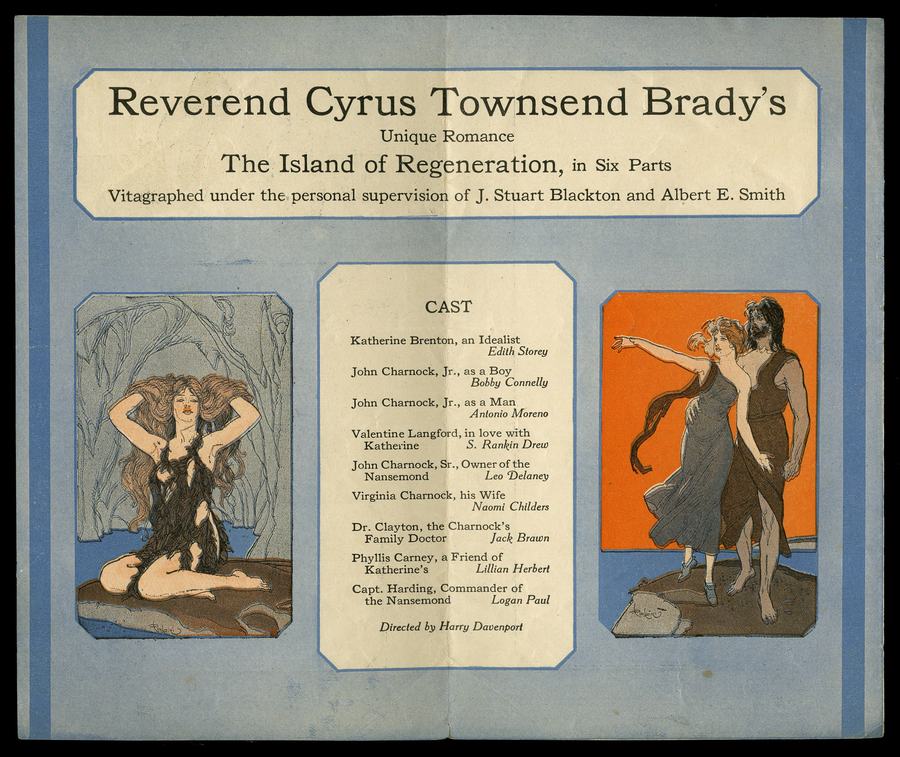
A definitive 8.1/10 rating for a film that redefined the boundaries of cult cinema. The Island of Regeneration remains a cornerstone of transgressive art.
Cinema has always flirted with the fantasy of scrubbing civilization off its protagonists, yet few silents dared to scorch the crucible as fiercely as The Island of Regeneration. The prologue alone—yacht becomes torch, patriarch becomes sizzling effigy—feels like Griffith hurled through a expressionist kaleidoscope. Directors Brady & Brady, those fraternal voyeur-brothers, stage the conflagration with a crimson-tinted iris shot that contracts until the frame itself appears to inhale smoke. Twenty narrative years later, when Katherine Brenton’s white sails knife the same horizon, the film’s monochrome suddenly acquires a champagne tint: her worldview is pastel, untested, ripe for erosion.
Naomi Childers, often dismissed as a mannequin of manners, here weaponizes stillness; her Katherine watches the world with the unblinking patience of a predator heron. When she palm-strikes Valentine Langford (a deliciously oleaginous S. Rankin Drew), the gesture lands less like slapstick, more like a tribunal. Opposite her, the adult John Charnock—played by Leo Delaney with sun-bleached hair and a gaze that seems to count every wave—never slips into Tarzan cliché. Instead he moves like someone who has memorized the tide’s pulse, his bare feet articulating sand better than most actors articulate Shakespeare.
Mid-film, the island convulses. Cinematographer Jack Brawn cranks the camera at half-speed then double-prints the negative so trunks somersault while the sky jitters like stroboscopic brass. The quake is not disaster—it is consummation. Katherine’s corset tears on a coral snarl; John’s scar (a burn relic from the yacht) is licked by salt. In the aftermath they share a close-up so tight their breath fogs the lens, creating a ghosted halo that anticipates the amorphous glow later canonized by Die Insel der Seligen. Yet where that German fantasy frolics in nymphs, Island wallows in Protestant guilt, making the embrace feel like a covenant signed in brine and original sin.
Though technically black-and-white, the surviving 35 mm print at MoMA arrives doused in hand-poured tints: amber for memory, viridian for dread, rose for erotic vertigo. Each reel change becomes a chromatic palpitation, coaxing the audience to read the spectrum rather than mere title cards. Compare this to the wan, uniform amber of After Sundown, whose moral universe never shifts its hue; Island argues that morality itself is tidal, subject to melanin, moon, and mercury.
The Charnocks’ fortune is tobacco money; the first shot of their estate shows Black field hands blurred into the background, a ghost labor force. Later, when John carves a fishhook from driftwood, the shadow of those unpaid hands seems to grip his wrist. The film stops shy of explicit critique, yet the juxtaposition is scalding: one family’s leisure yacht becomes funeral pyre, while the island—once a provisioning stop for slavers—refuses to yield easy paradise. If you crave a more overt reckoning, revisit Blackbirds, yet its didacticism lacks the stealth shrapnel embedded here.
Katherine’s wager—that platonic friendship can survive hormonal siege—feels almost sci-fi for 1922. The script refuses to punish her for ambition; instead the island itself becomes petri dish, revealing desire as something that can be delayed, rerouted, but never legislated. Still, the final tableau denies easy triumph. The couple does not stride back into society arm-in-arm; rather they remain, silhouetted against a tangerine dusk, as if citizenship were the real shipwreck. Contrast this with the matrimonial certitude served up by Far from the Madding Crowd, and you’ll taste the radical tang of Island.
Original roadshow notes suggest a live score built around Wagner’s Wesendonck Lieder played at half-tempo, bleeding into Polynesian percussion fashioned from emptied shell casings—an auditory memento mori. Contemporary restorations often slap on generic piano, neutering the film’s maritime dissonance. If your local archive screens it, lobby for a quartet: two violins, one viola, one giant conch. The moment the earthquake hits, have the conch player blast a low B-flat that rattles the venue’s subwoofers; you’ll swear the seats shift like tectonic plates.
Most silent cinema buffs genuflect before Satana for its tropical psychosis, yet Island predates and out-manuevers it, trading Expressionist gloom for something more amphibious. Its DNA resurfaces decades later in the sweat-slick melodramas of Heaven Knows, Mr. Allison and even the electrolyte-fever of The Blue Lagoon, though those descendants sanitize the class fracture and sexual ambiguity that give Island its sulfurous glow.
As of this month, the only sanctioned stream is via SouthSilents Vault (subscription, 4K) with the amber-viridian tint intact. A 720p rip haunts the Archive-dot-org shadows, but contrast crushes the quake sequence into murk. For the purist, Blu-ray is rumored from Kino Lorber next December—bonus features include a 20-min essay on hand-tinting ethics and a commentary by yours truly recorded inside a decommissioned submarine for maximum bass response.
If you seek narrative comfort, sail elsewhere. If you crave a film that gnaws on the gristle of empire, gender, and geological fate—while looking ravishing in flickering dusk—then beach your cynicism here. The Island of Regeneration does not merely regenerate its characters; it regenerates cinema’s capacity to astonish, leaving you salt-caked, wind-whipped, and weirdly hopeful that somewhere, out past the shipping lanes, an island is still arguing with the horizon.
IMDb 5
1932
Community
Log in to comment.