DbcultAccessing Vault...
Cult Review
Senior Film Conservator
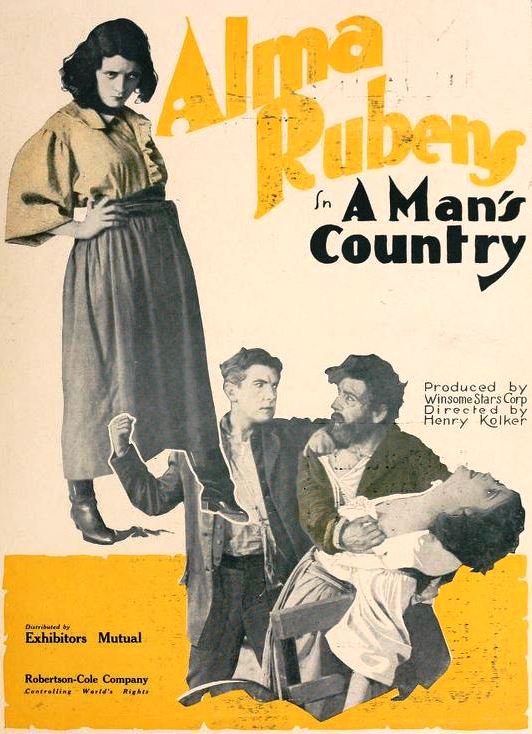
Ah, the silent era! A time when narratives unfolded through the eloquent dance of shadows and light, where a flicker of an eye could convey volumes and grand emotions were writ large across the screen. Stepping back into this cinematic epoch, we encounter 'A Man's Country', a 1919 drama that, despite its age, resonates with timeless themes of morality, redemption, and the raw, unvarnished human spirit. Directed with a keen eye for the dramatic by Henry Kolker (uncredited here, but his touch is palpable), and penned by the formidable duo of John Lynch and Richard Schayer, this film plunges us headfirst into the boisterous, often lawless, world of Huxley's Gulch, a gold-mining camp where life is cheap and entertainment, particularly of the dance-hall variety, is paramount.
At the heart of this rollicking frontier settlement is Kate Carewe, portrayed with captivating vivacity by Joy Winthrop. Kate is not merely a dance-hall queen; she is the gravitational center of Huxley's Gulch, a woman of formidable presence whose allure and independence command respect, even if it's grudgingly given by some. Winthrop imbues Kate with a certain magnetic defiance, a woman who has carved out her own niche in a 'man's country' through sheer force of will and a pragmatic understanding of her environment. Her performance is a masterclass in silent film acting, conveying a spectrum of emotions from playful flirtation to simmering resentment with subtle gestures and expressive eyes.
The equilibrium of Huxley's Gulch is dramatically disrupted by the arrival of Ralph Bowen, a minister with a singular, unyielding objective: to cleanse the town of its perceived moral decay. Played by Alfred Hollingsworth, Bowen represents the rigid, often judgmental, morality of established society, a stark contrast to the rough-and-tumble ethics of the gold camp. His condemnation of the miners, gamblers, and particularly the 'loose women' of the place, immediately sets him at odds with the community. Kate, naturally, becomes his primary target, his labeling of her as a 'scarlet woman' igniting a personal animosity that fuels much of the film's early dramatic tension. Hollingsworth skillfully portrays Bowen's initial self-righteousness, allowing the audience to feel the palpable disdain he evokes from the townspeople.
This ideological clash forms the narrative backbone, exploring the perennial conflict between strict moral codes and the nuanced realities of human existence. It's a thematic thread found in many frontier narratives, where civilization's rules often bend or break under the pressure of survival and individual freedom. The film doesn't shy away from depicting the hypocrisy inherent in some of Bowen's early pronouncements, nor does it fully condemn the pragmatic, albeit unconventional, lifestyle of the Gulch's inhabitants. This nuanced approach elevates 'A Man's Country' beyond a simple morality play.
The true genius of the screenplay by Lynch and Schayer reveals itself when a devastating plague sweeps through Huxley's Gulch. This cataclysmic event serves as a powerful narrative device, stripping away social facades and exposing the raw, unvarnished truth of human character. In a chilling display of self-preservation, many of the townspeople, including those who once championed their own brand of 'freedom,' abandon the sick and flee to the perceived safety of the hills. This exodus of fear leaves the afflicted to their fate, a stark commentary on the fragility of community when faced with existential threat.
It is in this crucible of crisis that Kate and Ralph, the film's antagonists, find their unexpected common ground. Despite their fervent disagreements and mutual disdain, they are the only ones who choose to remain, tending to the sick and dying. This shared act of selfless compassion becomes the catalyst for their transformation. The minister, stripped of his congregation and the moral high ground, is forced to confront the practical realities of suffering, while the 'scarlet woman' reveals a depth of empathy and courage that transcends societal labels. This shift is beautifully portrayed, with Winthrop and Hollingsworth conveying the gradual erosion of their prejudices through subtle, yet profound, changes in their interactions and expressions. It's a powerful reminder that true character is often revealed not in times of prosperity, but in adversity.
While Winthrop and Hollingsworth carry the central narrative with compelling performances, the supporting cast adds vital texture to the frontier tableau. Alan Roscoe, Alma Rubens, Phil Gastrock, Edna Mae Wilson, and Joseph J. Dowling all contribute to the vibrant, chaotic energy of Huxley's Gulch, creating a believable community that reacts authentically to the unfolding drama. Their collective portrayals of miners, gamblers, and other 'loose women' provide the necessary backdrop against which Kate and Ralph's transformation takes on greater significance.
Perhaps the most intriguing name in the supporting cast list, however, is Lon Chaney. Though his role in 'A Man's Country' might not be as prominent or as physically transformative as some of his later, more iconic performances in films like 'The Hunchback of Notre Dame' or 'The Phantom of the Opera,' his presence alone adds a certain weight and gravitas. Even in a smaller capacity, Chaney possessed an unparalleled ability to convey complex emotional states with a haunting intensity. His inclusion here, even if brief, serves as a fascinating glimpse into his early career, hinting at the depths of character he would later bring to the screen. It reminds us that even before he became 'The Man of a Thousand Faces,' Chaney was a formidable dramatic actor, capable of making any role, no matter how minor, memorable.
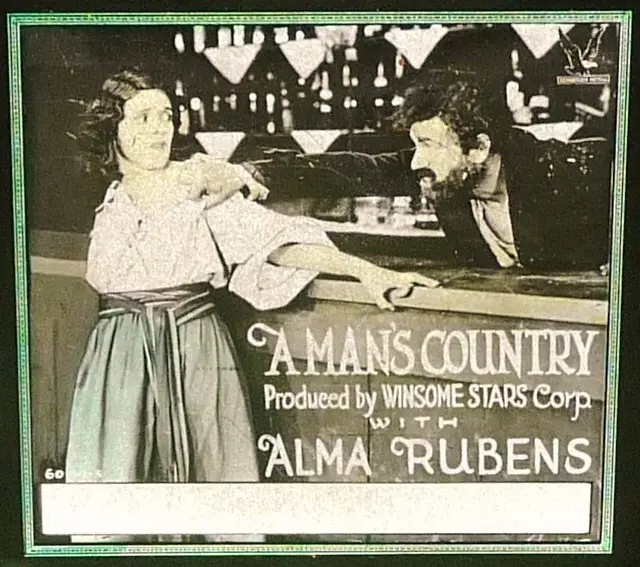
The core thematic exploration of 'A Man's Country' lies in its nuanced portrayal of redemption. It's not merely about a 'fallen woman' being saved by a 'righteous man,' but rather a mutual journey of self-discovery and a re-evaluation of preconceived notions. Both Kate and Ralph, in their own ways, are redeemed—Kate by demonstrating her inherent goodness and courage despite societal condemnation, and Ralph by shedding his rigid dogmatism in favor of practical compassion. This dual redemption arc is particularly effective, suggesting that true morality is found in action rather than judgment.
Released in 1919, 'A Man's Country' sits at a fascinating juncture in cinematic history, just before the full bloom of the Roaring Twenties and the burgeoning sophistication of narrative filmmaking. It exemplifies the era's capacity for powerful storytelling through visual means, relying heavily on strong characterizations and dramatic situations rather than complex dialogue or intricate plots. The film's depiction of the American frontier, with its blend of rugged individualism and communal hardship, is a recurring motif in early American cinema, echoing sentiments seen in other contemporary works that explored the challenges and allure of the wild West. The raw, often brutal, environment of Huxley's Gulch, much like the untamed landscapes in films such as Wild Youth, serves as more than just a backdrop; it is an active participant in the characters' transformations, shaping their choices and revealing their true selves.
While perhaps not as widely remembered as some of its more famous contemporaries, 'A Man's Country' holds its own as a compelling piece of silent cinema. Its narrative structure, while straightforward, is effective in building tension and delivering a satisfying emotional payoff. The transformation of Kate and Ralph from adversaries to allies, bound by shared humanity, is genuinely moving. It speaks to the universal truth that compassion and empathy can bridge even the most profound divides, a message that remains perennially relevant. The film's ability to engage with complex moral questions without becoming preachy is a testament to the skill of its writers and performers. It forces us to question our own judgments and consider the circumstances that shape individuals, rather than simply labeling them.
In conclusion, 'A Man's Country' is more than just a historical curiosity; it is a robust drama that offers a penetrating look at human nature under duress. Joy Winthrop's portrayal of Kate Carewe is a standout, embodying the spirit of a woman who defies easy categorization, while Alfred Hollingsworth's Ralph Bowen undergoes a credible and impactful transformation. The film's ability to use a dire situation to forge understanding between disparate characters is a powerful narrative choice, making it a film worth seeking out for enthusiasts of early cinema and anyone interested in the enduring power of redemption stories. It's a testament to the fact that even in the most rugged and unrefined environments, the noblest aspects of the human spirit can shine brightest.

IMDb 6.9
1929
Community
Log in to comment.