DbcultAccessing Vault...
7.3/10
Senior Film Conservator
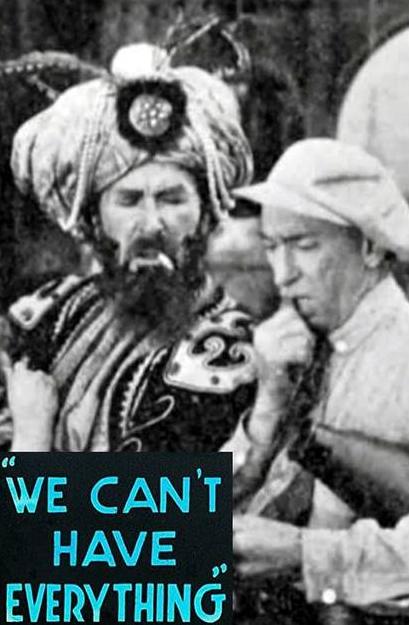
A definitive 7.3/10 rating for a film that redefined the boundaries of cult cinema. We Can't Have Everything remains a cornerstone of transgressive art.
The cinematic tapestry of 'We Can't Have Everything,' a poignant offering from the early 20th century, plunges audiences into the tumultuous waters of marital discontent, where the currents of desire pull two souls in disparate, yet equally forbidden, directions. It's a film that, even a century after its release, resonates with an almost uncomfortable familiarity, dissecting the intricate anatomy of a relationship's decay not through overt melodrama, but through the quiet, insidious creep of mutual yearning for something beyond the matrimonial bond. Rupert Hughes and William C. de Mille, the architects of this narrative, craft a story that is less about the scandalous nature of infidelity and more about the existential quandary of human happiness, a pursuit often at odds with the strictures of societal expectation and established commitment.
At its core, 'We Can't Have Everything' presents a deceptively simple premise: a married couple, both separately enamored with others, seeks to dissolve their union. Yet, the brilliance of the film lies in its masterful illustration of how such a seemingly straightforward disentanglement can rapidly metamorphose into a Gordian knot of escalating complications. Every attempt to sever a tie, to untangle one thread of their shared existence, seems only to tighten another, drawing them deeper into a web of unforeseen consequences. This narrative structure, akin to a tragicomic spiral, forces a contemplation on the nature of freedom and the elusive concept of 'having it all.'
Kathlyn Williams, as the wife, delivers a performance imbued with a quiet desperation, her eyes often betraying a longing that her words dare not articulate. Her portrayal is not one of a villainess, but of a woman trapped, yearning for a different life, a different love. Her counterpart, Elliott Dexter, as the husband, mirrors this internal conflict with equal aplomb, showcasing a man wrestling with duty and desire. Their performances are particularly compelling given the era's acting conventions, where nuanced emotional expression often took a backseat to broader gestures. Here, Williams and Dexter manage to convey a profound sense of internal struggle, making their characters deeply empathetic despite their morally ambiguous desires.
The film's strength is further bolstered by the supporting cast, each member contributing a vital thread to the narrative's intricate weave. Wanda Hawley and Tully Marshall, as the objects of the protagonists' affections, are not mere plot devices but fully realized characters whose presence complicates and challenges the main couple's quest for liberation. Marshall, in particular, brings a certain gravitas to his role, embodying the societal pressures and ethical dilemmas inherent in such a situation. Theodore Roberts, with his commanding presence, often serves as a moral compass or an obstacle, his interactions with the main characters highlighting the external judgments and societal ramifications of their choices. The film skillfully uses these peripheral figures not just to advance the plot, but to deepen the thematic exploration of love, loyalty, and the pursuit of happiness.
One cannot help but draw parallels to other cinematic explorations of personal freedom versus societal constraint. Much like in 'Das Recht aufs Dasein' (The Right to Exist), where individuals grapple with their fundamental right to forge their own path, 'We Can't Have Everything' delves into the very essence of self-determination within the confines of established relationships. Both films, though from different cultural contexts, probe the uncomfortable truth that personal fulfillment often demands a confrontation with existing norms and expectations. Similarly, the complex moral landscape traversed by the characters here echoes the ethical dilemmas presented in 'The Broken Law', where the boundaries of legality and morality blur under the weight of human need and desire.
The direction by William C. de Mille, under the watchful eye of writer Rupert Hughes, masterfully navigates the emotional labyrinth without resorting to overt sensationalism. The pacing is deliberate, allowing the audience to fully absorb the weight of each decision, each revelation. There's a subtle visual language at play, too, where the framing and mise-en-scène often reflect the characters' internal states – the feeling of being trapped, the fleeting moments of hope, and the inevitable return to complication. The film's aesthetic, while constrained by the technology of its time, effectively communicates the claustrophobia of a loveless marriage and the tantalizing, yet elusive, promise of new beginnings.
The film's title itself, 'We Can't Have Everything', serves as a profound philosophical statement, a stark reminder of life's inherent trade-offs. It challenges the romantic ideal that one can achieve perfect happiness without sacrifice, suggesting instead that every choice, especially in matters of the heart, comes with an accompanying relinquishment. This is a theme that recurs in many human dramas, but here it is explored with a particular poignancy, as the characters repeatedly discover that untangling one knot only seems to tighten another, creating a more intricate and suffocating web. The pursuit of 'everything' becomes a Sisyphean task, each step forward met with a corresponding regression into deeper complexity.
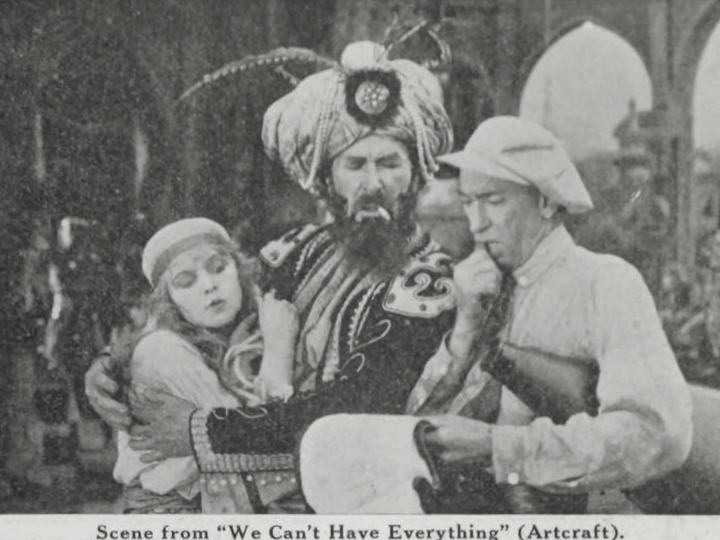
Consider the subtle yet powerful portrayal of societal pressure. Characters like Raymond Hatton and Charles Ogle, though perhaps not central, contribute to the atmospheric sense of a community observing, judging, and influencing the main characters' choices. Their reactions, whether overt or implied, highlight the era's rigid social codes and the profound impact they had on individual autonomy, particularly in matters of marriage and divorce. This external gaze adds another layer of complexity to the protagonists' already convoluted quest for personal contentment.
The screenplay, penned by Hughes and de Mille, is remarkably articulate for its period, relying on strong character development and intricate plotting rather than mere spectacle. It avoids easy answers, instead opting for a more truthful, if at times disheartening, portrayal of human relationships. The dialogue, though sparse by modern standards, is impactful, each intertitle carrying significant emotional weight. The film implicitly asks: what is the true cost of happiness? And is it ever truly attainable if it comes at the expense of others, or indeed, at the expense of one's own peace of mind?
The film's exploration of entanglement is not merely metaphorical; it manifests in the practicalities of divorce, property, and reputation. What begins as a relatively simple desire for separation quickly becomes bogged down in legalities and social consequences, each new development adding another layer of confusion. This escalating complexity is where the film truly shines, demonstrating how human intentions, no matter how pure or justified, can be corrupted and twisted by external factors and the sheer inertia of existing commitments. The film's message, that the path to liberation is rarely straight or unencumbered, resonates powerfully.
In an era where films like 'If My Country Should Call' focused on grander, nationalistic themes, 'We Can't Have Everything' bravely turned its lens inward, examining the personal, often messy, landscape of domestic life. It dared to suggest that the greatest battles are often fought not on battlefields, but within the confines of one's own heart and home. This introspective quality sets it apart, allowing it to transcend its period and speak to universal human experiences. The film's quiet rebellion against the superficiality of happiness is a testament to its enduring relevance.
The emotional landscape of the film is rich and varied, oscillating between fleeting moments of joy and pervasive undertones of melancholy. Sylvia Breamer and Sylvia Ashton, in their roles, further illustrate the societal fabric within which these characters operate, their interactions providing glimpses into the broader world that judges and defines the protagonists' actions. Thurston Hall and James Neill also contribute to this intricate ensemble, ensuring that the world of 'We Can't Have Everything' feels lived-in and authentic, populated by individuals with their own stakes and perspectives.
Ultimately, 'We Can't Have Everything' is a masterclass in psychological drama, a film that understands the inherent contradictions of the human heart. It does not offer easy resolutions or neat conclusions, mirroring the messy reality of life itself. Instead, it leaves the viewer pondering the elusive nature of contentment and the constant negotiation between individual desire and collective responsibility. It's a film that demands reflection, challenging us to consider the true cost of our choices and the undeniable truth that, in the grand tapestry of life, sometimes, we simply can't have everything.
Its legacy lies not just in its engaging narrative, but in its bold exploration of themes that remain perennially relevant. The struggle to reconcile personal happiness with the expectations of society, the intricate dance of love and commitment, and the ever-present shadow of compromise – these are the indelible marks left by 'We Can't Have Everything.' It's a film that, much like a complex piece of literature, invites re-watching and re-interpretation, each viewing revealing new layers of meaning and reinforcing its status as a significant, albeit often overlooked, cinematic achievement.
In its quiet intensity, 'We Can't Have Everything' reminds us that the pursuit of an idyllic existence is often fraught with unexpected turns and profound sacrifices. The film is a testament to the enduring power of human drama, proving that even without grand special effects or sweeping historical backdrops, a story focused on the intricacies of the human heart can leave an indelible impression. It is a cinematic experience that prompts introspection, urging us to question the very definition of fulfillment in a world where choices are rarely simple, and consequences are almost always far-reaching. The film's narrative, a testament to the masterful storytelling of its creators, continues to resonate, demonstrating that the profound dilemmas of love and commitment are truly timeless, transcending the eras in which they are depicted.
IMDb 6.4
1923
Community
Log in to comment.