DbcultAccessing Vault...
Cult Review
Senior Film Conservator
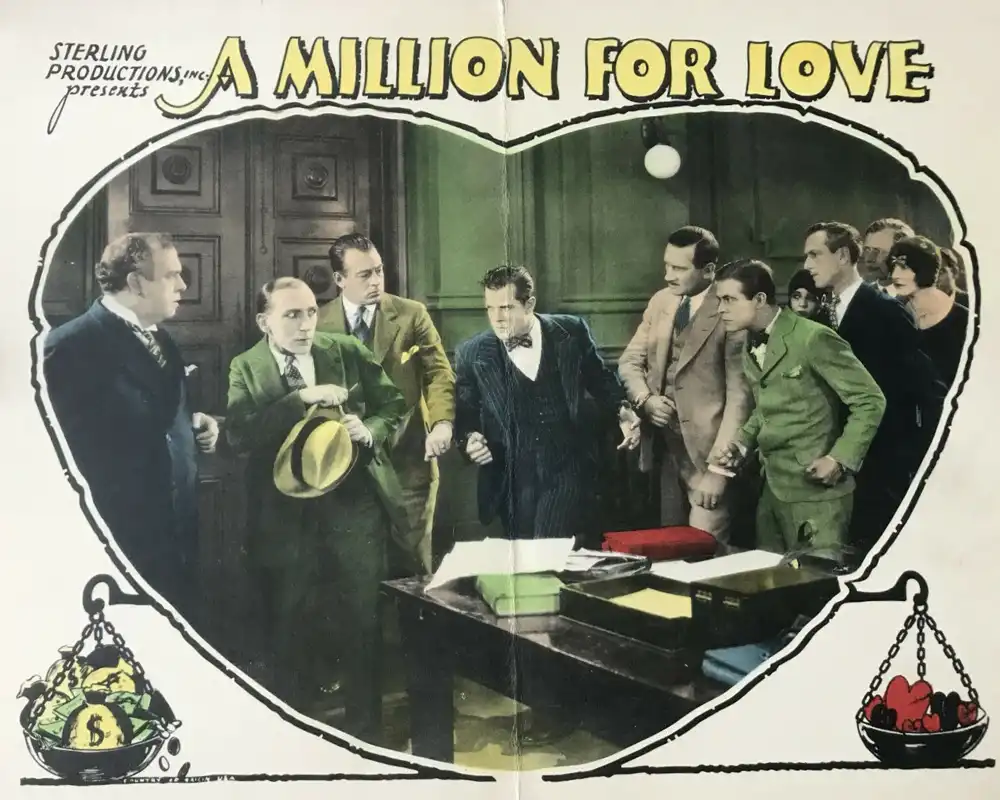
If you have a high tolerance for the specific kind of melodrama that only existed in the final years of the silent era, A Million for Love is worth a look. It’s not a masterpiece. It’s not even particularly memorable once the credits roll, but it’s a great example of a 'middle-of-the-road' 1928 production. If you’re the type who needs a fast plot or modern pacing, you will probably be bored out of your mind within twenty minutes. But if you like looking at the background of shots to see how they dressed extras in 1928, there’s enough here to keep you occupied.
The first thing that hits you is Lewis Sargent. He has this very specific, slightly frantic energy that feels a bit leftover from his days as a child actor. There’s a scene early on where he’s trying to look contemplative near a window, and you can almost see him waiting for the director to tell him to move. It’s that stiff, 'I am acting now' posture that makes these late silents so charming and occasionally frustrating.
Then there is Mary Carr. At this point in her career, she was basically the industry’s professional mother. If a script needed a woman to look saintly while a tear tracked through her foundation, they called Mary Carr. She does it well, but it’s so practiced here that it feels almost mechanical. There’s a moment where she’s clutching a letter—I think it’s in the second act—and the way her hands shake feels less like genuine grief and more like a very specific technical choice she’s made a thousand times before.
The sets are weirdly empty. Usually, by 1928, studios were getting pretty good at making interiors look lived-in, but some of the rooms in this film look like they were moved into five minutes before the cameras started rolling. There’s a wide shot of a drawing room that is just... cavernous. It makes the dialogue—or the title cards, rather—feel even more isolated. Speaking of title cards, some of them are incredibly wordy. There is one that explains a character’s entire motivation in three long sentences when a simple facial expression from Josephine Dunn probably would have done the trick.
Josephine Dunn is actually the highlight for me. She has this sharp, flapper-era bob and a way of looking at the other actors like she’s slightly bored by the whole production. It works for her character, but it also feels like a genuine reaction to the script. She has a much more natural presence than Sargent. In the scenes they share, the chemistry is lopsided; she’s acting in a sophisticated drama while he’s still stuck in a Victorian stage play.
There’s a transition about halfway through that is genuinely jarring. We go from a fairly quiet, emotional beat to a crowded social scene so fast I thought I’d skipped a reel. The editing in these lower-budget silents often feels like someone was getting paid by the foot of film they could cut out. It lacks the fluid grace of something like Stage Struck, which came out a few years earlier but felt much more modern in its construction.
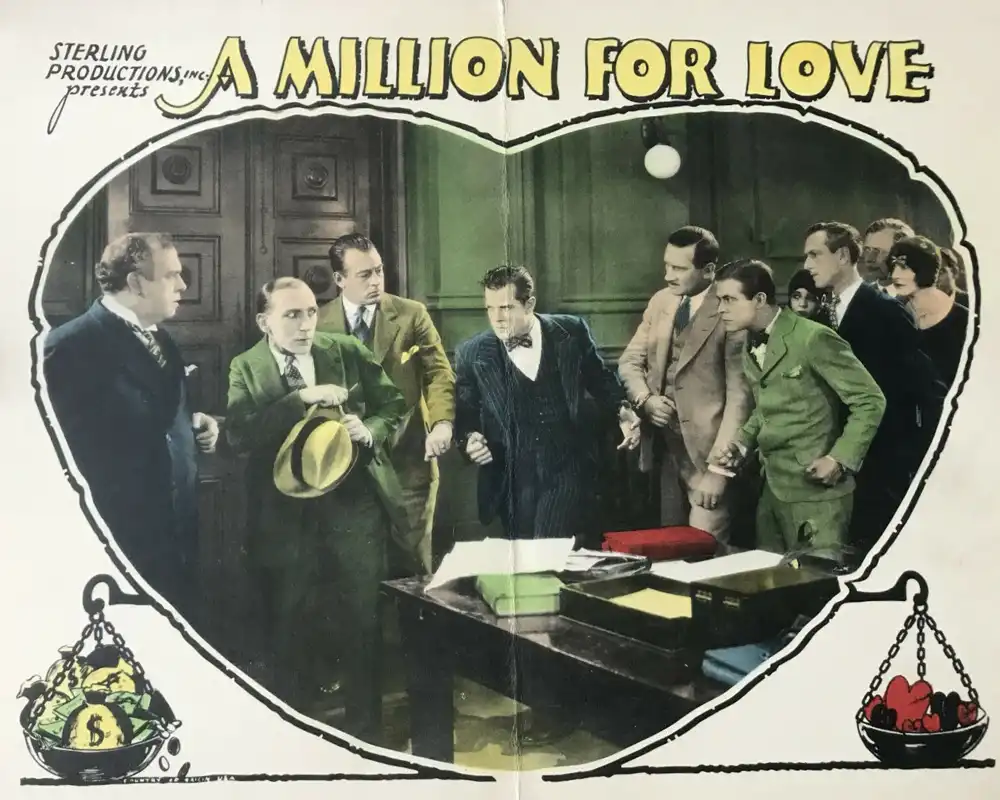
One detail I couldn't stop looking at: the hats. The men’s hats in this movie are absurdly tall. There’s a scene where Frank Baker is talking to Reed Howes, and I spent the entire time wondering if Baker’s hat was going to hit the top of the doorframe. It’s a small thing, but once you notice how much the costume department loved starch, it’s hard to look at anything else.
The film drags in the middle. There’s a sequence involving a legal dispute over the 'million' mentioned in the title that goes on for about ten minutes too long. It’s a lot of men in dark suits pointing at papers. If you’ve seen The Man Who Played God, you know how these static, talky scenes can be handled with a bit more visual flair. Here, it’s just flat. The camera doesn't move, the actors don't move, and the audience starts checking their watch.
It’s interesting to compare this to something like Hot Heels. That film had a certain zip to it, a sense that the medium was pushing toward something. A Million for Love feels like it’s standing still, content to use the same visual language that was already becoming dated by the time the Jazz Singer changed everything. It’s a movie made by people who knew exactly what they were doing, but didn't necessarily want to do anything new.
I did like the lighting in the final scene. They finally stopped using that flat, overhead wash and actually put some shadows on the walls. It gives the ending a weight that the rest of the film doesn't quite earn. It’s a small mercy, but it’s a nice one.
Is it a 'must-watch'? No. But if you’re deep into a silent film marathon and you’ve already exhausted the big names, you could do worse. It’s a functional, professional piece of work that reminds you that even in the golden age, most movies were just movies.
IMDb 4.5
1931
Community
Log in to comment.