DbcultAccessing Vault...
Cult Review
Senior Film Conservator
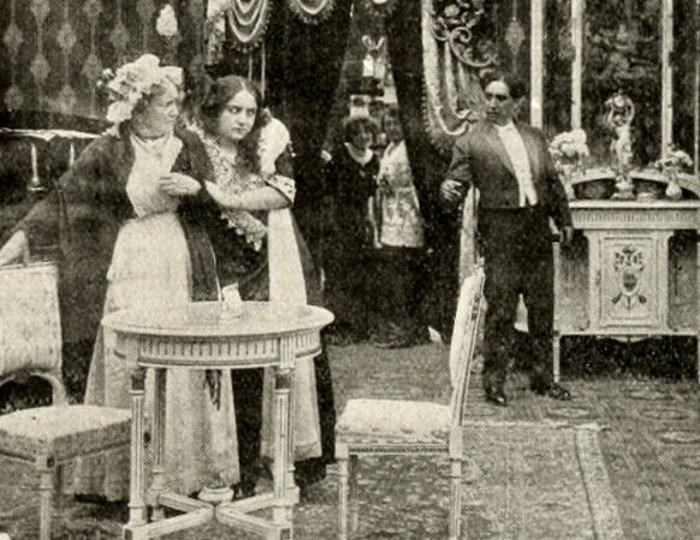
In the annals of early cinema, where narratives often painted in broad strokes of morality and melodrama, 'A Modern Mephisto' emerges as a particularly potent and unsettling exploration of human depravity and the profound resilience of the human spirit. Released in an era when film was still finding its voice, this picture, despite its age, resonates with a timeless intensity, presenting a character whose machinations feel as chillingly contemporary as they were over a century ago. It’s a compelling study of a man consumed by avarice and an unfortunate woman whose life becomes a crucible of betrayal and eventual triumph.
At the heart of this tumultuous narrative is Rodgers, an artist whose creative faculties are disturbingly overshadowed by a cynical, almost Faustian hunger for material gain. His journey to Villard Castle, ostensibly to restore ancient canvases, is merely a pretext for a far more insidious ambition: to marry Lord Villard's daughter for her wealth. This initial premise sets a dark tone, immediately positioning Rodgers not as a romantic lead, but as a calculating predator. His declarations to his friends are not boasts of love, but cold, hard statements of intent, laying bare a character devoid of genuine affection or moral compass. It’s a stark contrast to the noble intentions often portrayed in films of the period, such as the earnest struggles seen in The Ring and the Man, where ambition is tempered by a sense of justice.
The film meticulously charts Rodgers' manipulative prowess as he navigates the delicate social landscape of the castle. He is not merely charming; he is cunning, adept at feigning adoration and weaving a web of deceit that ultimately ensnares Alice, the innocent daughter. Their secret marriage, a pivotal moment, is less a union of souls and more a strategic acquisition for Rodgers. The discovery by Alice's nurse, also named Alice, introduces a crucial moral arbiter into the narrative. Her agreement to keep the secret, conditional upon Rodgers' fidelity, foreshadows the inevitable unraveling of his carefully constructed façade. This early promise, so easily given, becomes a ticking time bomb, a testament to Rodgers' inherent untrustworthiness. The film doesn't shy away from depicting the moral decay that underpins his every action, painting a vivid portrait of a man whose charm is a mere tool for exploitation.
As months pass, the veneer of marital bliss crumbles under the weight of Rodgers' burgeoning debts and his true, profligate nature. His desperate demand for $1,000, underscored by a chilling threat of suicide, reveals the extent of his emotional blackmail. This act forces Alice into a heartbreaking dilemma, leading her to part with her deceased mother's jewels – a profound symbol of her past and identity. Lord Villard's accidental witnessing of Nurse Alice handing these precious heirlooms to Rodgers ignites a chain reaction, exposing the secret marriage and leading to the nurse's tragic disownment. This moment is a powerful commentary on societal judgment and the harsh consequences of perceived transgression, echoing the struggles of women in films like Sapho, where reputation is everything.
The film then plunges into deeper waters of betrayal. Nurse Alice, in a moment of righteous indignation, confronts Rodgers, finding him amidst two profligate women – a stark visual representation of his moral bankruptcy. Her departure marks a critical turning point, severing the last thread of loyalty that might have tethered him to a semblance of decency. With Lord Villard’s death, the consequences for Alice, the daughter, are dire: disinherited and cast adrift, she is forced to forge her own path in a world that offers little quarter. This dramatic shift highlights the precariousness of women’s economic independence in the early 20th century, a theme subtly explored in Your Girl and Mine: A Woman Suffrage Play, albeit from a different angle.
Rodgers' financial embarrassment, a direct consequence of his own reckless choices, propels him into the desperate world of counterfeiting. This criminal turn underscores the film's exploration of moral decline, where a man's initial greed escalates into outright lawlessness. His capture, a thrilling sequence involving a daring dash across rooftops, injects a dose of action-packed suspense into the unfolding drama, momentarily shifting the tone from quiet despair to frantic pursuit. The five-year prison sentence, though a consequence of his actions, feels almost too lenient for the damage he has wrought, yet it serves as a narrative device to allow for significant character development in his estranged wife.
Five years later, the film presents a transformed Alice. No longer the naive, sheltered heiress, she has become a famous circus rider, embodying strength, independence, and an astonishing capacity for reinvention. Her resilience in the face of adversity is a testament to the human spirit's ability to adapt and thrive, even after profound personal tragedy. Her young son, nurtured in the serene countryside by the steadfast old nurse, represents the hope and continuity that Rodgers' destructive path threatened to extinguish. This period of Alice's life showcases a fascinating juxtaposition with the more traditional female roles often depicted in contemporary films like Our Mutual Girl, highlighting a burgeoning sense of female agency.
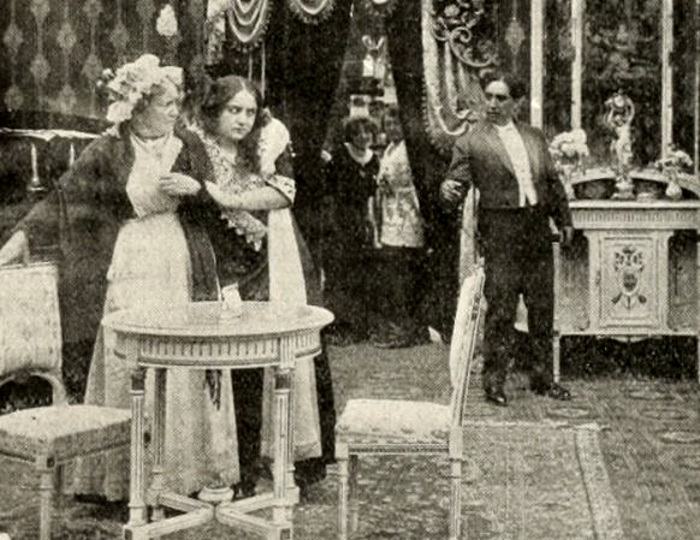
Rodgers' release from prison shatters Alice's hard-won peace. His reappearance at the theater, a sinister specter from her past, immediately casts a pall over her burgeoning happiness. The proposal from Prince Tremayne, a figure of nobility and genuine affection, accentuates the cruel irony of Alice's situation: despite her newfound independence and the promise of a brighter future, she remains legally bound to a man who has caused her nothing but suffering. Her inability to accept Tremayne's love due to her marital ties is a poignant reminder of the enduring societal constraints placed upon women, even those who have achieved remarkable success.
Rodgers' demands for $500 to go to America are not pleas but threats, his desperation having intensified rather than diminished during his incarceration. Alice's refusal to advance the money triggers a horrifying escalation: Rodgers snatches their child, initiating a frenetic and heart-stopping chase sequence. The image of Rodgers, a desperate father turned abductor, speeding away on a motorcycle with his son, pursued by Prince Tremayne, is a masterclass in early cinematic tension. The motorcycle catching fire and the subsequent crash, throwing both Rodgers and the boy to the ground, is a moment of visceral terror. Rodgers' subsequent act of using his own son as a shield, holding Tremayne and his chauffeur at bay with a revolver, is arguably the darkest manifestation of his character – a man so utterly devoid of paternal instinct that he would endanger his child for his own escape. This level of moral corruption is rarely seen in films of this period, perhaps only hinted at in the grand, sweeping narratives of human folly found in epics like Quo Vadis? or The Last Days of Pompeii, where societal decay is a central theme.
The chauffeur's cunning maneuver, swimming a stream to attack Rodgers from the rear, leads to a dramatic struggle on a bridge. Rodgers' fall into the water thirty feet below seems to signify the end of his tyrannical hold over Alice's life. Tremayne's report of his death brings a fleeting moment of profound relief and joy to Alice, a sense of liberation that she has so desperately earned. The restoration of her child to her arms completes this fragile tableau of happiness. However, this hard-won peace is brutally shattered by a chilling telephone call from Rodgers. His voice, mocking and triumphant, declares his survival, reminding Alice that her reckoning with him is far from over. This twist, a classic melodramatic device, amplifies the sense of an inescapable evil, a truly Mephistophelean figure who refuses to be vanquished.
Prince Tremayne's suggestion to take the child to his castle, a sanctuary from Rodgers' relentless pursuit, seems a sensible and protective measure. However, Rodgers, ever resourceful and insidious, learns of their plan and boards the same train. This sets the stage for the film's most heartbreaking and heroic act. The old nurse, a constant, unwavering presence of love and loyalty throughout Alice's ordeal, recognizes the inescapable threat that Rodgers poses. In a moment of supreme selflessness and desperation, she confronts him. Their struggle, a desperate ballet of life and death, culminates in a horrifying plunge onto the adjoining tracks, where both are instantly killed by another train. This act of ultimate sacrifice, where the nurse gives her life to permanently sever Rodgers' destructive influence, is a profoundly moving testament to unconditional love and protection. It elevates the film beyond mere melodrama, imbuing it with a tragic grandeur that resonates deeply, much like the profound selflessness found in narratives such as The Squaw Man, where characters make immense personal sacrifices for others.
The closing scene of 'A Modern Mephisto' offers a hard-won peace, tinged with the melancholic beauty of remembrance. Alice, now happily married to Prince Tremayne, watches her son place flowers on the grave of the nurse. This final image is not one of unbridled joy, but of a serene contentment earned through immense suffering and the ultimate sacrifice of a devoted guardian. It speaks to the enduring power of love and the profound impact of selfless acts, suggesting that even in the face of overwhelming evil, goodness and sacrifice can ultimately pave the way for a brighter future. The film, in its entirety, is a powerful exploration of moral choices, the corrupting influence of greed, and the unwavering strength of those who fight for justice and love.
The narrative's relentless pace and dramatic twists, characteristic of early cinema, are masterfully employed to maintain tension and emotional investment. While the characters might appear archetypal on the surface – the villain, the damsel in distress, the heroic rescuer, the selfless guardian – the film imbues them with enough complexity to transcend simple categories. Rodgers, in particular, is a fascinating study in unchecked ambition and moral decay, a true "modern Mephisto" whose destructive path leaves a trail of shattered lives. Alice's evolution from a naive heiress to a resilient circus performer and finally to a woman capable of finding peace after profound loss is a compelling character arc that showcases the film's nuanced understanding of human endurance.
Ultimately, 'A Modern Mephisto' stands as a compelling testament to the power of early filmmaking. It leverages dramatic irony, heightened emotional stakes, and a clear moral framework to deliver a story that is both entertaining and thought-provoking. Its themes of betrayal, sacrifice, and the relentless pursuit of justice resonate with a timeless quality, proving that even over a century later, the shadows cast by a truly modern Mephisto can still captivate and unsettle. It’s a film that, despite its melodramatic flourishes, offers a profound reflection on the human condition and the enduring triumph of the human spirit against the darkest of adversaries.
IMDb —
1916
Community
Log in to comment.