DbcultAccessing Vault...
7.7/10
Senior Film Conservator
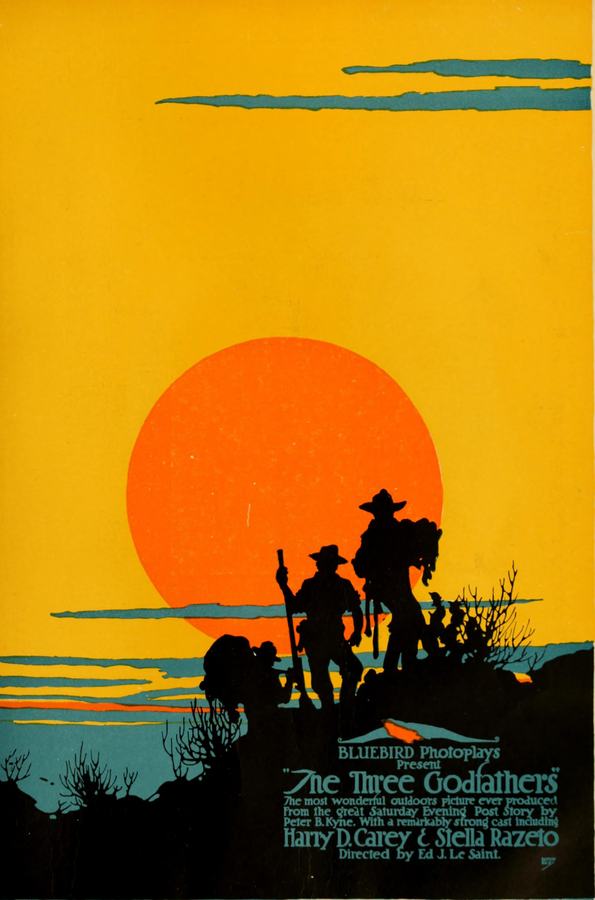
A definitive 7.7/10 rating for a film that redefined the boundaries of cult cinema. The Three Godfathers remains a cornerstone of transgressive art.
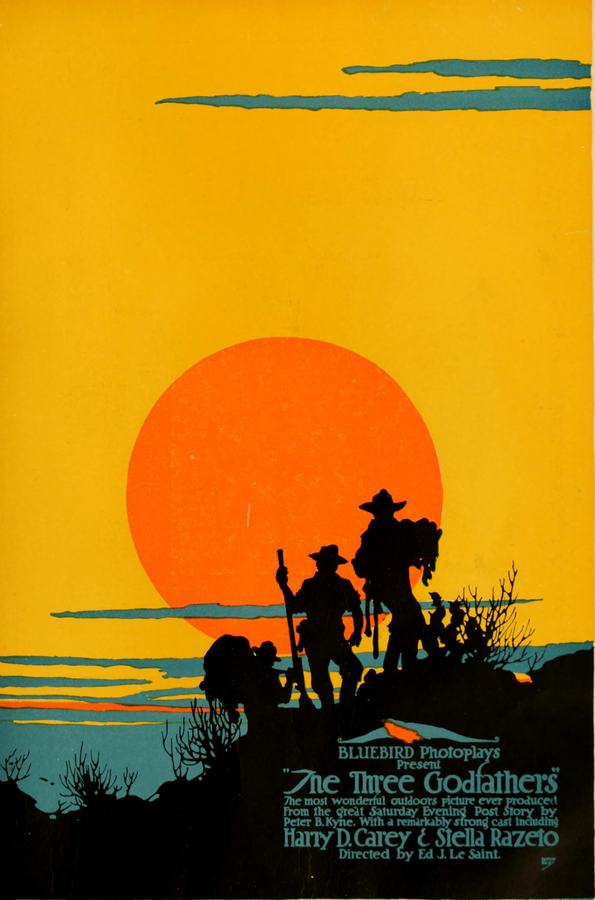
John Ford’s 1916 The Three Godfathers is not merely a western; it is a fresco of penitence painted on the cracked plaster of the Mojave, a film whose every celluloid pore sweats metaphysical brine. Shot when Hollywood was still a sun-dazed village of orange groves and drunken prospectors, this 65-minute miracle predates the director’s later, more trumpeted monuments yet already contains the full DNA of his moral cosmos: guilt, fraternity, landscape as scripture.
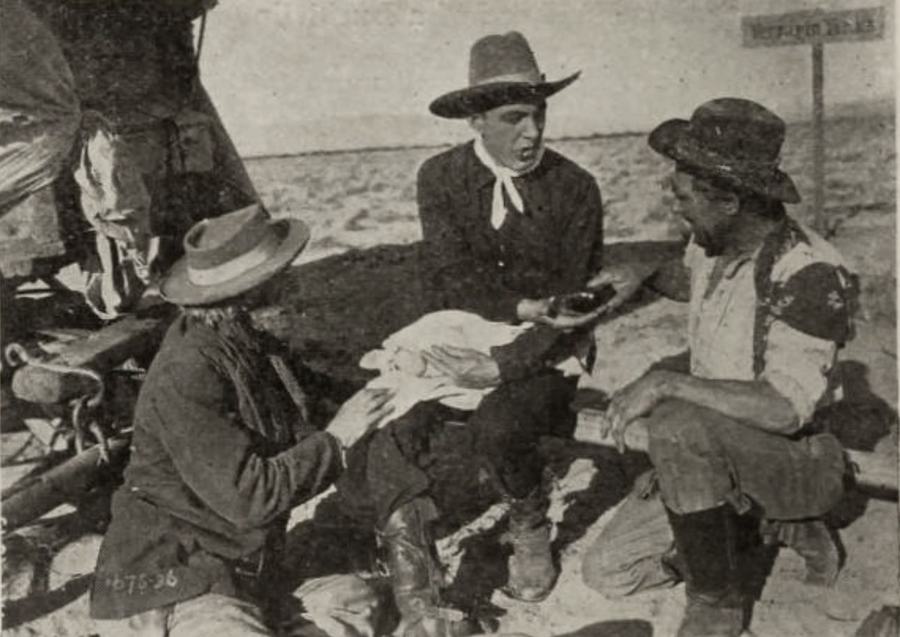
When the dying mother—Stella Razeto in a performance so brief it feels like a remembered prayer—presses her infant into the dusty palms of three men who have never changed a diaper, the film stages a reverse Annunciation: Gabriel is absent; instead, the news is delivered by a corpse-to-be. The promise she extracts is not spoken so much as exhaled, a covenant that hangs in the wagon like opium smoke. From that moment the posse recedes; the true antagonist becomes the desert itself, a vast negative space that swallows morality and water with equal appetite.
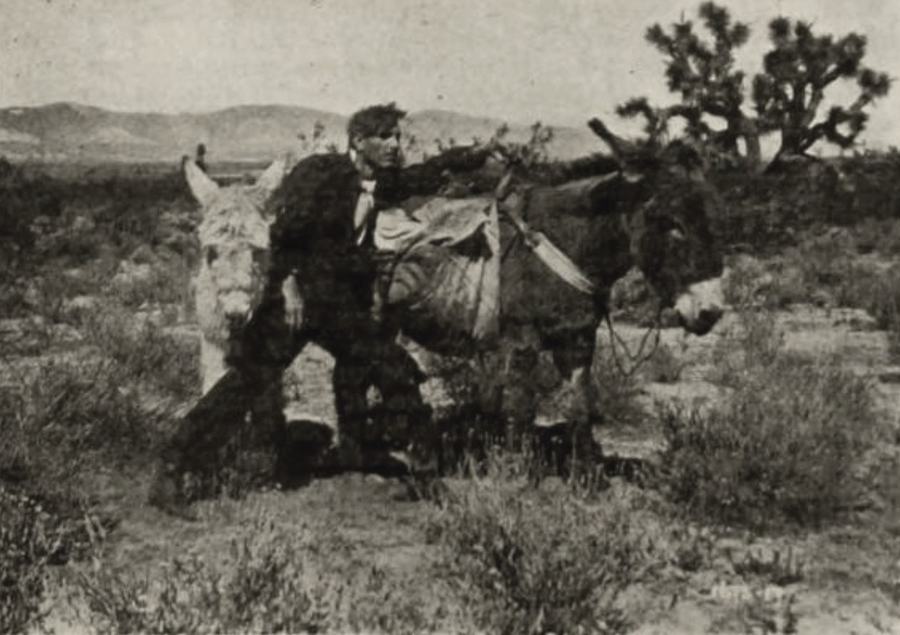
Cinematographer John W. Brown turns the sun into a white-hot interrogation lamp, bleaching the Technicolor-of-the-mind that silent audiences were obliged to supply. The horizon line wobbles, refusing symmetry; sagebrush trembles like gossip. Compare this to the Antarctic void in Dr. Mawson in the Antarctic where whiteness annihilates identity—here, ochre performs the same erasure, only faster.
Harry Carey—Ford’s on-screen alter ego before John Wayne inherited the mantle—plays Bob Sangster with the stoic minimalism of a man who has already shot his own reflection. Observe how he removes his hat when the baby first cries: the gesture is awkward, as if the Stetson itself were a baptismal barrier. Frank Lanning’s rust-bearded prospector provides the comic-leaven that never curdles into vaudeville; his death scene, delivered in a close-up that lingers until the eyes glaze like marzipan, is silent cinema’s answer to Lear’s heath.
The triumvirate of writers distilled Peter B. Kyne’s novelette into a liturgy of laconic titles. Note the intertitle that reads: "Water is the milk of the desert, and the milk is blood." Such aphoristic compression would make later Ford films—say, 1939’s Stagecoach—feel positively verbose. Compare the moral arithmetic here with the tangled maternal vendettas of Woman Against Woman; or, Rescued in the Clouds where domestic melodrama sprawls like unmoored ivy.
Modern viewers, marinated in therapeutic jargon, may expect a sermon. Ford refuses. The outlaws’ transformation is rendered as incremental as evaporation: a shared gulp, a stolen glance at the sleeping child, a boot gently rocking a makeshift cradle. When the weakest outlaw sacrifices himself by drawing the posse’s fire, Ford cuts not to his dying face but to the empty cradle rocking in wind—an ellipsis more brutal than any blood spurt.
Though the mother perishes in reel one, her absence haunts every frame; she is the negative space around which masculinity reshapes itself. Contrast this with the pharaonic grandeur of Cleopatra where femininity commands the lens like a conquering army. Here, femininity is evacuated so that men may gestate conscience in the womb of their own ribs.
Ford, the lapsed Catholic, stages the trek as a 14-station pilgrimage: the wagon is Golgotha, the abandoned mine shaft a sepulcher, the final town a Emmaus where recognition occurs not by broken bread but by a child’s first laugh. The three outlaws reprise the Magi, only their gifts are a stolen Bible, a canteen with two swallows left, and a silver bullet meant for the sheriff.
Contemporary exhibitors were encouraged to accompany the final march with "Rock of Ages." Heard in the mind’s ear, the hymn collides with the squeak of saddle leather to produce an unbearable pathos. Try overlaying that mental track onto the urban clang of The Crime of the Camora and you will gauge how radically Ford empties the world to make room for grace.
Without this film there is no 1948 3 Godfathers with its Technicolor sacraments, no Stagecoach ring-of-fire shootout, no Searchers threshold doorway that frames both reunion and exile. The DNA strand is visible: the use of Monument Valley’s cathedral buttes, the motif of the outsider as custodian of communal virtue, the tracking shot that begins on a lone rider and ends on cosmos.
Like many silents, the film survives only in a 55-minute reissue cut; the lost ten minutes reportedly contained a flashback to Sangster’s childhood where his own mother abandons him—an absence that renders his final devotion to the infant almost pre-verbal, a scar seeking its mirror. Scholars still hunt the excised nitrate like grail knights.
While Oliver Twist was busy ladling Victorian gruel and Hamlet, Prince of Denmark was declaiming in Klieg-lit Elsinore, Ford’s modest western achieved a philosophical heft that belies its B-picture origins. Even the pastoral charm of My Old Dutch feels parochial beside this sun-blasted metaphysics.
Though monochromatic, the film’s tinting scheme—amber for day, cobalt for night, rose for the miracle of dawn—anticipates the symbolic chroma of Impressioni del Reno. The final reel’s red tint, when the child is laid upon the church altar, floods the screen like a sudden stigmata.
In 1916 Motion Picture Magazine praised its "manly tenderness"—code, perhaps, for permissible sentimentality among cowboys. Modern critics, fluent in feminist and post-colonial argot, may flinch at the settler-imperial gaze embedded in the "empty" desert. Yet even that critique enriches; the film becomes palimpsest, each era inscribing its anxieties onto Ford’s biblical sand.
Great art often arrives unheralded, wearing the dusty denim of genre. The Three Godfathers is such a rose—its thorns are drought, its petals the fragile promise that even felons may be drafted into sainthood. To watch it is to gulp a mouthful of alkali and discover, miraculously, that it tastes like communion wine. In the crimson lexicon of cinema, this is the first beatitude: blessed are the outlaw midwives, for they shall inherit the thirst that leads to grace.
—reviewed by a ghost who still carries desert sand in his shoes
IMDb 9.1
1925
Community
Log in to comment.