DbcultAccessing Vault...
6.6/10
Senior Film Conservator
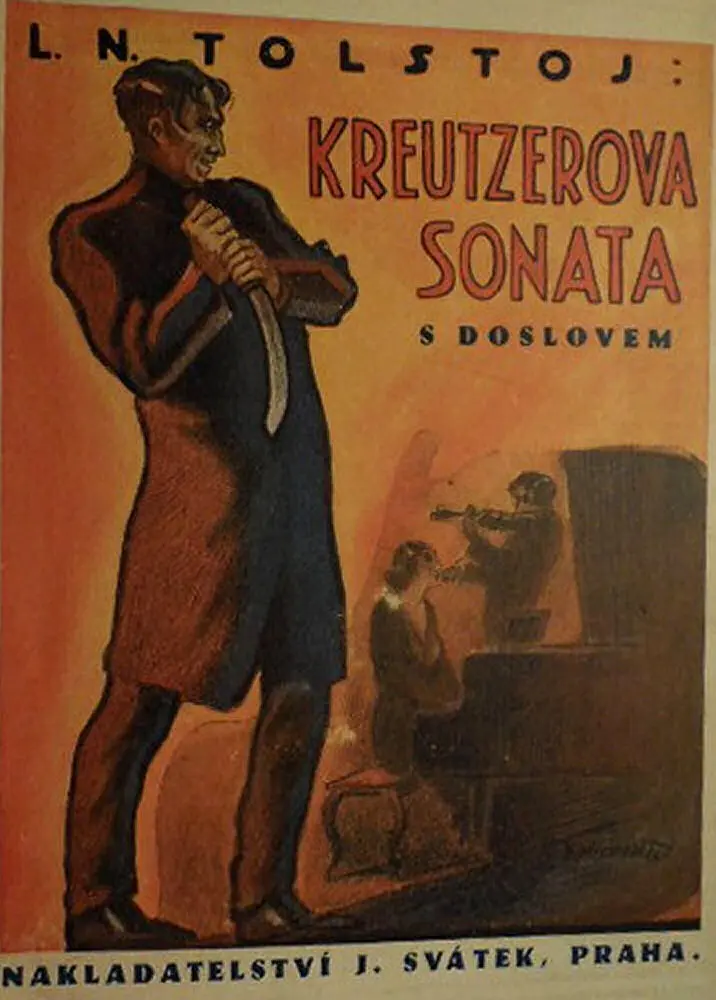
A definitive 6.6/10 rating for a film that redefined the boundaries of cult cinema. The Kreutzer Sonata remains a cornerstone of transgressive art.
Is The Kreutzer Sonata worth watching today? Short answer: yes, but only if you are prepared for a film that feels more like an autopsy than a drama. This is not a light evening of silent cinema; it is a claustrophobic dive into the rot of a dead marriage that will leave you feeling appropriately unsettled.
This film is for the cinephile who enjoys the dark, psychological weight of German Expressionism and the Kammerspielfilm movement. It is for those who want to see the exact moment a human soul curdles under the weight of suspicion. It is absolutely NOT for anyone looking for the breezy romanticism found in Mary Moves In or the lighthearted antics of Grab the Ghost. If you demand a hero to root for, stay far away from this one.
1) This film works because Gustav Machatý understands that silence is the loudest way to communicate a failing marriage.
2) This film fails because the middle act lingers far too long on repetitive shots of the husband’s scowling face, testing the audience’s patience.
3) You should watch it if you want to see how early cinema handled the 'New Woman' trope with a mixture of fascination and absolute terror.
Gustav Machatý is a name that should be spoken with more reverence in film circles. Long before he scandalized the world with 'Ecstasy', he was refining a visual language that prioritized mood over plot. In The Kreutzer Sonata, he takes Tolstoy's prose and strips it down to its skeletal remains. The film doesn't just tell you the husband is jealous; it makes the room feel smaller every time he enters it.
Take the scene where the wife and her lover first play the eponymous Beethoven sonata. In a lesser film, like The Cigarette Girl, this might be played for simple romantic tension. Here, Machatý uses sharp, jarring cuts between the frantic movement of the violin bow and the husband’s twitching eyes. It is aggressive. It is uncomfortable. The music—though unheard in a silent film—is rendered visible through the violent editing. It’s a technical triumph that bypasses the need for intertitles.
The pacing is deliberate. Some might call it slow. I call it honest. Marriages don't fail in a single afternoon; they erode over months of silent dinners and avoided eye contact. Machatý captures this erosion with a precision that makes modern dramas look frantic and superficial. He isn't interested in the 'why' of the affair as much as he is interested in the 'how' of the husband’s psychological collapse.
Yes, The Kreutzer Sonata is worth watching because it serves as a bridge between Victorian morality and modern psychological realism. It offers a rare look at 1920s Czech cinema, which was often more daring than its Hollywood counterparts. The film manages to make a century-old story feel immediate and dangerous.
Eva Byronova’s performance is the film’s secret weapon. In 1927, the 'flapper' was often a caricature, as seen in films like Molly of the Follies. But Byronova brings a weary complexity to the role. She isn't just a party girl; she is a woman who has realized that her husband is a fossil. Her movements are fluid and modern, contrasting sharply with Václav Žichovský’s stiff, wooden portrayal of the husband.
This contrast is the heart of the film. It’s not just a story about a man and a woman; it’s a story about two different centuries living in the same house. The husband represents the old world—rigid, possessive, and fueled by a sense of ownership. The wife represents the new world—fluid, expressive, and seeking intellectual stimulation. When these two worlds collide, the result isn't just an argument; it’s a total structural failure of the domestic unit.
There is a specific moment involving a simple glass of water that sticks in the mind. The husband watches her drink, and the camera lingers on his face until his gaze becomes predatory. It’s a brutally simple sentence in visual form: He hates her for being alive. You won't find that kind of raw, quiet animosity in The Forfeit or The Innocent Lie.
The lighting in this film is an active participant in the murder. As the husband’s sanity slips, the shadows in their home grow longer and more distorted. By the final act, the house no longer looks like a residence; it looks like a tomb. This isn't just 'good' cinematography; it is psychological mapping. The environment reflects the internal state of the characters with a literalism that is both terrifying and beautiful.
Compare this to the standard flat lighting of Short Change or Where Is My Wife?. In those films, the camera is a witness. In The Kreutzer Sonata, the camera is an instigator. It pushes into the characters' personal space, forcing the audience to endure their discomfort. It’s a nasty piece of work, and I mean that as a high compliment.
The use of close-ups is particularly striking. Machatý doesn't use them for glamour; he uses them to find the microscopic cracks in a character's composure. When the lover enters the frame, he is often slightly out of focus or positioned at an angle that suggests he is an intruder in a space that was already compromised. It’s subtle, but it builds a sense of dread that is far more effective than any jump scare.
It works. But it’s flawed. The middle section of the film suffers from a repetitive cycle of suspicion. We see the husband watch the wife. We see the wife look at the lover. We see the husband get angry. Then we repeat. While this effectively conveys the obsessive nature of jealousy, it does occasionally stall the narrative momentum. It’s a common issue in Tolstoy adaptations—the source material is so internal that the external action can feel thin.
However, just when you think the film is going to slide into boredom, Machatý throws a visual curveball. There is a dream sequence—or rather, a hallucination—that is as disturbing as anything found in The Bar Sinister. It breaks the monotony and reminds the viewer that we are dealing with a mind that has completely detached from reality. It’s an unconventional observation, but the film treats the piano itself as a murder weapon long before the actual violence occurs. The instrument is the catalyst for the husband’s final break.
Pros:
- Masterful use of shadow and light to convey psychological states.
- A powerhouse performance by Eva Byronova that feels decades ahead of its time.
- A brave, uncompromising ending that refuses to offer easy moral lessons.
- Exceptional direction by Machatý, proving his status as a pioneer of visual storytelling.
Cons:
- The pacing in the middle third can feel like a slog.
- The husband is so consistently unlikable that it can be hard to stay engaged with his perspective.
- Some of the intertitles feel redundant given how strong the visual storytelling is.
When you look at other films of the era, like Kan Kvinder fejle? or The Illustrious Prince, there is often a sense of moral equilibrium. Sinners are punished, and the righteous are rewarded. The Kreutzer Sonata doesn't care about that. It is a nihilistic look at how obsession destroys everyone in its path—the guilty and the innocent alike.
Even in a film like The Pride of New York, which deals with different social pressures, there is a clear narrative arc. Machatý’s film feels more like a spiral. It doesn't go forward; it just goes down. This makes it a much harder watch, but a significantly more rewarding one for the serious student of cinema. It challenges the viewer to look at the ugly parts of the human psyche without blinking.
"The Kreutzer Sonata is a film that weaponizes silence. It doesn't just depict a tragedy; it traps you inside one until you can smell the stale air of the characters' resentment."
The Kreutzer Sonata is a difficult, demanding, and ultimately brilliant piece of silent cinema. It is a film that understands the dark corners of the human heart better than most modern thrillers. While it may test your patience with its deliberate pacing, the payoff is a haunting experience that lingers long after the final frame. It is a technical achievement that proves Gustav Machatý was a visionary. If you have any interest in the history of psychological drama, this is essential viewing. It is a grim, beautiful, and deeply human look at the end of love.
IMDb 5.1
1933
Community
Log in to comment.