DbcultAccessing Vault...
Cult Review
Senior Film Conservator
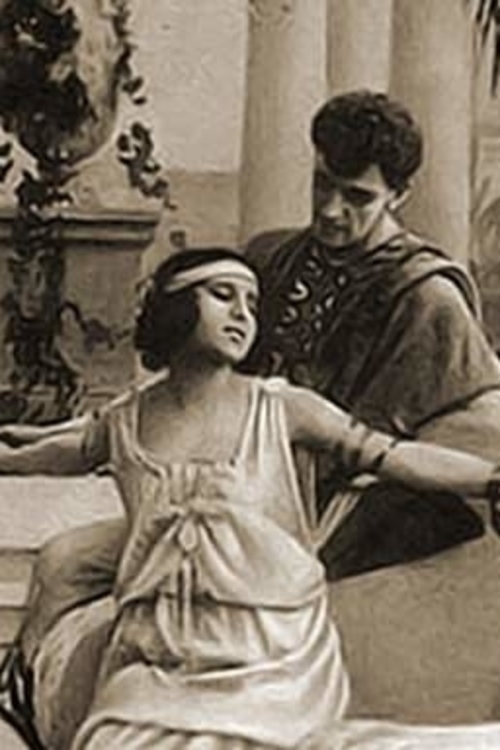
To speak of 'Azra' is to invoke a spectral grandeur, a phantom limb of cinematic history that, even in its partial or hypothetical form, grips the imagination with an almost unbearable intensity. Penned by the audacious Gabriele D'Annunzio, a figure whose life was as theatrical and controversial as his art, and brought to life by the ethereal Vera Kholodnaya, the film stands as a testament to the silent era's capacity for profound emotional depth and sweeping historical narrative. This isn't just a movie; it's a whisper from a bygone age, a tragic poem etched in celluloid that continues to resonate with themes as relevant today as they were a century ago: the tumultuous dance between personal desire and national duty, the crushing weight of destiny, and the exquisite agony of forbidden love.
D'Annunzio, a poet, playwright, and ardent nationalist, imbued 'Azra' with his signature blend of heightened romanticism, political fervor, and a decadent aesthetic. His co-writer, Mikolaj Branitskij, likely helped ground the more soaring flights of D'Annunzio's imagination, crafting a narrative that, while grand in scope, remains deeply human at its core. The film's 'semi-historical' designation is crucial; it allows for the dramatic license necessary to explore universal truths through a fictionalized lens, setting its passionate tale against a backdrop of geopolitical upheaval that feels both specific and timeless. This approach is reminiscent of how other silent epics, like The Rights of Man: A Story of War's Red Blotch, leveraged historical conflict to amplify individual struggles, though 'Azra' does so with a distinctly Italianate flair for operatic tragedy.
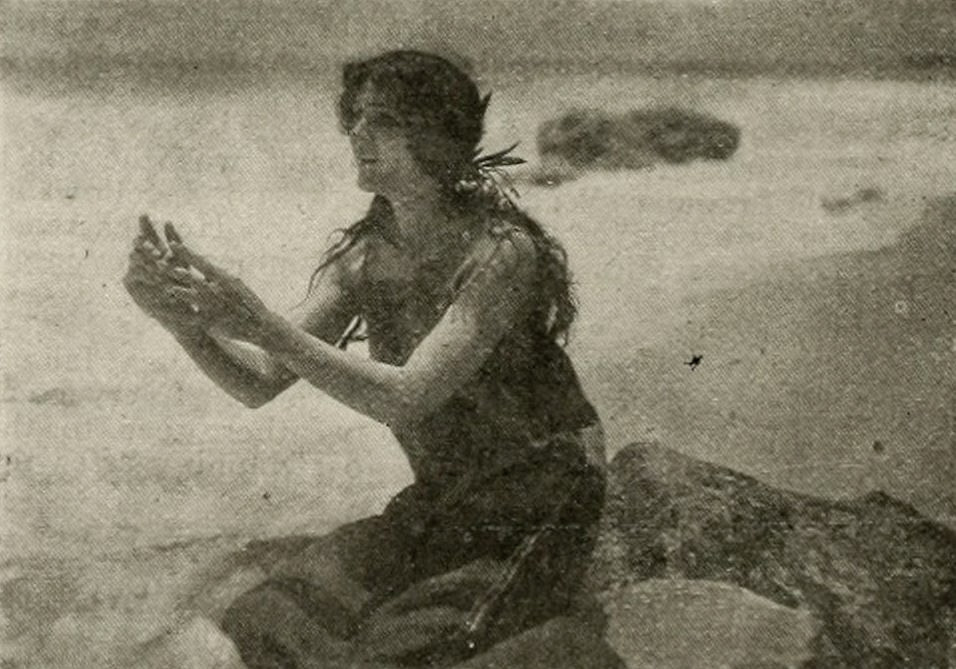
At the absolute epicenter of 'Azra's' emotional maelstrom is Vera Kholodnaya. Her portrayal of the titular character is nothing short of mesmerizing. Kholodnaya possessed a unique quality, an almost otherworldly beauty coupled with an innate ability to convey profound sorrow and inner conflict with the subtlest of gestures and the most expressive of eyes. She wasn't merely acting; she was embodying the very spirit of tragic romance. Her Azra is not a passive victim but a woman of immense strength, burdened by a legacy and a love that threaten to tear her apart. One can imagine her silent tears, her anguished gazes, speaking volumes, articulating the impossible choices forced upon her by fate and circumstance. Her performance here, even in memory, solidifies her status as one of the silent era's most compelling and irreplaceable stars, a talent whose brevity only amplified her legend. Comparisons to her other iconic roles, perhaps in films like Nothing But Nerve or Lyubov statskogo sovetnika, reveal a consistent thread of poignant vulnerability and quiet defiance that she brought to every character, but in Azra, it feels elevated to an almost mythical plane.
Osip Runich, as Prince Valerian, provides the perfect foil to Kholodnaya's delicate intensity. Runich, known for his charismatic and often imposing screen presence, brings a complexity to Valerian that prevents him from being a one-dimensional antagonist or a simple romantic lead. He embodies the allure of power, the seduction of ambition, and the internal struggle of a man caught between his desires and his political imperatives. His interactions with Azra must have crackled with an unspoken tension, a dangerous magnetism that drew them together even as their respective worlds pulled them apart. The chemistry between Kholodnaya and Runich would have been pivotal, a silent dialogue of longing and despair that drives the narrative forward with an inexorable force. This kind of intense, almost visceral pairing is rare, recalling the dramatic duets in films like The Sting of Victory, where personal and political stakes become inextricably intertwined through the performances.
The plot of 'Azra' is a masterclass in dramatic construction, weaving together threads of personal tragedy with the broader tapestry of national struggle. Azra, as the embodiment of her people's spirit, is faced with an impossible choice: betray her heart for the freedom of her land, or succumb to a love that might lead to its subjugation. This dilemma is amplified by the presence of A. Platonov as Konstantin, a character likely representing the ardent, uncompromising voice of patriotism, perhaps a rival for Azra's affections, or a steadfast ally whose ideals stand in stark contrast to Valerian's pragmatism. Pavel Baratov, in his role as an elder or advisor, grounds the narrative with a sense of tradition and gravitas, providing a moral compass or a voice of ancestral wisdom amidst the escalating crisis. The interplay between these characters creates a rich, multi-faceted exploration of loyalty, sacrifice, and the often-brutal realities of political power. The film's ability to balance these intimate struggles with the grand sweep of history is a testament to its ambitious vision, a quality often sought but rarely achieved with such poignant success as in, say, The Opened Shutters, which also explored societal pressures on individual lives.
D'Annunzio's influence is palpable not just in the narrative's structure, but in its very soul. His fascination with beauty, heroism, and the tragic grandeur of human endeavor permeates every frame. One can imagine the visual splendor: opulent costumes, dramatic landscapes, and a cinematography that would have emphasized the stark contrasts between light and shadow, hope and despair. The semi-historical setting, likely a romanticized interpretation of Balkan or Mediterranean conflicts, provides fertile ground for D'Annunzio's blend of realism and myth. It's a world where ancient customs clash with modern aspirations, where personal honor can dictate the fate of nations, and where love, in its purest and most destructive forms, is a force capable of reshaping destinies. This thematic richness is what elevates 'Azra' beyond a mere melodrama, positioning it as a profound commentary on the human condition in times of great change.
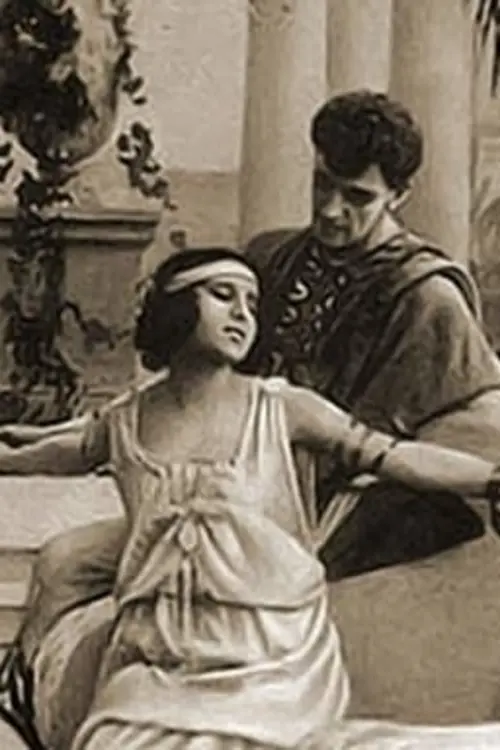
The power of silent cinema lies in its reliance on visual storytelling and the nuanced performances of its actors. In 'Azra,' this would have been paramount. The absence of spoken dialogue forces the audience to engage more deeply with the characters' expressions, their body language, and the intricate details of the mise-en-scène. Kholodnaya, in particular, was a master of this silent language, capable of conveying a universe of emotion with a single glance. The pacing, the editing, the use of intertitles – all these elements would have conspired to create a narrative flow that was both deliberate and emotionally charged. One can envision sweeping panoramic shots of the troubled landscape, juxtaposed with intense close-ups that magnify Azra's internal turmoil. The use of symbolism, a hallmark of D'Annunzio's work, would have been visually articulated, perhaps through recurring motifs or allegorical imagery that underscore the film's deeper themes.
The film’s climax, an act of profound sacrifice, would undoubtedly have been rendered with a heartbreaking solemnity. Whether Azra chooses to give her life for her people, or forsake her love for their freedom, the resolution would have been steeped in the kind of melancholic beauty that defined so much of silent Russian cinema. This isn't a story designed for a neat, happy ending; it's a tragedy destined to linger in the mind, prompting reflection on the unbearable choices faced by those caught in the maelstrom of history. The very ambiguity of its semi-historical setting allows for a more universal interpretation of its message, echoing the timeless struggles depicted in stories like Der Fürst der Diebe und seine Liebe, where personal desires clash with grander societal forces.
The true tragedy of 'Azra,' beyond its narrative, lies in its elusive nature. Like many films of its era, especially those produced amidst the political turmoil of the early 20th century, its full existence is a fragile thing, often reduced to fragments or mere descriptions. Yet, even in its spectral form, 'Azra' offers invaluable insight into the artistic currents of its time: the fusion of literary genius with nascent cinematic art, the power of star performers, and the enduring appeal of epic, emotionally charged storytelling. The film represents a fascinating cross-cultural collaboration, blending D'Annunzio's Italian sensibilities with the burgeoning Russian film industry, creating a unique synthesis that would have stood apart from its contemporaries. This blend of influences and the sheer ambition of the project are aspects that make it endlessly fascinating for film historians and enthusiasts alike, much like the intriguing premise behind Trompe-la-Mort, which also navigated complex cultural landscapes.
To imagine 'Azra' in its complete form is to conjure a lost masterpiece, a film that would have undoubtedly solidified Kholodnaya's legendary status and showcased D'Annunzio's dramatic vision on a grand scale. It speaks to the universal human experience of being caught between irreconcilable forces, a theme that resonates across cultures and eras. The film's enduring allure lies not just in its potential artistic merit, but in what it represents: a moment in time when cinema was finding its voice, when grand narratives and profound emotions were conveyed through the silent, expressive power of the moving image. It reminds us that even films that exist only in memory or fragments can leave an indelible mark on our understanding of cinematic art and the human heart. Other films, like The Curse of Greed, also explored the destructive nature of human passions, but 'Azra' elevates the stakes to a national level, making the personal political in the most profound sense.
Ultimately, 'Azra' is more than a historical curiosity; it's a powerful narrative about the burdens of identity and the price of freedom. It challenges its audience to consider the impossible choices that define human existence, particularly when individual desires collide with collective destiny. Kholodnaya's Azra, even as a figment of cinematic history, embodies the tragic heroine par excellence, a figure whose sacrifice transcends the confines of her story to become a universal symbol of endurance and profound love. This film, whether fully recovered or eternally imagined, stands as a poignant reminder of the silent era's artistic heights and the enduring power of storytelling to explore the most complex facets of the human spirit. Its themes are echoed in various forms across cinematic history, from the personal sacrifices in Sister Against Sister to the broader political struggles in Her Country's Call, yet 'Azra' holds a unique, almost mythical place due to its creators and its poignant disappearance. It is a film that demands to be remembered, studied, and perhaps, one day, fully rediscovered, allowing its full, tragic beauty to once again grace the silver screen.
The artistry of 'Azra' lies in its audacious ambition: to marry the poetic grandeur of D'Annunzio with the nascent power of cinema, to cast an icon like Kholodnaya in a role that epitomized her tragic allure, and to tell a story that resonates with the timeless struggles of love, loyalty, and national identity. It is a film that, even in its absence, speaks volumes about the enduring magic of the moving image and its capacity to capture the very essence of human experience, leaving an indelible mark on the collective consciousness of film history. Such profound narratives, where individual fate intertwines with the destiny of a nation, are the bedrock of cinematic legend, much like the intricate plotting of The Guilty Egg or the dramatic stakes in Tavasz a télben, but 'Azra' achieves a unique synthesis of these elements through the lens of a specifically D'Annunzian romanticism. It is a poignant, powerful, and ultimately unforgettable cinematic ghost.
IMDb 5.5
1919
Community
Log in to comment.