DbcultAccessing Vault...
Cult Review
Senior Film Conservator

A reel that smells of brine and kerosene still flickers in the vaults, and every time the gate clicks open Meredith M. Nicholson’s hallucination lurches back to life. The Port of Missing Men is not a story you watch; it’s a contagion you contract—frames scratch the retina like coral, intertitles hiss like hot tar on hull-planks. Most silents merely age; this one ferments.
We begin with a duel at dawn, pistols loaded not with lead but with futures. Augustus Balfour’s Kempton fires wide, deliberately, and the bullet ricochets through the next eighty minutes of celluloid, lodging finally in the viewer’s moral cartilage. From that first smoky discharge, the narrative abandons linearity the way a ship dumps ballast: swiftly, unceremoniously, so it can ride higher on dark currents.
Nicholson’s script, lean as a famine poem, still manages to chart three separate moral latitudes: the fog-choked European embassy where reputation is a porcelain currency; the equatorial free-port whose taverns reek of vetiver and betrayal; and the open sea, that sodium-lit purgatory where sins are ballast to be jettisoned. Each locale is introduced with a superimposed compass card, its needle spinning wildly before dissolving into a human iris—an early, wordless admission that direction is always subjective when the soul is unmoored.
Compare this triptych to the single coal-dusted village in The Miner’s Daughter, or the claustrophobic prison yard of Sentenced for Life. Nicholson refuses the comfort of a fixed stage; he keeps turning the globe under our feet until we taste longitude on our tongues.
Augustus Balfour possesses the hollowed cheeks of a man who has swallowed his own reflection and found it bitter. Watch the way he removes his gloves—thumb and forefinger pinching the wrist as though peeling a second skin—every gesture an echo of the pistol he once raised in cowardice. Across from him, Marguerite Skirvin’s Aurelia seems spun from sea-foam and wire: her smile arrives a half-second late, like a telegram re-routed through too many relay stations, carrying news that no longer matters.
The supporting men form a parliament of damaged saints: Frederick Bock’s cycloptic revolutionary speaks only in maritime flag semaphore, each arm-cracking semaphore letter slamming against the air like a gavel; Wallace Scott’s preacher clutches a Bible with pages surgically excised to roll cigarettes, scripture turned narcotic. In the surgical theater below deck, Edward MacKay’s doctor injects morphine into the soles of his own feet, arguing that redemption must enter through the lowest point of the body. Their collective pathology feels closer to the fevered ensembles of Ten Nights in a Barroom than to the tidy moral ledgers of East Lynne.
Cinematographer David Wall—yes, the actor doubles as the eye behind the lens—shoots dusk as if it were a wound. Early scenes in the embassy bathe in pewter grays, but once the narrative reaches the tropics the spectrum mutates: saffron, absinthe, bruise-purple. A lantern swung inside a prison hold becomes a solar flare, silhouetting chains that resemble rosaries more than shackles. During the eclipse climax, Wall hand-cranked the camera slower, so the sun’s corona blooms like a magnesium flower, each frame over-exposed until the celluloid itself threatens ignition. The result is a light that does not illuminate but cauterizes.
This visual ferocity stands in stark contrast to the stately tableaux of Du Barry or the Parisian gloss of Le diamant noir. Wall’s camera gulps light, chokes on it, spits it back molten.
Central to the film’s mythology is a leather-bound ledger cataloguing every sailor who has vanished into the port’s maw. The book’s pages are palimpsests: new names inked over erased ones, creating a topography of erasure. When Kempton finally thumbs to the last folio, he finds his own signature—ink dated three years prior to his arrival, a bureaucratic premonition. The moment lands like a slap from a dead man.

Nicholson here anticipates Borges by decades: identity not as continuity but as a footnote someone might scribble over. Compare that to the tidy fingerprints in The Third Degree or the cryptographic neatness of The Million Dollar Mystery. Missing Men offers no cipher—only the scarier prospect that you are already archived, filed, and forgotten.
Though technically mute, the film orchestrates a symphony of implied noises: the wet slap of rope against mast, the intestinal creak of teak, the hiss of a match struck near an open keg of gunpowder. Modern viewers often report phantom audio—waves, heartbeats, the scrape of quill on parchment—an illusion achieved by Wall’s micro-close-ups: a trembling lip, a bead of sweat tracing the spine of the ledger. It’s synesthetic cinema before the term existed.
Scent, too, becomes character. Intertitles describe “the sour perfume of starched uniforms” or “the sweet stink of mangoes rotting in a prosecutor’s drawer.” The audience is forced to remember odors, triggering limbic memories more stubborn than any image. You walk out of the screening room tasting salt on your gums, much like exiting a Lynch theater where the hum of fluorescent lights lingers in the skull.
Skirvin’s Aurelia refuses the damsel’s sash. She negotiates her own dowry with the syndicate using intelligence gleaned from intercepted cables; she encrypts escape routes into embroidery samplers. In one bravura sequence she distracts a guard by reciting Baudelaire while unpicking the stitches of her own bodice, the unraveled thread spelling longitude coordinates in Morse. The camera lingers on her fingers—pianist fingers that never touch ivory, only secrets.
This proto-feminist bent differentiates the film from the punished adulteresses of Sapho or the sacrificial wives in Satyavan Savitri. Aurelia’s agency is never decorative; it’s operational, surgical, survivalist.
Nicholson, lapsed Catholic and lapsed anarchist both, stages rituals that ache with apostasy. The penitent procession wears plague masks shaped like halved avocados, their eyeholes rimmed in phosphorous so they glow like carrion angels. A confessional booth is repurposed as a telegraph cubicle: sins tapped out in Morse, absolution relayed through undersea cable. The eclipse itself becomes anti-transubstantiation—instead of bread becoming body, the sun becomes absence, a wafer of void.
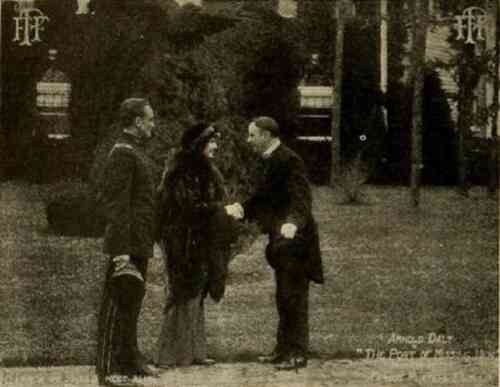
Compare this to the orthodox martyrdom in Den tredie magt or the ecclesiastical pageantry of The Burglar and the Lady. Missing Men wrestles faith to the ground and rifles through its pockets.
Viewed today, the film uncannily prefigures geopolitical black sites and off-shore detention archipelagos. The port’s legal limbo mirrors Guantánamo, its ledger foreshadows clandestine flight manifests. When Kempton barters his identity for Aurelia’s passage, we hear resonances of every whistle-blower erased from agency payrolls. The silent era often feels sepia-sealed, yet this particular print perspires present-tense dread.
Lynch’s Lost Highway nod is obvious: both narratives loop back to swallow their own tails. But there’s also a whiff of Apocalypse Now in the riverine descent toward a temple where morality is napalmed, and a pinch of Dead Man in the metaphysical western that ends with a boat instead of a train.
For decades the only known copy toured church basements in a Portuguese fishing village, its nitrate reels warping like Atlantic kelp. Restoration began after a 1998 flood; archivists separated each frame with scalpels, bathed them in a witch’s brew of alcohol and rose oil, then re-photographed onto 35 mm stock. The digital scan reveals hairline cracks that resemble lightning bolts—cracks that, perversely, enhance the film’s thesis about the fracture of self.
Streaming on niche services, the movie now reaches eyeballs accustomed to 4K gloss. Watch it on a tablet at midnight, headphones sealing you inside its hush, and you’ll still smell brine. Algorithms can compress pixels; they cannot compress guilt.
Great art doesn’t comfort; it returns you to port with saltwater in your lungs and a name in the ledger you never agreed to sign. The Port of Missing Men does exactly that, only the port is missing, the men are missing, and, by the final iris-out, so are you. Seek it not for antique curiosity but for the rare, vertiginous sensation of cinema reaching across a century to press its thumb against your carotid and whisper: “You were here before you arrived.”
Watch it. Then check your pulse. Then check the mirror. Then burn the ledger—if you can find it.
IMDb 5.2
1931
Community
Log in to comment.