DbcultAccessing Vault...
Cult Review
Senior Film Conservator
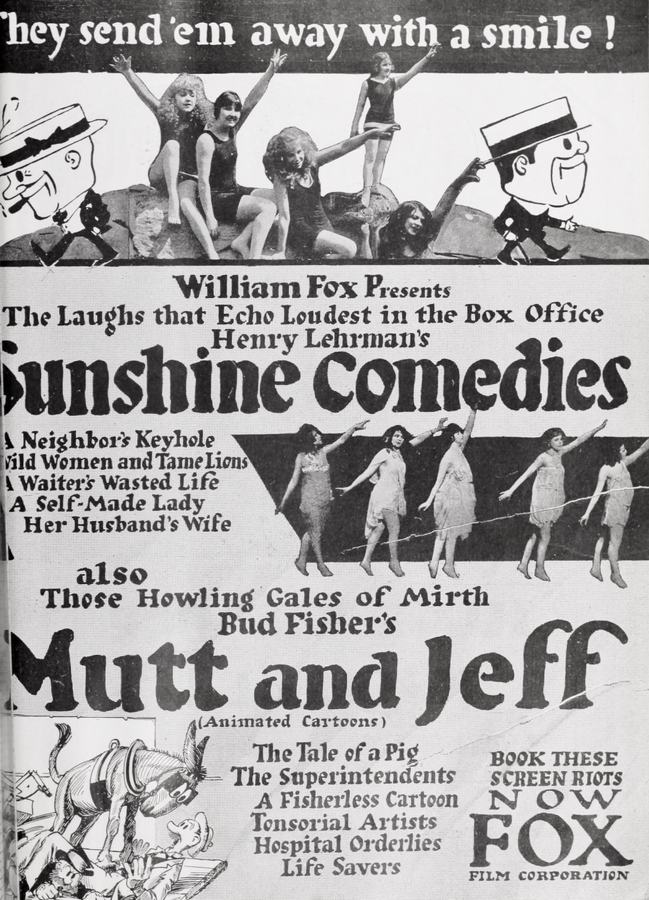
The flickering shadows of early cinema often held up a distorting mirror to human foibles, and few films captured the essence of urban alienation and the corrosive nature of unbridled curiosity quite like "A Neighbor's Keyhole." This cinematic gem, a quiet yet profoundly resonant exploration of voyeurism and the chasm between perception and reality, remains a testament to the power of visual storytelling in an era devoid of spoken dialogue. It's a film that, despite its presumed simplicity, delves into complex psychological terrain with an understated grace, inviting audiences not merely to observe, but to reflect on their own tendencies to judge from afar.
At its core, "A Neighbor's Keyhole" introduces us to Mr. Percival Smith, portrayed with a masterful blend of boredom and burgeoning obsession by George Binns. Binns crafts a character whose initial ennui is palpable, a man adrift in the quietude of his own existence, seeking external stimuli to fill an internal void. His apartment, a sanctuary that quickly becomes a prison of his own making, offers a singular, tantalizing aperture: the keyhole to his neighbor's dwelling. This seemingly innocuous opening transforms into a portal, not just to another apartment, but to the labyrinthine corridors of Percival’s own imagination. The film brilliantly uses this confined space to illustrate the expansive reach of human conjecture, demonstrating how a singular, limited viewpoint can spawn an entire universe of fabricated drama and intrigue.
The narrative arc is a slow, deliberate burn, charting Percival's descent from casual observer to full-blown psychological meddler. His neighbor, Miss Eleanor Vance, brought to life with an exquisite blend of grace and enigmatic privacy by Winifred Westover, becomes the unwitting subject of his relentless scrutiny. Westover’s performance is particularly noteworthy; she must convey a complete and innocent life without the benefit of direct interaction with Percival, relying solely on subtle gestures and expressions that Percival—and by extension, the audience—misinterprets. Her quiet domesticity, her routine tasks, her occasional visitors, all are filtered through Percival's increasingly distorted lens, transforming the mundane into the menacing, the innocent into the illicit.
The genius of "A Neighbor's Keyhole" lies in its ability to build genuine suspense and comedic tension from the most ordinary of circumstances. Percival's interpretations are the true antagonists here, his mind a fertile ground for suspicion. A frequent male visitor, played by Charles Dorety, becomes a clandestine lover rather than a brother or business associate. A struggle with an unwieldy object—perhaps a new hat stand or an awkwardly shaped piece of furniture—is perceived as a violent altercation. Even the seemingly innocuous actions of a maid, personified by Billie Ritchie, are imbued with an air of conspiratorial secrecy. The film deftly uses cross-cutting between Percival’s anxious, wide-eyed peering and Miss Vance’s perfectly innocent actions, creating a powerful ironic distance that both amuses and disquiets the viewer.
This narrative technique resonates deeply with films that explore the subjective nature of truth. One might draw a thematic parallel to the dramatic tension in No Man's Land, where characters operate under severe informational constraints, leading to profound misunderstandings and escalating conflict, albeit in a vastly different genre. Here, the 'no man's land' is the mental space between Percival's perception and Eleanor's reality. The film's direction, though subtle, plays a crucial role in maintaining this delicate balance. Close-ups on Percival's eye at the keyhole, juxtaposed with wider shots of Miss Vance's apartment that reveal the truth, are simple yet profoundly effective cinematic devices that guide the audience's understanding while immersing them in Percival's delusion.
The supporting cast plays a vital role in amplifying Percival's misguided crusade. Fritz Schade, perhaps as a gossipy building resident or a fellow busybody, provides an audience for Percival's outlandish theories, further fueling his conviction. This interaction highlights the communal nature of gossip and how easily misinformation can spread and gain credibility when a receptive audience exists. Hugh Fay, possibly as the building manager or a skeptical neighbor, serves as a grounded counterpoint, representing the voice of reason that Percival stubbornly ignores until the bitter end. The interplay between these characters, often communicated through exaggerated silent film gestures and expressions, adds layers of comedic relief and dramatic irony to Percival's escalating predicament.
The film’s exploration of societal scrutiny and the breakdown of privacy feels remarkably prescient, even for its era. In a world increasingly interconnected yet paradoxically isolated, the allure of observing others from a safe, anonymous distance remains a potent, often problematic, human impulse. "A Neighbor's Keyhole" serves as a timeless cautionary tale, reminding us that what we perceive through a narrow aperture is rarely the full, unvarnished truth. The comedic elements, particularly Percival's clumsy attempts to gather 'evidence' or his awkward encounters while spying, resonate with the slapstick sensibilities of the time, yet are always grounded in a deeper human truth about the absurdity of our own self-importance.
Beyond the performances, the film's aesthetic choices contribute significantly to its impact. The contrast between Percival's dimly lit, often cluttered apartment—symbolizing his confused mental state—and Miss Vance's brightly lit, orderly space—representing her transparent innocence—is a subtle yet effective visual metaphor. The cinematography would have relied heavily on stark contrasts and expressive lighting to convey mood and character. The keyhole itself, often framed as a tight circular vignette, becomes a character in its own right, a silent, all-seeing eye that distorts as much as it reveals. The set design, though likely minimal, would have been carefully chosen to facilitate the narrative of domesticity and its misinterpretation, with objects placed to be easily mistaken for something more sinister when viewed from an oblique, limited angle.
The film's pacing is also a masterstroke. It avoids rapid-fire gags, instead allowing the tension to build gradually, drawing the audience into Percival's psychological trap. This deliberate unfolding allows for a deeper engagement with the character's internal journey, making his eventual humiliation all the more poignant. This measured approach to storytelling can be seen in other character-driven silent dramas like The Awakening of Bess Morton, which similarly explores an individual's internal transformation, though through a lens of moral awakening rather than voyeuristic comeuppance. The slow revelation of truth, rather than a quick comedic punchline, imbues "A Neighbor's Keyhole" with a lasting resonance.
"A Neighbor's Keyhole" is more than a simple comedy of errors; it's a profound commentary on the human condition in an increasingly urbanized society. The apartment building, a microcosm of modern life, provides both proximity and isolation. Neighbors live mere feet apart, yet remain strangers, susceptible to forming elaborate, often erroneous, narratives about each other. This theme of social disconnectedness, where observation replaces genuine interaction, finds an interesting counterpoint in films like The Chaperon, which, while focusing on social decorum, also highlights the intricate dance of public perception and private lives in a communal setting. The film subtly suggests that Percival's voyeurism stems not just from malice, but from a profound loneliness and a desperate desire for engagement, however vicarious.
The climax of the film, where Percival's fabricated reality inevitably collides with Miss Vance's innocent truth, is both cathartic and deeply embarrassing. The moment of revelation, when the 'mystery' is unmasked as utter banality, is a powerful lesson in humility. Binns' portrayal of Percival's mortification is likely unforgettable, a physical manifestation of a shattered illusion. It’s a moment that transcends mere comedy, venturing into the realm of profound social commentary, echoing the universal discomfort of being caught in a lie, especially one born of unfounded suspicion. This type of dramatic reversal, where a character's elaborate scheme unravels due to simple truth, is a staple of many comedic and dramatic works, from Up a Tree (though more overtly farcical) to the more intricate plot twists of Believe Me, Xantippe.
"A Neighbor's Keyhole" stands as a timeless piece of cinema, its themes of privacy, perception, and the dangers of unchecked curiosity resonating as strongly today as they did upon its release. It's a reminder that the human tendency to observe, judge, and misinterpret is a constant, regardless of the technological advancements that facilitate such acts. The film's clever construction, relying on visual cues and the power of suggestion, showcases the remarkable ingenuity of silent filmmakers in conveying complex ideas without dialogue. It's a foundational text for understanding the cinematic exploration of voyeurism, paving the way for later, more explicit treatments of the subject.
The film's impact lies not just in its entertainment value, but in its ability to provoke introspection. It challenges the viewer to question their own assumptions, to consider the narratives they construct about others based on limited information. It's a poignant and often humorous examination of the human condition, a testament to the enduring power of storytelling to illuminate the darker, more curious corners of our collective psyche. In an era where digital 'keyholes' are ubiquitous, the lessons imparted by Percival Smith's unfortunate adventure remain acutely relevant, urging us to look beyond the surface, to seek understanding rather than judgment, and to respect the unseen lives unfolding behind every closed door.
IMDb —
1921
Community
Log in to comment.