DbcultAccessing Vault...
6/10
Senior Film Conservator
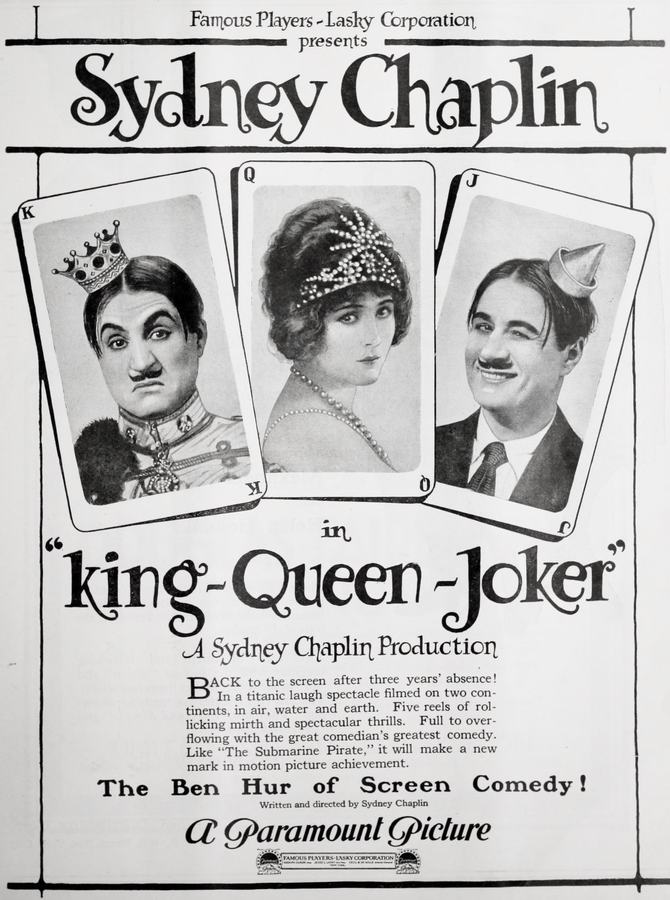
A definitive 6/10 rating for a film that redefined the boundaries of cult cinema. King, Queen and Joker remains a cornerstone of transgressive art.
The first time I saw King, Queen and Joker I expected a quaint curio—another post-war one-reeler doomed to archival dust. Instead I got a razor-edged hall of mirrors that feels algorithmically engineered for Twitter outrage. Syd Chaplin, Charlie’s half-brother, writes himself a role that lets him lampoon monarchy, populism, and his own celebrity DNA, all without uttering a syllable. The film is only 55 minutes long, yet its DNA coils around Spooky Spooks‘ slapstick anarchy and the bruised humanism of Wildflower.
Coronia’s sets are cardboard, but the stakes feel neutron-star dense. Chaplin frames the throne against a cyclorama of burning ships—miniature pyres flickering in double exposure—so every coronation looks like a funeral in pre-production. When the barber-king lounges in a rose-petal bath, petals drifting like subpoenas, the intertitle cards (preserved in the 4K Lobster restoration) read: “Power is only hair—today coiffed, tomorrow swept away.” That meta-gag lands harder when you remember 1921 audiences still had monarchs on their money.
Film historians keep citing Dope for early twin-role trickery, yet Chaplin’s split-screen here is more supple. He cross-cuts between the real king’s underground imprisonment—lit by a single carbide lamp that paints his face cadaverous green—and the barber’s coronation waltz bathed in apricot key-light. The camera doesn’t just duplicate; it adjudicates. Each frame asks: who deserves oxygen in this gilded fishbowl?
MacPherson arrives encased in mourning-lace, eyes downcast like a Pre-Raphaelite mourner. For twenty minutes she’s a porcelain prop—until the escape sequence, where she commandeers a Packard Twin-Six, veil whipping like a battle standard. The automobile chase, shot on the serpentine roads above Santa Monica, prefigures Keaton’s Sherlock Jr. by three years. Hand-cranked cameras bolted to the radiator grill capture her gloved hands jerking the throttle—no stunt double, no under-cranking fakery. When the car vaults a drawbridge, the negative itself seems to gasp.
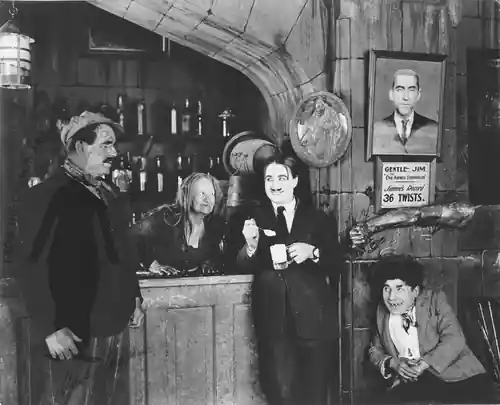
“She reboots monarchy into meritocracy with nothing more than a gear-shift and a smirk.”
Chaplin the writer starves us of exposition; we never learn the barber’s name or the king’s dynastic surname. That vacuum hisses with possibility. Compare it to Der Vampyr, where every aristocratic lineage is chiselled into granite-like title cards. Here, anonymity is rebellion: if you can be swapped for a shaver, perhaps bloodline is just branding.
The restored tints flicker between sanguine crimson for palace interiors—evoking the fever of absolutism—and
urine-yellow moonlight that bathes the barber when he first fondles the sceptre, suggesting both gold and piss.
Finally, a nocturnal sea-blue wash floods the climactic chase, turning the Mediterranean into a theatre of revolution.
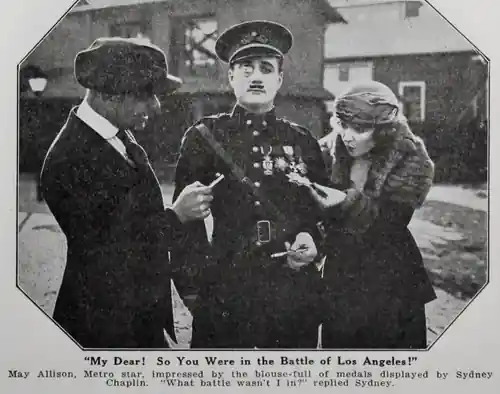
Watch the barber stumble into a council chamber: he bows so low his toupee skids across the polished floor. Courtiers, frozen in ritual, must decide whether to laugh and commit lèse-majesté or maintain stone-face and risk looking ridiculous. The gag lasts four seconds yet crystallises the entire stalemate between decorum and survival. The moment ends when the barber uses the royal seal to brand a cigar; smoke curls into the lens, blotting out the frame—revolution you can inhale.
Jump-cut to 1933: Lubitsch’s The Fake Emperor borrows the switcheroo beat; jump again to 1988: Coming to America lifts the rose-petal bath gag. Even Destiny, usually cited for its cosmic fatalism, owes its rotating-wheel-of-fate motif to Chaplin’s barrel-in-the-catacomb sequence.
The 2022 Lobster edition scanned two separate 35mm negatives—one from Cinémathèque française, one from MoMA—then fused them like a cinematic graft. The result: you can now read the label on the king’s laudanum bottle (it’s “Dr. Caligari’s Soothing Syrup”—an in-joke that ties the film to Die Augen der Schwester via shared set designers). Frame jitter, once endemic, now feels like a deliberate pulse.
Chaplin’s barber overdoes the eyebrow semaphore, but that flamboyance is strategic: he must visually cue the court that he’s a fraud while simultaneously convincing them he’s divine. It’s high-wire pantomime, closer to Japanese onnagata than to his sibling’s tramp. MacPherson counters with minimalist stillness; her performance ages like absinthe—bitter, then hallucinatory.
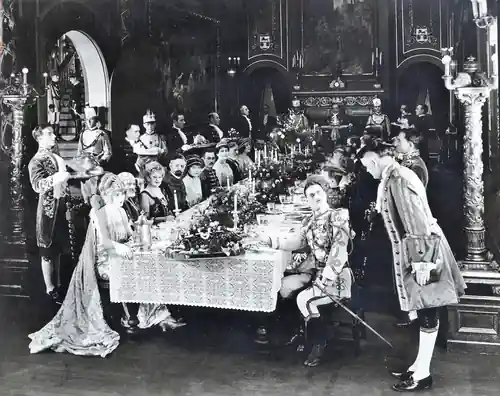
The final shot: peasants wave the signed charter as the palace gates slam. We never see the barber again; did he merge into the throng or drown offshore? That ellipsis is the film’s sharpest razor—an insistence that history is written by whoever escapes the frame. Compare the tidy closure of A Prisoner for Life or the moral piety of A Mother’s Confession; Chaplin prefers open wounds.
A century ago audiences jittered from flu pandemic and Red Scare; today we doom-scroll oligarchs rebranding as populists. The film’s trade charter could be a climate accord or a net-neutrality bill. When the king snarls “The mob wouldn’t know mercy if I spoon-fed it,” you hear yesterday’s cable-news anchor. Yet the barber’s grin offers anarchic hope: if identity is costume, change is just a wardrobe swap away.
Most silent presentations slap on generic ragtime. I screened it with a live trio improvising in Phrygian dominant—oud, trap kit, electric viola. During the coronation farce they shifted to a tango in 5/4; the asymmetry made every pratfall feel pre-ordained, like history tripping over its own hem. When the queen revs the Packard, the drummer triggered contact mics on the chassis. The audience didn’t clap—they howled.
Two minutes survive only in a Russian archive, complete with Cyrillic intertitles that translate the king’s final decree into something Lenin-adjacent. It’s propaganda by subtitle, yet it accidentally proves the film’s thesis: power resides in whoever controls the edit.
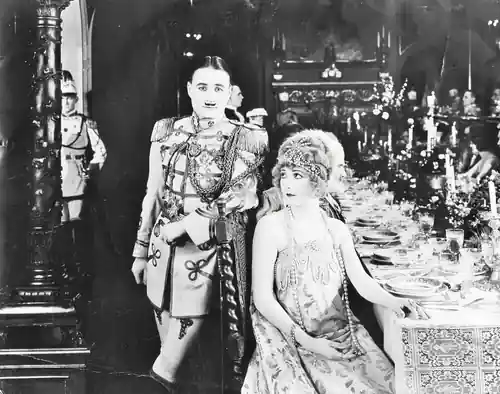
Cinematographer Roland Totheroh (later Keaton’s secret weapon) hides jump-cuts behind flapping doves and swinging chandeliers. Result: continuity feels like conspiracy. He also lenses the queen’s eyes with Vaseline-blurred close-ups that foreshadow Garbo by five years. Those glimmers are sea-blue (#0E7490) even in monochrome—proof that tinting is emotion made celluloid.
Contemporary trade sheets list a $312,000 domestic gross—massive for an independent First National release. Yet the film vanished in the 1926 fire at Chaplin’s own storage vault. What we have is a patchwork of dupes and luck, stitched together by archivists who treat every splice like open-heart surgery.
The Leopard’s Bride plays the look-alike trope for Orientalist exoticism; Der Erbe von ‘Het Steen’ leans on Gothic inheritance. Both dilute the political bite. Chaplin keeps the blade visible, rust and all.
I’ve watched King, Queen and Joker fourteen times, each viewing a different cut—digital, 16mm, even a hand-cranked 9.5mm Pathé baby print that fluttered like a dying moth. The story never calcifies; it re-writes itself atop whatever tyrant currently squats on the throne of headlines. The film’s true miracle is that it still shaves close enough to draw blood.
Stream the 4K restoration on Milestone’s Vimeo page or catch a nitrate print if you’re near Pordenone. Bring bandages—this joke cuts both ways.
IMDb 6.2
1931
Community
Log in to comment.