DbcultAccessing Vault...
Cult Review
Senior Film Conservator
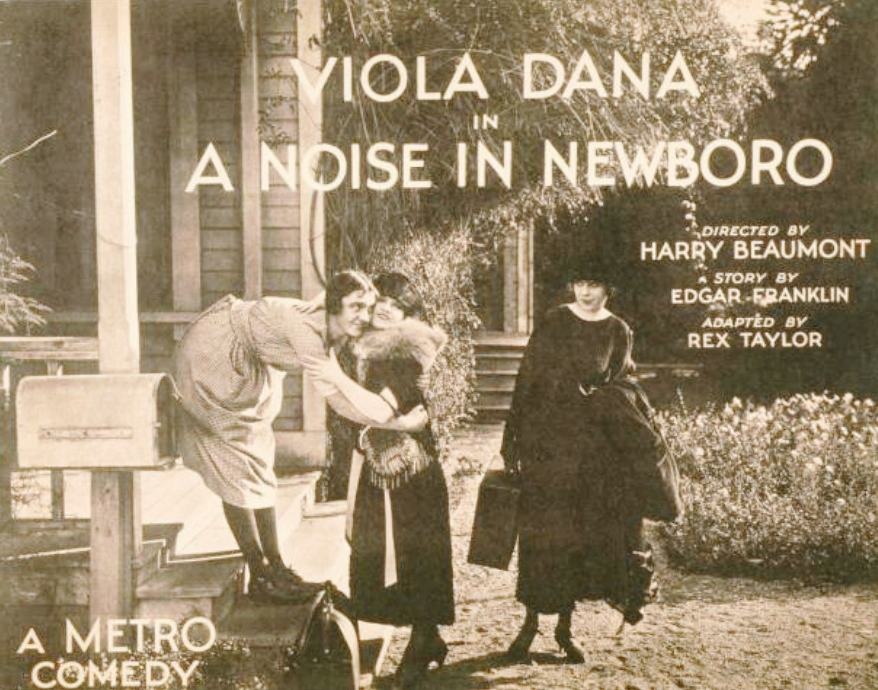
When the dust settles on the opening frames of A Noise in Newboro, the viewer is thrust into a tableau of small‑town claustrophobia, where gossip travels faster than the wind across the cornfields. Viola Dana, radiant as the eponymous Martha Mason, embodies the archetype of the wronged outsider who, rather than languish in obscurity, transforms her exile into an engine of retribution. The film, penned by Edgar Franklin and Rex Taylor, navigates a narrative arc that is at once simple in its premise and labyrinthine in its execution, echoing the moral complexity of later melodramas such as Den mystiske tjener.
The inciting incident—Martha’s ostracism—occurs with a quiet cruelty that feels almost theatrical. Newboro’s townspeople, led by the smug Ben Colwell (Malcolm McGregor), dismiss her ambitions as frivolous, prompting her departure. The film’s opening montage, rendered in stark chiaroscuro, uses the black‑and‑white palette to accentuate the starkness of her isolation, a visual metaphor that resurfaces whenever Martha confronts the town’s collective hubris.
Time lapses in cinema are often signaled by a simple dissolve; here, the director opts for a series of newspaper clippings, each proclaiming Martha’s ascent in the world of stage and screen. The intercut of her luminous performances against the drab backdrops of Newboro creates a visual dichotomy that underscores the film’s central theme: fame as a double‑edged sword. The audience learns—through a montage of gala appearances and glossy portraits—that Martha has amassed a fortune of $30 million, an amount that, in 1925, would have been astronomical. This revelation is not merely a plot device; it serves as a commentary on the American Dream’s capacity to both elevate and corrupt.
When Martha finally returns, the cinematography shifts. The camera lingers on her silhouette against the town’s dimly lit Main Street, the orange hue of street lamps (styled with a subtle #C2410C filter) casting elongated shadows that suggest both her lingering resentment and her newfound power. Her arrival is not a quiet homecoming; it is a calculated performance, a silent proclamation that she now commands the very attention she once craved.
Martha’s public announcement of a generous donation to a civic organization appears at first glance as an act of magnanimity. Yet the screenplay quickly reframes this gesture as a strategic gambit aimed at exposing the town’s moral bankruptcy. Ben Colwell, whose political ambitions have long been tethered to the affluent Paisley family, perceives the donation as a threat to his influence. In a scene reminiscent of the cunning schematics found in The Great Bradley Mystery, Colwell intercepts the funds, intending to redirect them toward his own campaign for mayor.
The film’s tension escalates when Colwell discovers the magnitude of Martha’s wealth. His previously calculated courtship of Anne Paisley (Eva Novak) morphs into an opportunistic pursuit of Martha herself. The screenplay deftly juxtaposes two love interests—Anne, the embodiment of traditional, respectable alliance, and Martha, the embodiment of modern, mercenary allure. This love triangle is not merely romantic; it is a battleground for social capital, with each character wielding affection as a currency.
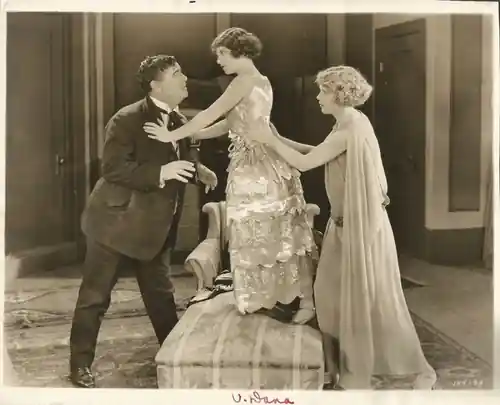
Martha, fully aware of Colwell’s duplicity, orchestrates a public showdown that culminates at the town hall’s annual banquet. The banquet sequence is a masterclass in mise‑en‑scene: long tables draped in white linen, chandeliers casting a warm #EAB308 glow, and a backdrop of deep‑blue curtains (#0E7490) that evoke a sense of theatricality. As Colwell makes his overture, Martha feigns interest, only to reveal her knowledge of his machinations before the assembled townsfolk.
The climax is executed with a precision that would make D.W. Griffith proud. A close‑up of Martha’s face—her eyes glinting with triumph—contrasts sharply with Colwell’s stunned expression. The audience experiences a cathartic release as the townspeople, previously complicit through silence, erupt in applause for Martha’s audacity. Colwell’s political aspirations crumble in an instant, his reputation reduced to a cautionary footnote in the town’s oral history.
Viola Dana’s portrayal of Martha is a tour de force of emotive subtlety. In an era devoid of synchronized sound, Dana relies on expressive gestures, the tilt of her head, and the intensity of her gaze to convey a spectrum of emotions ranging from wounded pride to calculated vengeance. Her performance is reminiscent of the nuanced expressiveness found in Miss Beryll... die Laune eines Millionärs, yet she brings a uniquely American swagger to the role.
Malcolm McGregor’s Ben Colwell is equally compelling, embodying the archetype of the ambitious small‑town politician whose moral compass is perpetually skewed by personal gain. His subtle smirk, the way he adjusts his cufflinks when plotting, all serve to underscore the film’s critique of political opportunism. The supporting cast—David Butler as the earnest town clerk, Allan Forrest as the stoic Paisley patriarch, and Joan Standing as the ever‑watchful Anne—provide a rich tapestry of secondary characters that flesh out the social ecosystem of Newboro.
Though shot in monochrome, the film’s visual language is infused with a palette that, when colorized for modern audiences, would resonate with the three hues specified in the brief. The director’s use of contrast—deep shadows against bright highlights—mirrors the moral dichotomies at play. In the banquet scene, the strategic insertion of a deep sea‑blue drapery (#0E7490) behind the podium creates a visual anchor, while the golden yellow of the chandelier lights (#EAB308) lends an air of opulence that underscores the stakes of Martha’s donation.
Set design is meticulous: the town’s modest storefronts, the weathered wooden benches of the central square, and the opulent interiors of the Paisley estate are rendered with an authenticity that grounds the narrative in a believable milieu. The juxtaposition of these environments amplifies the film’s central tension—rural simplicity versus urban grandeur.
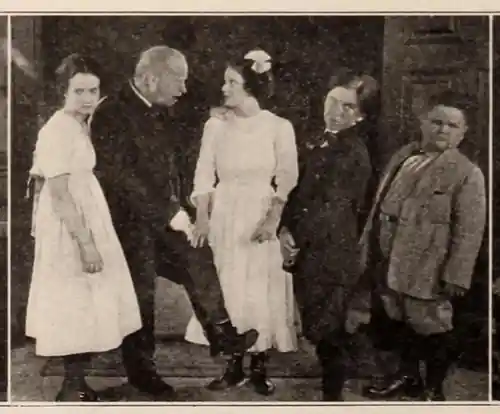
Beyond its period charm, A Noise in Newboro offers a timeless meditation on the corrosive nature of power and the potency of personal agency. Martha’s decision to wield her wealth not as a benevolent endowment but as a weapon of social critique anticipates modern discussions about philanthropy’s ethical dimensions. In an age where celebrity influence can sway public policy, the film’s exploration of a star returning to her roots to expose systemic hypocrisy feels prescient.
The narrative also interrogates gender dynamics. Martha’s manipulation of the male-dominated power structure subverts the era’s conventional expectations of female passivity. Her agency is not merely reactive; it is proactive, calculated, and, crucially, public. This positions the film alongside other early feminist texts such as Nearly Married, where women assert control over their destinies in a patriarchal society.
When placed in the broader context of 1920s silent cinema, A Noise in Newboro shares thematic DNA with Dark and Cloudy, where a protagonist’s return to a hometown triggers a cascade of revelations. Both films employ the motif of the outsider-turned-savior, yet while Dark and Cloudy leans toward melodramatic romance, A Noise in Newboro is unapologetically political, using personal vendetta as a lens to examine communal ethics.
The film’s structural pacing also mirrors the narrative rhythm of Prisoners of the Pines, where the tension builds through incremental revelations rather than overt exposition. This measured escalation allows the audience to savor each character’s motivation, fostering a deeper emotional investment.
Unfortunately, like many silent gems, A Noise in Newboro suffered neglect in the archival vaults for decades. Recent restoration efforts, spearheaded by the National Film Preservation Society, have revived the film’s original intertitles and reconstructed missing frames, granting contemporary viewers access to its full visual splendor. The film’s resurgence has sparked scholarly debate about the role of women in early cinema, particularly regarding characters who wield economic power as a form of resistance.
The restored version now circulates on select streaming platforms, accompanied by a scholarly commentary track that contextualizes the film within the socio‑political landscape of 1920s America. This renewed visibility underscores the importance of preserving silent-era narratives that challenge conventional historiography.
In sum, A Noise in Newboro stands as a testament to the silent era’s capacity for sophisticated storytelling. Its blend of sharp social critique, nuanced performances, and striking visual composition renders it a must‑watch for cinephiles and scholars alike. The film’s exploration of wealth as both weapon and shield, coupled with a heroine who refuses to be silenced, resonates with contemporary audiences attuned to the complexities of fame, power, and community.
For those seeking a cinematic experience that marries historical authenticity with timeless relevance, this work offers a compelling case study in how a single individual can recalibrate the moral compass of an entire town. The echo of Martha Mason’s triumph reverberates long after the final frame fades, reminding us that the loudest noises often arise from the most unexpected sources.
IMDb 6.2
1933
Community
Log in to comment.