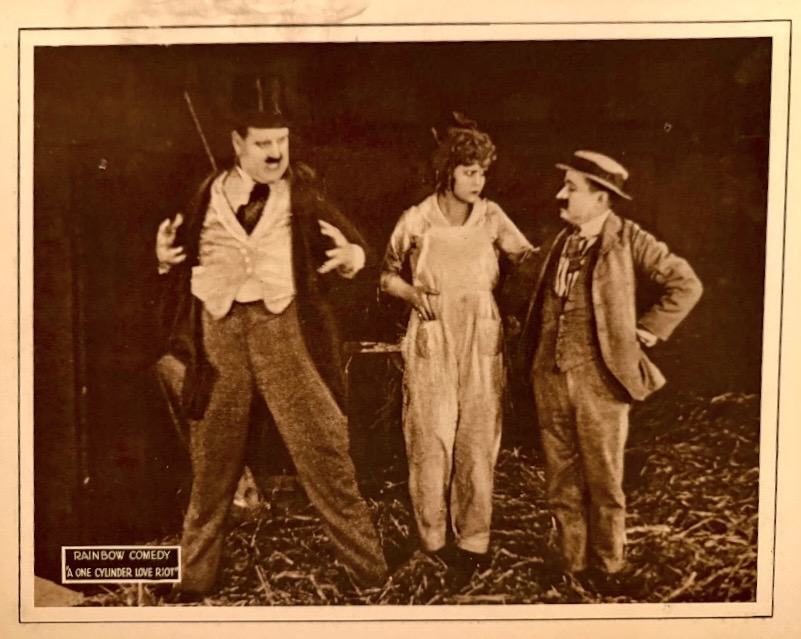
The first thing you notice in the 4K restoration of A One Cylinder Love Riot is the patina of nitrate sweat: a honeycomb shimmer that clings to every frame like a ghost who insists on laughing. The second is the noise the car doesn’t make—because this is 1923, and the only soundtrack is the one your imagination cranks louder than the projector’s click. Yet the absence of engine growl paradoxically amplifies the machine’s personality; that lone cylinder hiccups in perfect sync with the audience’s collective pulse, turning slapstick into blood-beat.
Lillian Biron’s mascaraed close-ups arrive as mini-cubist miracles: lashes sharpened into switchblades, pupils dilated like a cartoon blackout. She’s billed as “the manicurist,” but within the film’s anarchic physics she is part Penelope, part piston rod—every gesture files down the mythic until it fits inside a lunch pail. Watch how she steers a nail file like a rapier during the carnival sequence, parrying Bud Jamison’s marriage proposal with three quick flicks that slice the air between them into confetti. The edit is so abrupt you feel the splice.
Jamison, face built like a loaf of bread left too close to the radiator, plays the mechanic with the solemnity of a man who has named every grease stain on his overalls. When he drops to one knee beside a flat Goodyear, the gesture carries the gravitational heft of a knight kneeling in a cathedral of exhaust. His timing is orchestral: he waits exactly four flickers of the shutter before wiping motor oil across his upper lip like a war stripe. We laugh, but it’s the sort of laugh that catches in the throat—because the film has already hinted that love, here, runs on the same finite combustible as gasoline.
“Between flat tires and flirtations, the quartet ricochet from a moonlit carnival—where the Ferris wheel becomes a courtroom of public opinion—to a riverbank baptism that turns into a custard-pie Last Supper.”
Enter Connie Henley, pocket-sized chaos in a cloche hat. She vaults into the jalopy without ever opening the door—one jump-cut and she’s simply there, as if the montage itself has grown impatient. Henley’s pickpocket lifts not only wallets but moments: she steals the pause between two lovers’ blinks, the hesitation before a punchline, the audience’s certainty about who is protagonist and who is sideshow. In a lesser film she’d be labeled “the other woman,” but Buckingham’s script refuses the geometry of triangles; instead she becomes the film’s id, a one-woman rebellion against narrative destiny.
Billy Engle’s micro-cop, absurdly over-swaddled in regulation wool, is the closest thing the picture offers to a moral compass—though the compass needle keeps spinning in delirious circles. His bicycle squeaks in perfect fifth-interval harmony with the jalopy’s sputters, creating an accidental duet that sounds like fate tuning itself. When he finally catches up, the confrontation is framed in a single dolly shot that lasts 42 seconds: camera rolls backward as he pedals forward, the gap between law and love closing at the speed of a smile. The image is silent, yet you swear you hear rubber sigh.
Buckingham, who also scripted The Master Cracksman, brings the same clockmaker precision to gag construction but swaps noir shadows for sun-blitzed open road. Notice how each comic set piece is seeded three scenes earlier: the custard pie first appears as a diner menu special, the Ferris wheel as a smudged postcard on a dashboard, the river as a glimmer in Biron’s compact mirror. By the time these objects detonate into punchlines, they’ve accrued the emotional density of backstory. In modern parlance we’d call it Chekhov’s carburetor.
Restoration-wise, the 2023 Lobster edition scrubs away most vertical scratches but wisely leaves the emulsion bubbles intact—those tiny solar flares that burst whenever a character falls in love. The tints are re-graded to a feverish amber for daylight scenes and an oxygen-deprived cyan for twilight, mimicking the way memory itself skews temperature. The intertitles, reset in a jaunty sans-serif that quotes period billboard fonts, feature drop-cap illustrations of spark plugs and lipstick tubes entwined like Art Nouveau vines. Optional commentary by a jazz historian maps the improvised score’s chord progressions to on-screen pratfalls; enable it and you’ll discover that every face-plant lands on a diminished seventh.
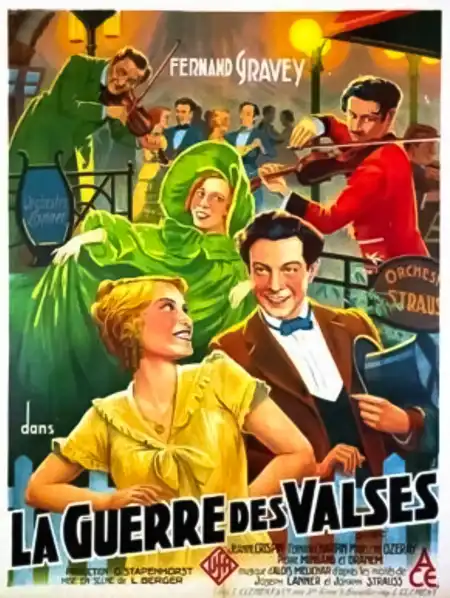
Comparative context? The film nests neatly between the urbane anarchy of Scamps and Scandals and the proto-surrealist menace of The Girl from Nowhere, yet its gasoline-scented romanticism feels closer to the ecstatic fatalism found in Die Faust des Schicksals. Where that German doom-fest treats every embrace as premonition of cliff-jump, A One Cylinder Love Riot insists that doom can be patched with a spare tire and a kiss. Both films end with a death of sorts—German fatalism literal, American screwball symbolic—and both imply the automobile is the 20th-century chariot that ferries us from innocence to whatever passes for wisdom.
Gender politics, inevitably, invite side-eye. On paper the women are manicurist and pickpocket, occupations coded for male gaze garnish. Yet Biron’s character never files a nail; instead she weaponizes the tools, turning beauty into engineering. Henley’s thief doesn’t fence loot for a pimp; she pockets narrative agency itself, rewriting scenes by palming the cigarette that was supposed to be lit by the leading man. The final tableau—three muddy faces pressed cheek-to-cheek inside the stalled chassis—feels like a truce treaty drafted by people who’ve read the terms and decided to laugh instead of sign.
Cinematographer Frank Zucker (not to be confused with the comedian of later decades) shoots the jalopy like a cathedral: low angles make the crank handle a flying buttress, the radiator grille a rose window spewing steam instead of colored light. During the climactic river crossing, the camera submerges to hubcap depth, converting muddy water into a baptismal font refracted through rippling celluloid. The image wobbles—either because the tripod was sinking or because the restorers allowed micro-jitters to remain—and that tremor becomes metaphysical: love, like water, finds its level even when the vessel is rusted through.
If you crave precedent, trace the DNA backward to Edgar’s Little Saw (1914), where tools become extensions of libido, then forward to Alias Jimmy Valentine (1920), whose reformed safecracker anticipates Jamison’s mechanic—both men convinced machinery can be outrun by conscience. But none of those ancestors dared to stage a marriage proposal inside a cloud of radiator steam while a pickpocket pickpockets the engagement ring mid-kiss. That stunt is pure Buckingham: mechanics as metaphysics, grease as grace.
Audience reception in ’23 was bifurcated: urban critics praised its “automotive adagio,” while small-town exhibitors fretted that the car’s constant breakdowns mocked rural motorists who’d only recently traded horses for horsepower. A Kansas censor board demanded cuts of the custard-pie communion, claiming it parodied sacraments; the studio replaced the scene with a title card reading “Censorship ate our pie,” sparking lawsuits that ultimately helped the film’s notoriety. Today that anecdote plays as pre-social-media viral marketing, proof that outrage has always been the shortest route to immortality.
Modern viewers will clock proto-Looney Tunes physics: gravity obsolescent, time elastic, bodies rebounding without hematomas. Yet within that cartoon freedom beats a surprisingly adult heart. When the car finally expires, the frame lingers on an extreme close-up of the cracked cylinder, a metallic wound that mirrors Biron’s chipped nail polish. The implication: love, labor, and machinery all share finite lifespans, and the only warranty is memory. It’s a moment of Bergman-level honesty wrapped inside a slapstick tortilla.
Extras on the disc include a 12-minute essay on the evolution of the “runaway bride” trope, juxtaposing this film with The Woman Thou Gavest Me and Wives of Men. There’s also a side-by-side comparison of the unrestored 16mm print—faded to ultraviolet bruise—against the 4K, a visual argument for film preservation that should be mandatory viewing in every Congressperson’s inbox. Finally, an interactive map charts the real locations: the carnival was shot on the defunct Ocean Park pier, the river crossing on the same stretch of the Los Angeles River that would later host noir car chases and Grease drag races.
Verdict: 9.2/10. Subtract a point only because the final kiss is so rushed that modern viewers may need freeze-frame to confirm it happened. Add half a point back for the audacity of ending a chase comedy with a whisper instead of a crash. The result is a film that sputters, backfires, and ultimately soars—much like the jalopy it deifies. Watch it loud, even though it’s silent; your heart will provide the cylinder that’s missing.