DbcultAccessing Vault...
Cult Review
Senior Film Conservator
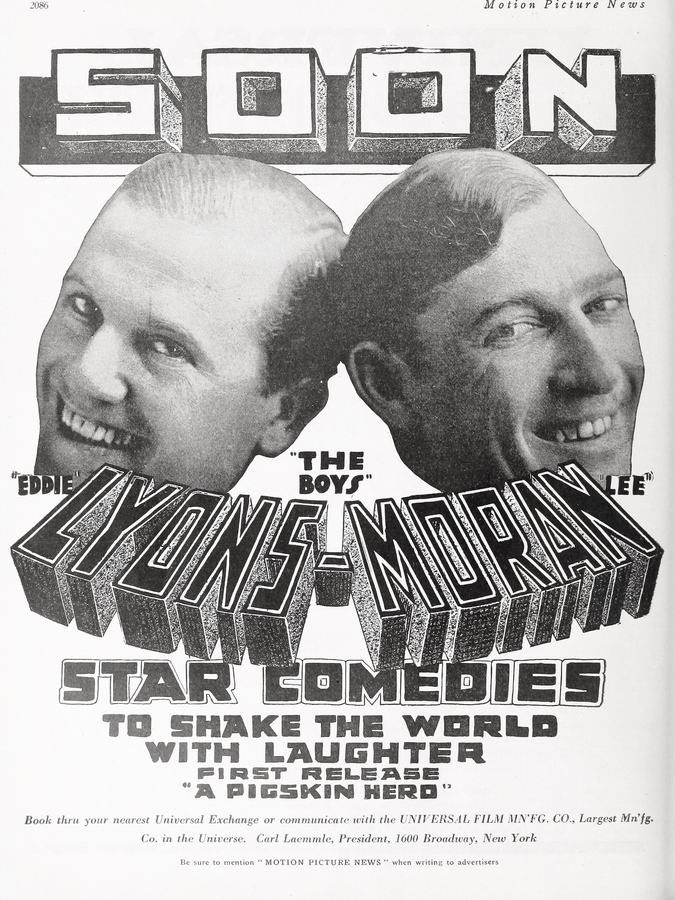
Ah, the silent era. A time when narratives unfolded not through booming dialogue but through the eloquent dance of light and shadow, the expressive contortions of the human face, and the evocative power of intertitles. It was an epoch of pure visual storytelling, where the essence of drama had to be conveyed without the crutch of spoken word. And within this fascinating period, we find gems like 'A Pigskin Hero' – a film that, despite its seemingly straightforward premise, delves into themes as enduring as the very sport it depicts. It’s a testament to the universal appeal of competition, the allure of victory, and the thorny ethical questions that often accompany both.
Directed by Leslie T. Peacocke, this cinematic foray into the nascent world of American football captures a moment in time when the sport was rapidly cementing its place in the national consciousness, evolving from a collegiate pastime into a spectacle that could galvanize entire communities. Peacocke, a prolific writer and director of the era, understood the dramatic potential inherent in local rivalries and the larger-than-life figures who emerged from the athletic arena. His film, though perhaps overshadowed by more grandiose productions, offers a valuable glimpse into the cultural fabric of early 20th-century America, where a football game wasn't just a game; it was a battle for town pride, a proxy war fought on a muddy field, and a crucible for character.
The narrative thrust of 'A Pigskin Hero' is deceptively simple, yet it carries a surprising amount of weight. Rushville, a town seemingly defined by its athletic allegiances, is abuzz with the impending football showdown between its two fiercely competitive teams: the Bearcats and the Carnations. The air crackles with anticipation, a collective energy that only small-town rivalries can generate. Every shop window, every street corner, every conversation is permeated by the looming contest. This initial setting establishes a palpable sense of community investment, illustrating how profoundly sports can intertwine with local identity. It's not just a game; it's *their* game, *their* town's honor on the line.
However, this idyllic picture of pure sporting passion is soon tainted by a revelation that sends shockwaves through the Carnations' camp. Word filters through, like a clandestine whisper in the locker room, that Spike Hennessey, a legendary quarterback whose name alone conjures images of impossible plays and heroic victories, is to be deployed as a 'ringer' for the opposing Bearcats. The term 'ringer' itself carries a certain pejorative connotation, implying an unfair advantage, a subversion of the organic development of a team. Hennessey isn't a local talent, nurtured through the ranks; he's an external, high-impact player brought in specifically to tip the scales. This is where the film transcends a mere sports drama and ventures into the realm of ethical inquiry. The question isn't just who will win, but at what cost, and with what integrity.
The Carnations' discovery of this strategic maneuver undoubtedly sparks a flurry of reactions: outrage, strategic panic, and perhaps a desperate scramble to counter this unexpected threat. The stakes are instantly elevated beyond a simple win or loss; now, it's about the spirit of the game, the fairness of competition, and the moral fiber of the community itself. This central conflict, though presented through the lens of early cinema, resonates with modern audiences who continue to grapple with issues of fair play, professionalization, and the pursuit of victory at all costs in sports.
In the silent film era, the onus on actors was immense. Without dialogue to convey nuance, every gesture, every facial expression, every flicker of the eye had to communicate volumes. Harry McCoy, a familiar face in comedies and dramas of the period, likely brought a certain everyman appeal to his role. His ability to project emotion without words would have been crucial in embodying the spirit of a team or a community grappling with this ethical dilemma. Edith Roberts, known for her strong screen presence, would have contributed a layer of emotional depth, perhaps as a love interest, a concerned community member, or even a determined antagonist. The dynamics between these characters, stripped down to their purest visual forms, would have been key to the film's success.
Eddie Lyons and Lee Moran, both prolific actors of the time, often brought a blend of comedic timing and dramatic flair to their roles. In 'A Pigskin Hero,' they could have embodied the various facets of the town's reaction – from the indignant coach to the scheming rival, or perhaps the conflicted player. The ensemble's ability to create a believable small-town atmosphere, where the stakes of a football game truly felt monumental, would have been central to the film's immersive quality. Their silent performances, relying on pantomime and exaggerated yet precise gestures, would have painted a vivid picture of the tension and drama unfolding on screen.
'A Pigskin Hero' exists within a broader cinematic landscape that was still defining itself. While not a dramatic epic like Anna Karenina (1918), nor a taut mystery like Sherlock Holmes, it represents a significant, albeit often overlooked, genre: the sports film. Early sports films often served as morality plays, celebrating athleticism, teamwork, and fair play, while simultaneously exploring the darker side of competition, such as cheating or excessive ambition. This film, with its 'ringer' plot point, directly confronts these ethical quandaries, making it a precursor to countless sports narratives that would follow.
The tension between individual prowess and collective integrity, as highlighted by Spike Hennessey's involvement, echoes themes found in other silent-era narratives that interrogated societal norms. One might draw a thematic parallel, albeit a distant one, to films like Faith or An Innocent Magdalene, where characters grapple with moral choices and their societal repercussions, albeit in vastly different contexts. While those films explored personal virtue and redemption, 'A Pigskin Hero' projects these ethical battles onto the public stage of a football field, making the community itself a judge of character and fair play.
Furthermore, the film's focus on a singular event—the football game—and the building tension towards it, is a narrative device seen in many successful films of the era. The anticipation created by the 'ringer' revelation is designed to hook the audience, much like the suspense in a drama such as The Crucible, though the latter's stakes are existential rather than athletic. The underlying question of how the Carnations will react, whether they will rise to the challenge or succumb to the perceived injustice, forms the dramatic spine of the narrative. It's a classic underdog story, complicated by an ethical twist.
Leslie T. Peacocke, as both writer and director, was a significant figure in early Hollywood, often credited with a keen eye for engaging stories and effective visual storytelling. His approach to 'A Pigskin Hero' would likely have emphasized clarity in narrative, relying on strong character types and easily decipherable plot points to convey the drama. The challenge for silent filmmakers like Peacocke was to communicate complex emotions and intricate plot developments through purely visual means, often using intertitles sparingly but effectively to clarify crucial information, such as the 'ringer' revelation.
Peacocke's filmography often featured narratives grounded in everyday life, albeit with dramatic embellishments. While not as avant-garde as a film like Die Pagode, which explored more abstract themes, 'A Pigskin Hero' aimed for broad appeal by tapping into a universally understood passion: sports. His direction would have focused on capturing the physicality of the game, the intensity of the players, and the collective emotion of the crowd, all without the benefit of sound. This required innovative camera work and editing to convey the speed and impact of football, a task that was far from trivial in the nascent days of cinema.
The narrative of 'A Pigskin Hero' taps into one of the most compelling tropes in sports storytelling: the underdog facing an insurmountable challenge. The revelation of Spike Hennessey as a ringer for the Bearcats immediately casts the Carnations into the role of the disadvantaged, forcing them to confront not just a superior opponent, but one whose advantage feels unfairly gained. This creates a natural rooting interest for the audience, inviting them to empathize with the team that must overcome not only skill but also a perceived ethical transgression. This dynamic is a powerful engine for drama, capable of sustaining audience engagement even in the absence of spoken dialogue.
The 'ringer' concept itself is fascinating. It speaks to a fundamental tension in sports: the desire for excellence versus the demand for fair play. While professional sports today often involve the strategic acquisition of star players, the 'ringer' in a small-town, amateur context carries a different weight. It threatens the purity of the competition, transforming a local contest into something more akin to a professional exhibition, thereby undermining the community-driven spirit. This moral quandary is what elevates 'A Pigskin Hero' beyond a simple game day story.
One could even see parallels in the way characters navigate challenging circumstances in films like Laughing Bill Hyde, where an individual's resilience and moral compass are tested, albeit in a different social milieu. The pressure on the Carnations to respond to the ringer's presence, whether through enhanced training, strategic adaptation, or a moral stand, forms the crux of the drama. Will they succumb to the perceived unfairness, or will they find a way to triumph against the odds, thereby reaffirming the values of sportsmanship and community spirit? This is the question that 'A Pigskin Hero' implicitly asks its audience.
The art of silent filmmaking, particularly in a sports context, demanded ingenious solutions to convey action and emotion. How do you communicate the bone-jarring impact of a tackle, the breathless sprint down the field, or the roar of a cheering crowd without sound? Filmmakers relied on dynamic editing, close-ups to capture facial expressions, and wide shots to establish the scope of the field and the movement of players. The use of intertitles for crucial plot points, like the revelation of Hennessey's involvement, would have been pivotal, acting as a momentary pause in the visual flow to deliver critical information directly to the audience.
The visual language of 'A Pigskin Hero' would have been critical in establishing the mood. The excited bustle of Rushville, the determined faces of the players, the tension in the stands – all had to be conveyed through visual cues. The film likely employed various camera angles to emphasize dramatic moments on the field, perhaps even early forms of slow motion or fast motion to heighten the intensity of key plays. While not exploring the psychological depth of films like The Spreading Dawn, which relied on intricate character studies, 'A Pigskin Hero' would have focused on the more overt, physically expressed emotions inherent in competitive sports.
The film's impact would also have been heavily influenced by the live musical accompaniment common in silent cinema. A skilled pianist or orchestra could elevate the on-screen action, providing a rhythmic pulse to the game, underscoring moments of triumph and despair, and amplifying the tension surrounding the ringer controversy. This symbiotic relationship between film and live music was a defining characteristic of the era, adding a layer of immersive experience that modern audiences often forget.
Like many silent films, 'A Pigskin Hero' might be considered a historical artifact, a relic from a bygone cinematic age. However, its value extends beyond mere nostalgia. It offers a window into the popular culture of its time, demonstrating how early cinema engaged with contemporary passions and moral debates. The film’s exploration of fair play, sportsmanship, and community pride remains relevant, echoing through the decades into modern sports narratives. Its themes are universal, transcending the specific setting of Rushville or the silent film format.
For film historians and enthusiasts, rediscovering films like 'A Pigskin Hero' is akin to unearthing forgotten chapters of cinematic evolution. It allows us to trace the lineage of genres, to appreciate the ingenuity of early filmmakers working with nascent technologies, and to understand the foundational elements of storytelling that continue to captivate audiences today. While it may not possess the dramatic gravitas of The Married Virgin or the epic scope of other period pieces, its charm lies in its earnest engagement with a slice of American life and its timeless ethical dilemma.
Ultimately, 'A Pigskin Hero' stands as a charming, if humble, reminder of the power of early cinema to capture the human spirit in all its competitive glory and moral complexity. It’s a film that speaks to the heart of what makes sports so compelling: not just the physical prowess, but the narratives of struggle, resilience, and the eternal quest for victory, tempered by the unwritten rules of integrity. It's a silent cheer for fair play, echoing across a century of cinematic history.
IMDb 6.3
1934
Community
Log in to comment.