Summary
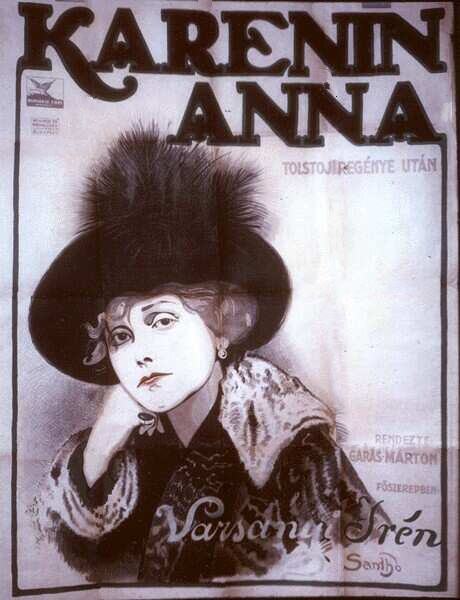
A fevered danse macabre unfurls inside a snow-globe St-Petersburg where Irén Varsányi’s Anna, porcelain yet incandescent, pirouettes between chandeliers and shame; her eyelashes catch the wax of a loveless marriage while a crimson spotlight—borrowed from the opera house that frames half the film—bleeds across her cheekbones, foreshadowing the blood she will later spill on railway steel. Count Vronsky, here a sleek silhouette rather than a fleshy paramour, materialises as a flicker of epaulettes in her boudoir mirror, their courtship staged in a stroboscopic montage of gloved hands, opera glasses and silk trains that hiss across parquet like restless serpents. The camera, drunk on German-expressionist angles, tilts until the aristocratic salon becomes a funhouse; servants freeze into busts, wallpaper blooms with locomotive steam, and Anna’s veil transmutes into a shroud. Cuckolded Karenin, played by Adolf Sieder with the rigidity of a Tsarist paper-doll, is lit from below so that his beard carves gothic shadows across the iconostasis; when he tears up Anna’s love letter, each shred flutters upward like a penitential soul, superimposed over the smoking stack of the very train that will, in the coda, pulp her fractured dreams beneath iron wheels. The child, little Seryozha, is filmed through a fish-eye lens: his cherubic face balloons, distorting into an accusatory putto while Tchaikovskian strings saw at the viewer’s nerves. Intertitles, handwritten in trembling cyrillic, confess Anna’s mortal sin yet refuse absolution; the final shot reverse-motion resurrects her corpse onto the platform only to collapse again—an infinite loop of desire and doom that predates Vertigo’s obsession by four decades.
Synopsis
Mail author for translation. A halhatatlan mûvészi alkotások úgy vonzzák a mûélvezõket, mint a boldog találkozások színhelye a szerelmeseket; több- ször is visszatérnek hozzá. Tolsztoj gyönyörû regénye, a Karenina Anna is ezek közé a mûvek közé tartozik - csak film idáig tíz készült belõle. A regénynek világszerte leg- ismertebb változata 1936-ból való. Fõszereplõje Greta Garbo. Az 1948-as Karenina Anna, Julien Duvivier munkája az eddigi legjobb megfilmesítés. Némafilm viszont egy készült szerte a világon, amely Annát úgy ábrázolja, mint a regény: a sze- relmet sóvárgó asszony alakját teátrális eszközökkel mu- tatja be, aki felnagyított társadalmi konvenciók közt él, s az elõírt és elvárt szabályokat nem igazán tûri. Ter- mészetes meleg érzésekkel közeledik közvetlen környeze- téhez, hiszen éppen ezek az érzések hordozzák magukban a konvenciók, a képmutatás elleni lázadás lehetõségét.
Review Excerpt
"
A Snow-Storm of Shadows: Inside the 1918 Fever Dream
Imagine, if you dare, a world where every ball gown is a death-shroud stitched with pearls and every whispered “I love you” detonates like shrapnel across a drawing-room. That world is Anna Karenina 1918, a one-of-a-kind Hungarian silent that treats Tolstoy’s tome not as polite literature but as an opium hallucination. The film, believed lost until a nitrate fragment surfaced in a Transylvanian cloister, now flickers again like a magnesium fl..."