DbcultAccessing Vault...
Cult Review
Senior Film Conservator
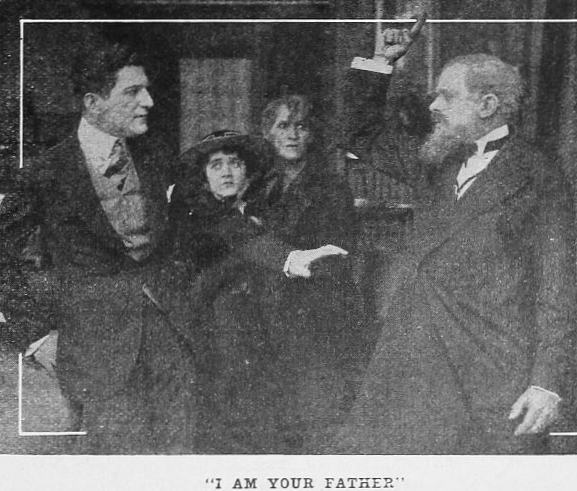
The 1917 adaptation of William J. Locke’s The Fortunate Youth stands as a towering, if occasionally overlooked, monolith of silent era storytelling. It is a film that refuses to be categorized simply as a 'rags-to-riches' fable, instead opting to interrogate the very nature of identity and the precariousness of social mobility in a rigid Edwardian landscape. While many contemporary works of the era, such as The Chattel, focused on the transactional nature of human relationships, this film pivots toward the internal psychological warfare of a man living a lie for the sake of a higher truth.
Davison Clark’s portrayal of the younger Paul, and John Merkyl’s subsequent transition into the adult Paul Savelli, provides a fascinating study in character continuity. The early scenes in the industrial north are shot with a gritty verisimilitude that borders on the naturalistic, capturing the suffocating atmosphere of a home dominated by a brutalist stepfather. This is not the sanitized poverty often seen in Hollywood productions of the same decade. It is a visceral, tactile misery that makes Paul’s eventual flight to London feel less like a choice and more like a biological necessity for survival.
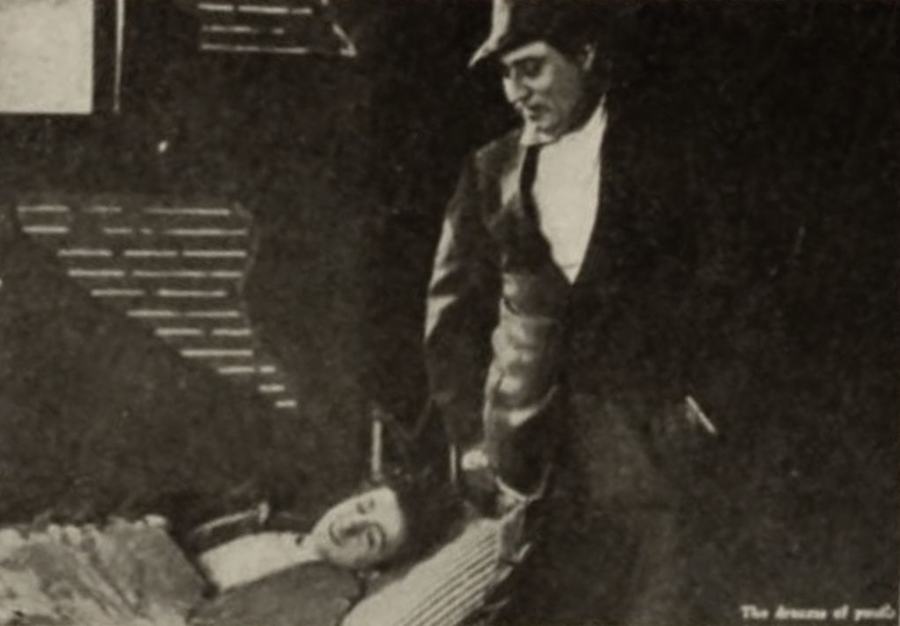
When the narrative shifts to the cosmopolitan sprawl of London, the visual language of the film undergoes a radical transformation. The cinematography, handled with a sophistication that rivals the stylistic flourishes found in Filibus, begins to utilize light and shadow to mirror Paul’s dual existence. As Paul Savelli, he is bathed in the soft, high-key lighting of the aristocracy, yet the shadows of his 'Kegsworthy' past are never entirely banished. The film suggests that while one can change their name and their accent, the marrow of one's upbringing remains immutable.
Marguerite Forrest’s Princess Sophie Zobraska is a character of immense complexity, far removed from the passive female archetypes that populated much of the 1910s cinema. She is the Pygmalion of this narrative, but her motivations are layered with a mixture of genuine altruism and a subtle, perhaps unconscious, desire to play God with a human soul. Her grooming of Paul for Parliament is depicted as a meticulous intellectual conquest. She doesn't just provide him with clothes and connections; she provides him with an ideology.
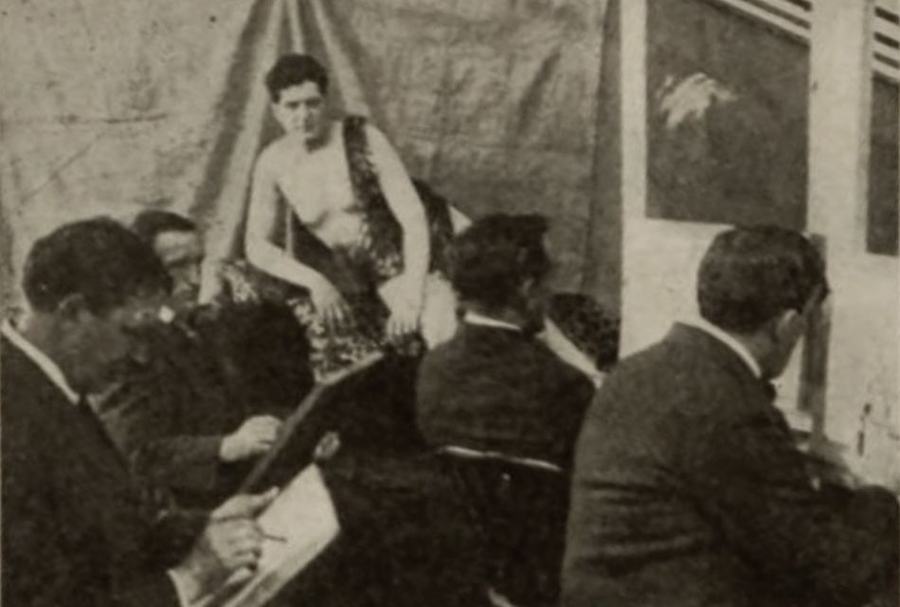
The dynamic between Sophie and Paul serves as the emotional anchor of the film. It invites comparison to the themes of social engineering explored in The Island of Regeneration, though here the isolation is not physical but social. They are two people operating within a bubble of their own making, convinced that they can outrun the destiny prescribed by Paul's birth. The chemistry between Merkyl and Forrest is palpable, even through the flickering grain of a century-old negative, conveying a partnership built on mutual intellectual respect rather than mere romantic convenience.
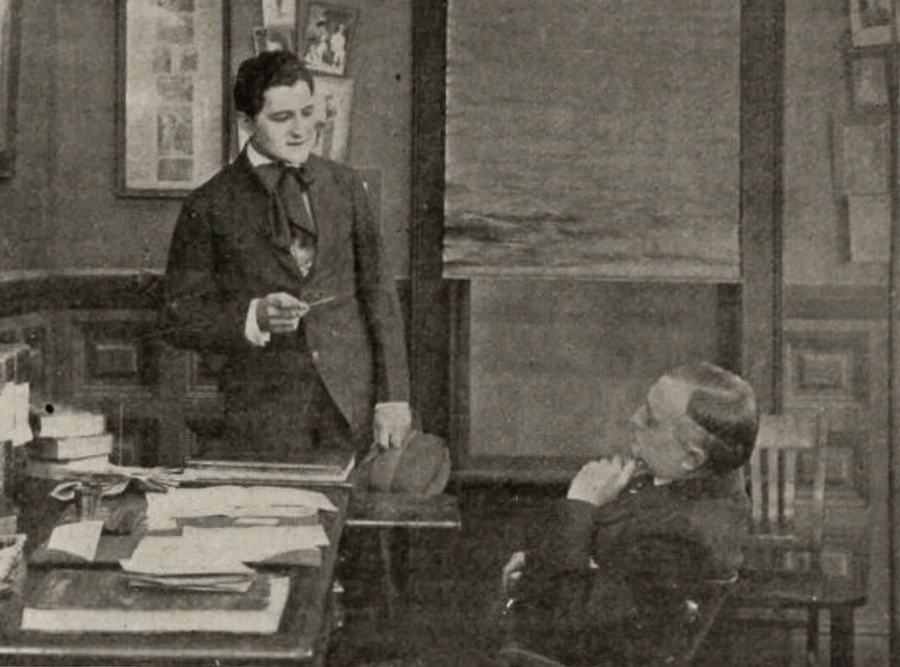
The introduction of Silas Finn, played with a menacing gravitas by Charles E. Graham, shifts the film from a character study into a high-stakes political thriller. Finn represents the old guard—the established, the cynical, and the entrenched. His opposition to Paul is not based on policy, but on the visceral threat that a 'new man' poses to the status quo. The scenes where Finn demands Paul’s withdrawal are masterclasses in tension, utilizing tight framing that emphasizes the claustrophobia of Paul’s predicament.
Unlike the overt villainy found in The Bandit of Port Avon, Finn’s antagonism is rooted in a twisted sense of moral superiority. He holds the 'ace up his sleeve'—the knowledge of Paul’s father—not just as a weapon, but as a proof of his belief that the lower classes can never truly transcend their origins. This thematic conflict elevates the film beyond its plot, forcing the audience to confront the inherent biases of the electoral system and the fragility of the 'self-made man' mythos.
William J. Locke’s source material provides a sturdy skeleton for the screenplay. Locke was a master of the 'gentlemanly' novel, but the film adaptation strips away some of the literary fluff to reveal a lean, muscular narrative. The pacing is deliberate, allowing the audience to feel the weight of the years passing as Paul transforms. This isn't the frantic energy of Just Out of College; it is a slow-burn drama that respects the gravity of its subject matter.
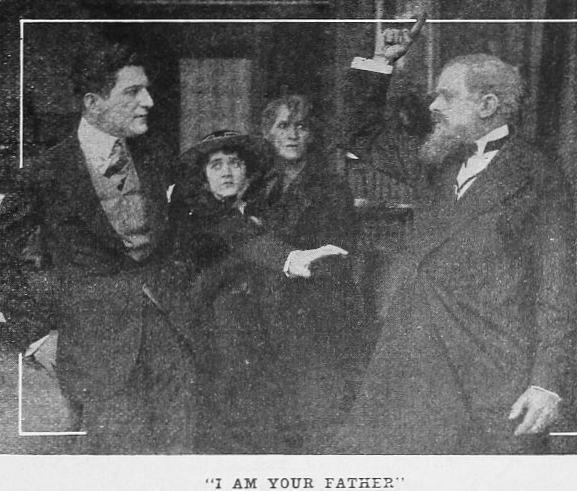
One must applaud the directorial choices that utilize visual motifs to represent Paul’s internal state. The recurring imagery of the 'open road' vs. the 'closed door' of the Victorian parlor serves as a shorthand for Paul’s fluctuating prospects. In one particularly poignant sequence, Paul looks at his hands—once stained with the soot of the north, now manicured and holding the documents of a parliamentarian. This moment of quiet introspection carries more narrative weight than a dozen pages of dialogue ever could.
The film also excels in its use of crowd scenes. The political rallies are staged with an eye for the chaotic energy of the era, reminiscent of the atmospheric detail in Australia Calls. These sequences highlight the irony of Paul’s situation: he is a man of the people who has spent his entire adult life trying to escape the people. The tension between his genuine desire to serve and his fear of being 'found out' by the very constituents he seeks to represent adds a layer of tragic irony to the final act.
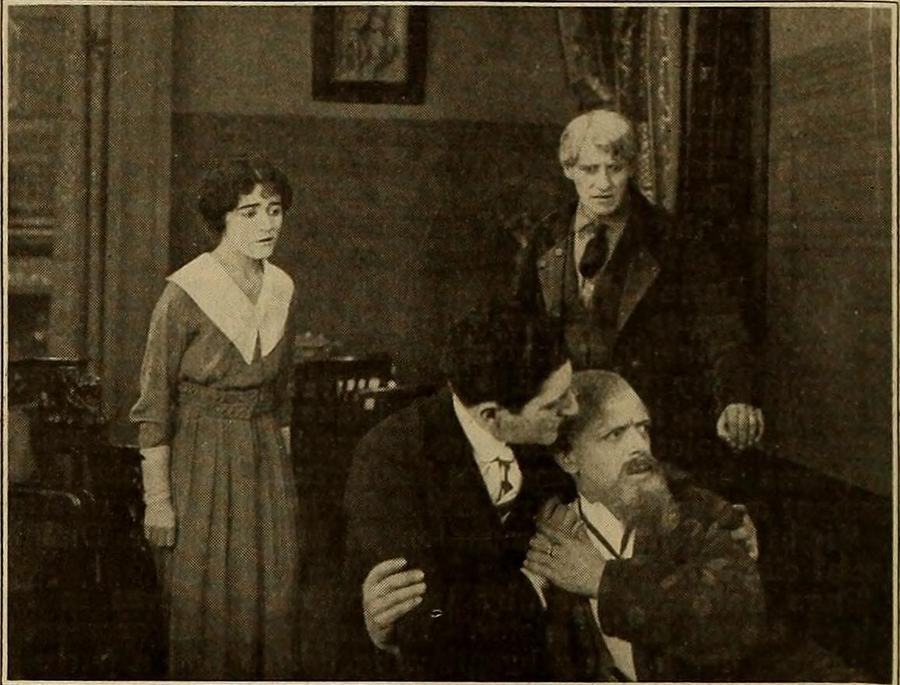
Without venturing into the territory of heavy spoilers, the revelation regarding Silas Finn’s 'ace' is handled with a restraint that is rare for 1917 cinema. Often, silent dramas relied on histrionic gestures and exaggerated intertitles to convey shock. Here, the impact is felt through the stillness of the actors. The realization that Paul’s past is not just a memory, but a living, breathing obstacle in the form of his opponent, creates a fascinating moral quandary. Does he yield to the blackmail to protect his secret, or does he risk everything for the sake of his political integrity?
This moral crossroads is what makes The Fortunate Youth a precursor to the modern political drama. It shares a certain DNA with Souls in Bondage in its exploration of how the past shackles the present. The resolution of the conflict is both satisfying and intellectually honest, refusing to offer the easy, saccharine endings that were the hallmark of many lesser films of the decade.
Technically, the film is a testament to the rapid evolution of cinematic grammar. The editing is fluid, moving between the disparate worlds of the London elite and the gritty underworld with a confidence that suggests a deep understanding of montage. While it may not have the experimental bravado of The Black Box, its strength lies in its narrative coherence and the strength of its performances. The cast, including Sue Balfour and Lila Leslie in supporting roles, provides a rich tapestry of social archetypes that flesh out the world of the film.
The costume design also deserves mention. Paul’s transition from rags to the impeccably tailored suits of a candidate is not just a costume change; it is a visual representation of his psychological armor. As he dons the attire of the upper class, his posture changes, his movements become more controlled, and his gaze more assertive. This attention to detail is what separates a great silent film from a merely functional one.
To watch The Fortunate Youth today is to witness the birth of the political thriller as we know it. It deals with themes that remain painfully relevant: the influence of one's background on their career, the ethics of self-invention, and the power of the past to disrupt the present. It stands alongside other heavyweights of the era like For King and Country as a sophisticated exploration of duty and identity.
In the grand scheme of silent cinema, this film is a vital link between the Victorian melodramas of the past and the more cynical, character-driven narratives that would emerge in the 1920s. It is a work of significant emotional depth and technical proficiency that deserves a prominent place in the pantheon of early 20th-century art. Whether you are a scholar of the silent era or a casual fan of political intrigue, this film offers a rewarding, thought-provoking experience that resonates long after the final frame has flickered out.
Ultimately, the 'fortune' in the title is not just about Paul’s eventual success, but about the fortuitous encounters and the resilience of the human spirit. It is a film that believes in the possibility of change, while acknowledging the scars that such change inevitably leaves behind. It is, in every sense of the word, a masterpiece of its time.

IMDb 6.5
1930
Community
Log in to comment.