DbcultAccessing Vault...
Cult Review
Senior Film Conservator
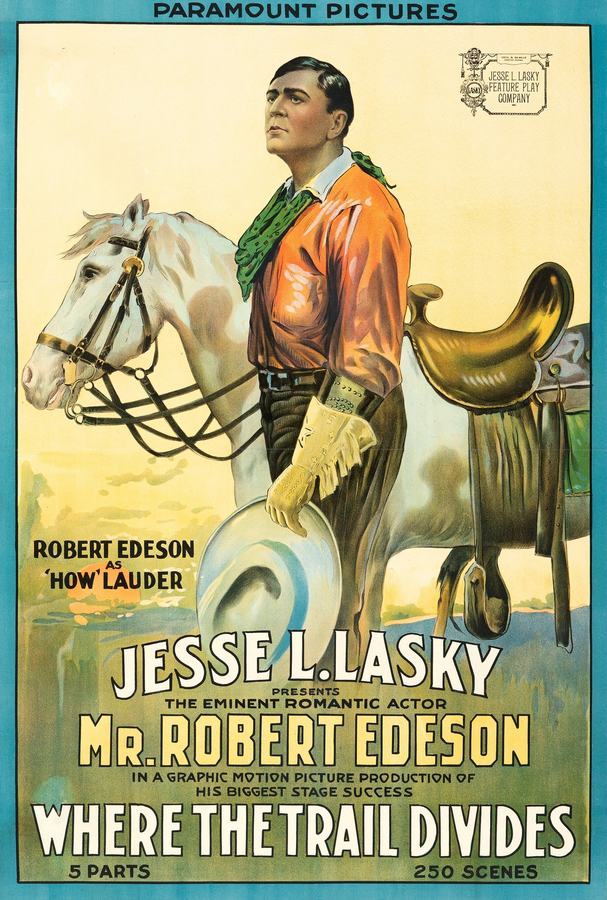
The first image is a scar: dusk light slicing across a half-burned Sioux village while a white officer lifts a mute boy into the saddle as casually as one salvages a war souvenir.
William Otis Lillibridge’s narrative—adapted here by Paramount’s nascent West-Coast studio—never sanitizes that scar. Instead it probes it, excavates it, stretches it into a jagged frontier map where every mile re-opens the wound of identity. What makes Where the Trail Divides singular among hundreds of nickelodeon westerns is its refusal to grant anyone clean moral topography. Heroes own land deeds yet sleep on conscience calloused; villains sip champagne while clutching oil-slick contracts; the landscape itself—those rolling Dakota breaks photographed in dusty orthochromatic greys—oozes a mute complicity, as though grass blades whispered take, take, take long before the cavalry arrived.
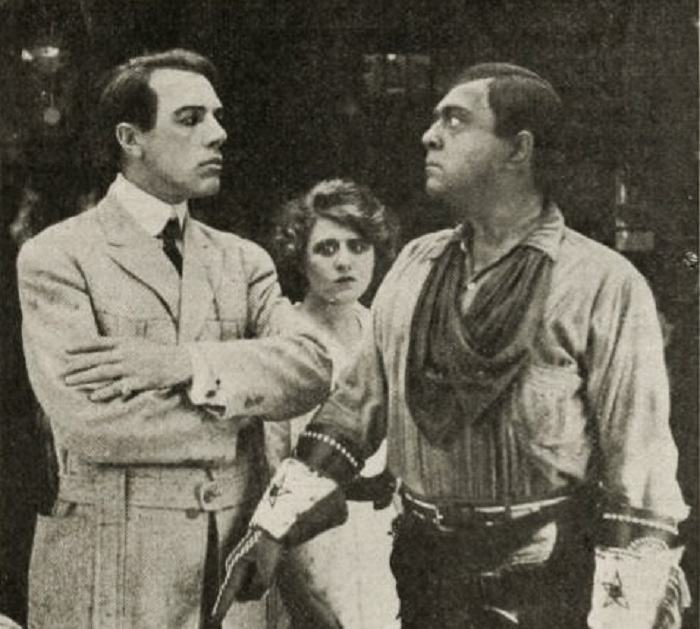
Cinematographer Homer A. Scott (later mentor to James Wong Howe) shoots childhood montage through doorway frames: wagon wheels, split-rail fences, schoolhouse eaves—each threshold suggesting passage but also excision. When adolescent How—played with stoic magnetism by Antrim Short—trades buckskin for celluloid collar, the camera tilts slightly, as though the world itself tips under assimilated weight. Notice the graduation waltz: a 360-degree dolly that begins inside a paper-lantern gymnasium, then glides through open doors into prairie night, the music thinning until only wind and fiddler-cricket remain. You can feel the frontier inhaling, waiting to swallow civilization whole.
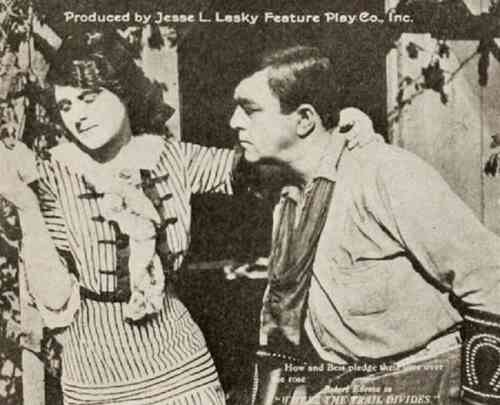
Mary Higby’s Bessie Rowland exudes porcelain resolve; her close-ups hold two beats longer than 1914 convention, allowing flickers of calculation—love, pity, avarice—to dart across her iris like spooked trout. Opposite her, Robert Edeson’s Craig oozes that particular patrician smarm Hollywood later recycled for 1980s yuppie villains: the smile that greets you while the hand behind his back fingers a derringer. Yet the film belongs—quietly, fiercely—to Antrim Short. Required to telegraph a lifetime of cultural dislocation without benefit of title cards beyond basic exposition, Short relies on posture: spine erect as a cadet during classroom scenes, shoulders slightly canted forward in ranch sequences, as though forever bracing against a wind only he can sense.
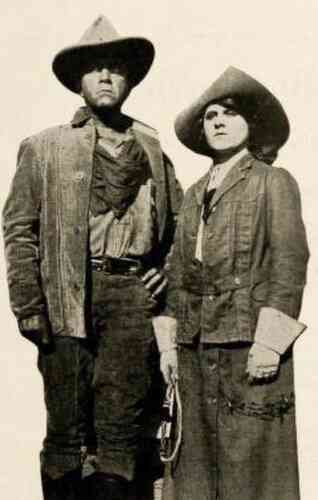
Mid-film, the story executes a hair-pin pivot: overnight barren soil gushes black gold. Historians will note that North Dakota’s oil boom did not ignite until the 1950s, so Lillibridge’s geological prophecy feels either clairvoyant or metaphoric. I favor the latter. The geyser erupts precisely at the moment How abdicates ownership of the land; thus petroleum becomes liquid vengeance, a subterranean twin to the hero’s suppressed rage. Watch Scott’s camera linger on that first uncapped bore: crude arcs against dawn sky, silhouetted like a dark firework, then splatters across the lens—an audacious breach of fourth-wall propriety that anticipates Scorsese’s blood-sprayed frames in Taxi Driver by six decades.
Critics hunting for lineage may trace the triangular cruelty here to The Merchant of Venice’s racialized contracts, or to Madeleine’s suffocating courtroom moralities; yet the film’s DNA feels closer to the bruised melodramas of Damaged Goods and After Sundown—works that likewise weaponize social taboo to expose the rot gilded by so-called civility. Even Satana’s feverish eroticism flickers in the corner of certain ranch-door scenes, though censorship shackles of the era force the embrace between Bess and Craig to remain largely suggestive.
Archival records indicate the original road-show featured live orchestral accompaniment cribbed from Grieg and early Sousa. Modern home viewing—say, a 4K scan on a boutique Blu-ray—demands your own curated playlist. Try the plaintive guitar of Mississippi Fred McDowell against the first act’s prairie homestead; segue into Max Richter’s On The Nature of Daylight for the separation sequence; finish with the industrial clanks of Nine Inch Nails’ A Warm Place during the oil-revelation reel. The juxtaposition uncannies the narrative, reminding us that America’s pastoral myths always bled into mechanized futures.
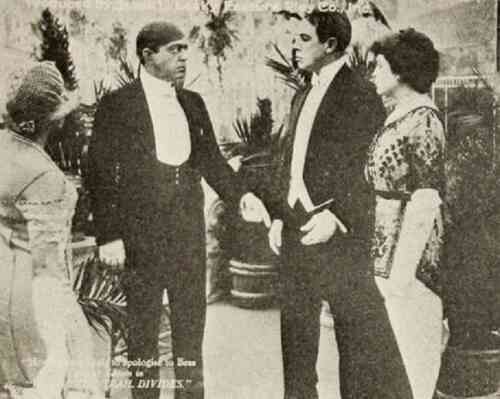
Read as artifact, the film dramatizes woman-as-deed. Bessie’s hand literally passes from guardian to cousin to How and back again, each transfer ratified by legal parchment rather than consent. Yet Higby’s performance complicates victimhood; observe her micro-grin when Craig is humiliated in the Manhattan club—an expression not of rescued virtue but of conspiratorial triumph. Bess may ride the rails of patriarchal plot, yet she pockets agency like spare change, spending it in the final reel when she wires How westward, effectively choosing the man and the mineral windfall simultaneously.
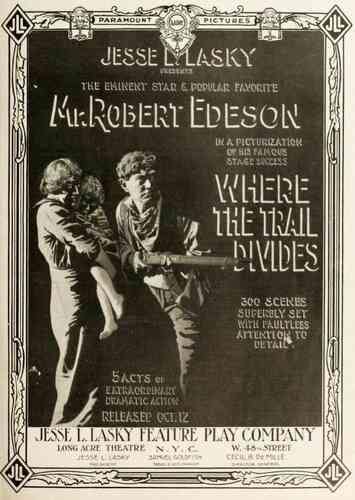
Post-colonial theorists will note How’s liminal fate: too red for Drawing-Room respectability, too white-educated for tribal return. His ultimate reclamation of land and bride offers a fantasy of Indigenous restitution impossible in 1914 reality. Yet the film slyly undercuts triumph: note the second wedding—performed not in Lakota tongue but Episcopal rite, and under the shadow of a derrick rather than sacred butte. Liberation tastes of crude; marriage reeks of petrol. The couple’s kiss dissolves to a shot of pumpjack nodding against sunset—an eternal mechanical prayer that simultaneously funds and desecrates their future.
Director Robert Thornby favors hard cuts over cross-dissolves, a proto-Eisensteinian jolt that compresses years into single frames. One moment How tips his mortarboard; the next he wrestles cattle rustlers amid sagebrush. The strategy breeds vertigo, evoking the way frontier memory collapses chronology—yesterday’s massacre bleeds into tomorrow’s land-rush until time pools into one haunted present.
Only two incomplete 35mm nitrate reels were known to exist until 2019, when a near-complete print surfaced in a Tioga, North Dakota barn—its tin emblazoned with Educational Films Ltd stencil. The 2022 4K restoration by UCLA Film & Television Archive harvests frames from a Library of Congress paper-print, digitally re-grains them to match surviving nitrate density, and tints act-breaks per early Viragraph protocols: amber for prairie daylight, cyan for interiors, rose for the two weddings. Result: an image that glows like memory half-remembered, scratches intact like stretch marks of history.
John Ford screened this picture for cast prior to The Iron Horse; watch for visual echoes in the graduation dance that prefigures the cavalry social in Fort Apache. Nicholas Ray mined Craig’s oily charm for Johnny Guitar, while the oil-gush anticipates the venal glee of There Will Be Blood. Even the final act’s telegram—Come west immediately—serves as prototype for the climactic wires that ricochet through The Exploits of Elaine and countless serials.
At 72 minutes, Where the Trail Divides hurtles toward a re-marriage that feels suspiciously like foreclosure. Love conquers nothing; it merely renegotiates lease on a now-sullied paradise. The last shot—pumpjack bowing against orange dusk—offers no horizon, only iterative extraction. Yet within that bleak circuitry lies the film’s modernity: America, too, keeps remarrying itself to the same ground, each contract inked with a different resource, each vow destined to be broken by the next boom. To watch this century-old yarn today is to recognize your own reflection in the glistening crude, to understand that every trail, once divided, never really rejoins—it merely fracks into futures we have not yet learned to regret.
IMDb —
1920
Community
Log in to comment.