Summary
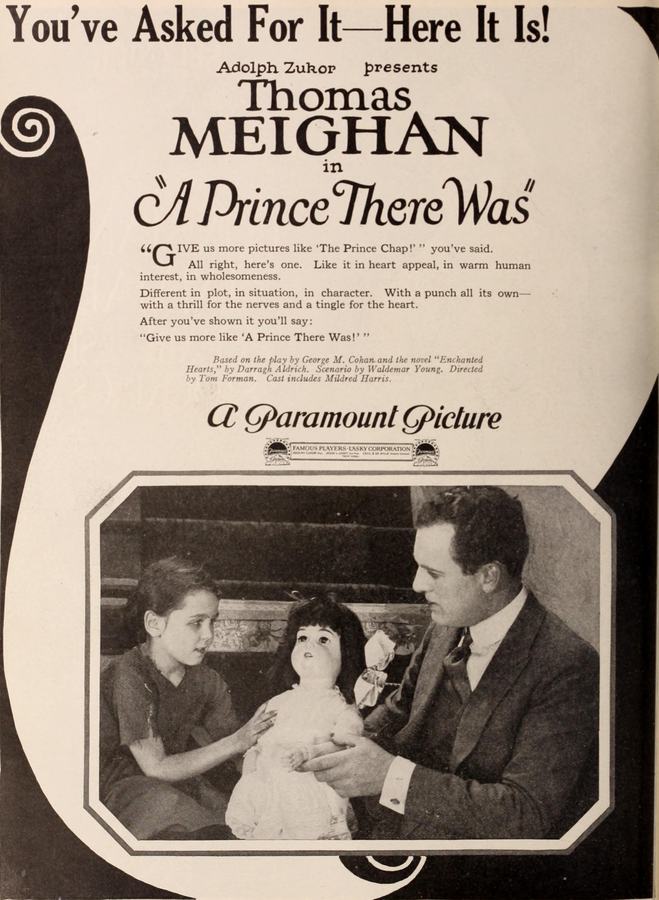
A Prince There Was stitches together the frayed threads of societal hypocrisy and romantic redemption with a deftly woven narrative. Charles Edward Martin, a golden-haired aesthete adrift in the gilded excesses of his wealth, stumbles into the orbit of Katherine Woods, whose family's financial ruin was orchestrated by the unseen hand of J.J. Stratton. The film's genius lies in its subversion of fairy-tale tropes: Comfort Brown, a pragmatic boardinghouse worker, becomes the deus ex machina, engineering Martin's transformation from a self-absorbed dilettante to a literary savior cloaked in the guise of a prince. The resulting interplay of identity—Martin's performative nobility, Katherine's repressed rage, Stratton's serpentine malice—creates a taut psychological drama where every character's mask is both a shield and a snare. Waldemar Young and George M. Cohan's script, though occasionally hamstrung by the era's theatrical conventions, achieves a rare alchemy by merging moral fable with the raw, unvarnished urgency of a modern tragedy.
Synopsis
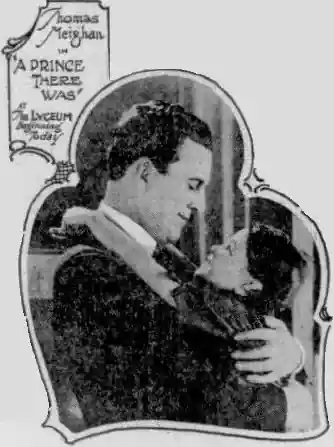
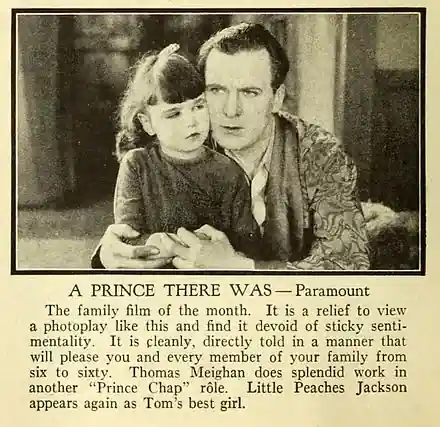
Wealthy society idler Charles Edward Martin meets Katherine Woods, whose father was ruined financially by J.J. Stratton, Martin's broker, although Martin is unaware of his scheming. Katherine is unsuccessfully trying to gain an income by writing magazine stories; but Comfort Brown, who works in her boardinghouse, seeks a magazine editor to plead Katherine's case and encounters Martin, a friend of the editor, whom she likens to a prince she has read about in fairy tales. Under the name of Prince, Martin takes up residence in the boardinghouse, posing as assistant editor of the magazine; when he falls in love with Katherine, he buys out the magazine to publish her stories. Katherine is happy until Stratton reveals Martin's true identity and makes Katherine believe he ruined her father, but Stratton is eventually exposed and the lovers are reunited.
Review Excerpt
"
In the early 1920s, when Hollywood was still grappling with the transition from stage-bound melodrama to cinematic storytelling, A Prince There Was emerged as a peculiarly ambitious hybrid—part fairy-tale parable, part social satire, and wholly a product of its time. Directed with a painterly eye for chiaroscuro by Waldemar Young, the film’s narrative pivots on the collision of two worlds: the glittering, hollow decadence of Charles Edward Martin’s existence and the embittered resilience..."