DbcultAccessing Vault...
6/10
Senior Film Conservator
A definitive 6/10 rating for a film that redefined the boundaries of cult cinema. A Prodigal Bridegroom remains a cornerstone of transgressive art.
Is 1926’s A Prodigal Bridegroom a forgotten relic or a timeless piece of physical comedy? Short answer: yes, but only if you have the stomach for the specific, unhinged brand of slapstick that defined the Mack Sennett era.
This film is for the cinephile who appreciates the jagged edges of silent-era humor and the technical precision of physical distortion. It is absolutely not for those who require their protagonists to be even remotely likable or their plots to follow a logical, grounded progression.
A Prodigal Bridegroom is worth watching because it showcases the peak of the Sennett 'factory' style of filmmaking. In an era where many comedies were trying to become more sophisticated and feature-length, this production doubled down on the absurd. It captures a moment in cinematic history where the gag was king, and logic was a distant second. If you want to understand the DNA of modern physical comedy, this is a required text.
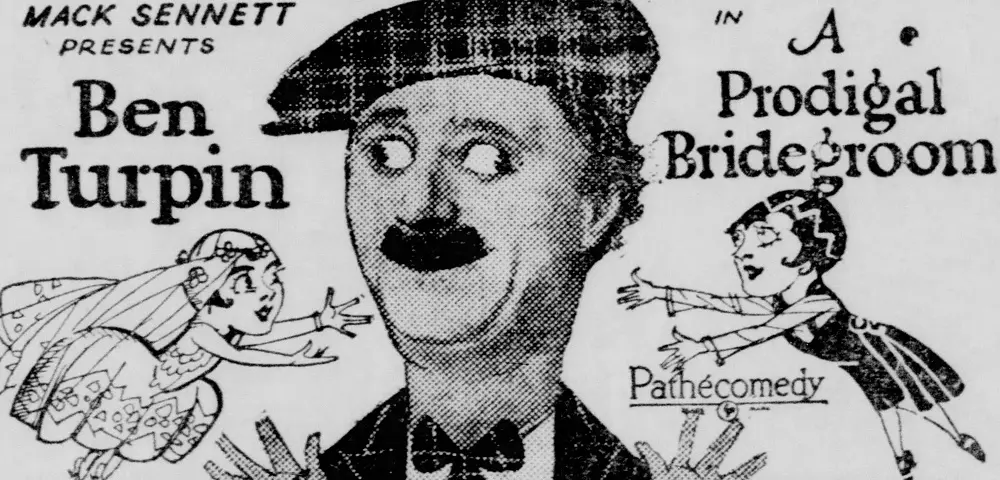
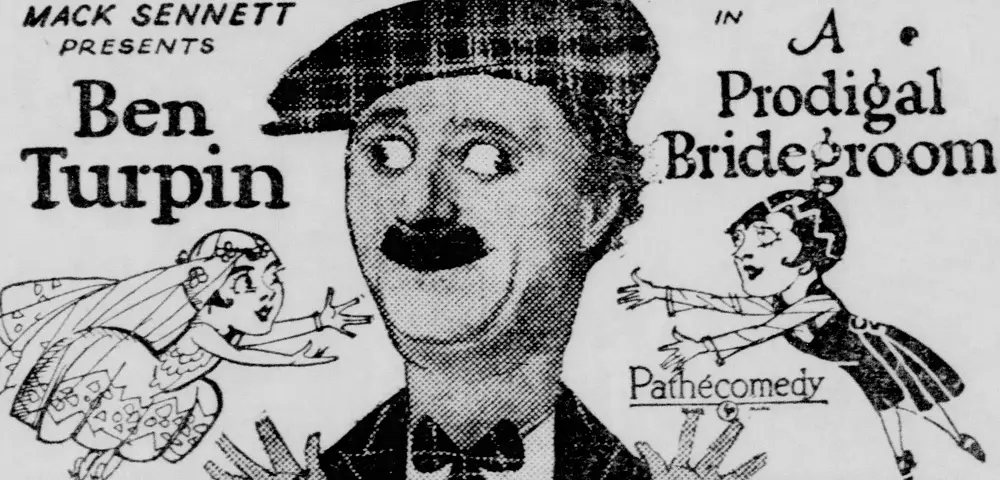
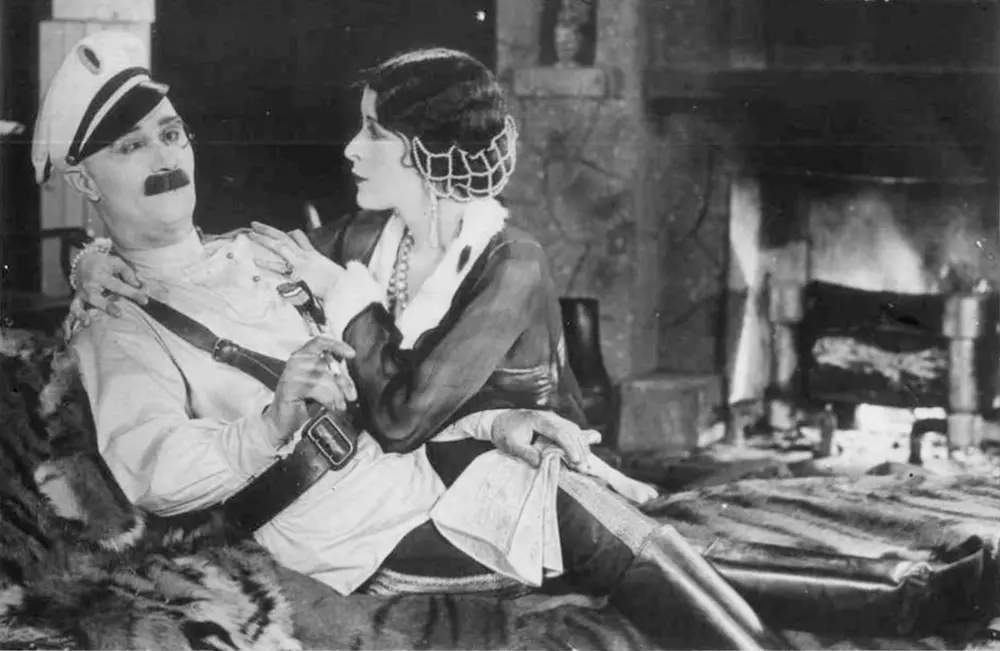
Ben Turpin was never a subtle actor. While his contemporaries like Buster Keaton were mastering the 'Stone Face' or Charlie Chaplin was perfecting the 'Little Tramp' pathos, Turpin was busy being a human cartoon. In A Prodigal Bridegroom, his performance as Ben is a masterclass in intentional awkwardness. Every time he looks at Madeline Hurlock’s character, his crossed eyes suggest a man who is literally incapable of seeing the danger right in front of him.
There is a specific scene where Ben returns to his village, flaunting his cash. He doesn't just walk; he struts with a peacock-like arrogance that makes his eventual downfall feel like a necessary cosmic correction. It’s hard to find a modern equivalent to this. Most modern actors want to be 'in' on the joke. Turpin, however, plays the character with a sincerity that makes the absurdity hit harder. He isn't playing a funny man; he's playing a man who thinks he's the most handsome, successful person in the room, while the audience knows he's a disaster.
Compared to his work in Off the Trolley, Turpin here feels more integrated into the ensemble. He isn't just a gimmick; he's the engine of the plot’s cruelty. His willingness to discard his 'faithful sweetheart' isn't played for tears—it’s played for the sheer ridiculousness of the lies he tells to get away with it. It’s a cynical approach to romance that feels surprisingly modern.
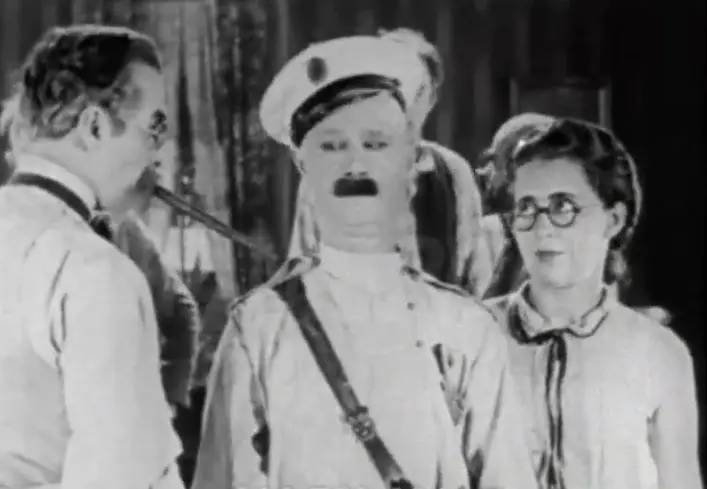
Madeline Hurlock’s performance as the gold-digging vamp is the film’s secret weapon. In many films of this era, like Saint, Devil and Woman, the female antagonist is often a one-dimensional predator. Hurlock, however, plays the role with a weary professionalism. She doesn't hate Ben; she just views him as a job. Her interactions with him are transactional in a way that provides a sharp contrast to Turpin’s manic energy.
The chemistry between the two is anti-romantic. Every time she 'ensnares' him, you can see the gears turning in her head. She is counting the bills before he’s even finished his sentence. This dynamic elevates the film from a simple slapstick reel to a satirical look at how money attracts the worst kinds of parasites. It’s a theme explored with more gravity in Just a Woman, but here it’s treated with a playful nihilism.
The direction and writing team, including Mack Sennett and James Gruen, utilized a 'gag-first' philosophy. The cinematography is functional, designed to keep the physical space clear so the audience can track the movement. There are no fancy tracking shots here. Instead, we get wide frames that allow the actors to use their entire bodies. This is a lost art. Modern comedy relies on the edit to create the joke; A Prodigal Bridegroom relies on the performer to inhabit the frame.
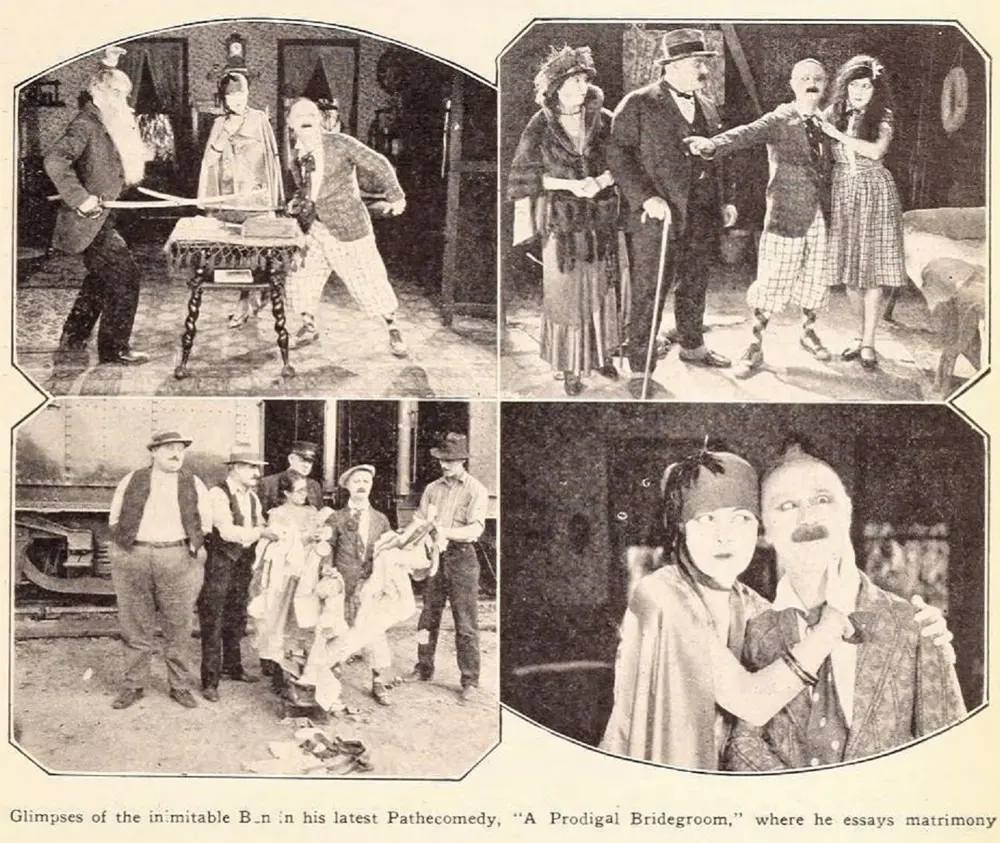
The pacing is relentless. Once Ben arrives in town, the film barely pauses for breath. This is both a strength and a weakness. While it prevents boredom, it also means the 'preposterous tale' Ben weaves to ditch his sweetheart doesn't get the screen time it deserves. We see the fallout of the lie, but the construction of the lie itself—which is the most interesting part of the script—is handled with a brevity that feels like a missed opportunity.
One cannot discuss this film without mentioning the supporting cast. Andy Clyde and Vernon Dent provide the necessary grounding. They act as the 'normal' world reacting to Turpin’s insanity. Without them, the film would float off into pure abstraction. They are the anchors that make the slapstick feel like it has consequences.
Pros:
Cons:
The crux of the film's second half is the lie Ben tells. In a modern context, his gaslighting of his sweetheart would be seen as a psychological thriller. In the hands of Mack Sennett, it’s a farce. This tonal dissonance is what makes the film fascinating to watch today. We are watching a man systematically destroy his life for a woman who clearly doesn't love him, and we are expected to laugh at his incompetence.
The lie involves a level of theatricality that suggests Ben has been watching too many melodramas in the big city. He isn't just lying; he's performing. This meta-layer—a character in a movie acting like he's in a different, worse movie—is a sophisticated touch that you don't always expect from slapstick. It reminds me of the narrative layers in The Dream Cheater, though significantly less macabre.
A Prodigal Bridegroom is a jagged, cynical, and frequently hilarious piece of 1920s cinema. It works. But it’s flawed. The film doesn't care if you like Ben, and that is its greatest strength. It refuses to play by the rules of the 'hero’s journey,' choosing instead to follow the 'idiot’s detour.' While it may not have the emotional resonance of a Chaplin film, it has a raw, chaotic energy that is sorely missing from modern, over-sanitized comedies. It’s a reminder that sometimes, the best way to tell a story is to let a cross-eyed man run around with a suitcase full of money until everything falls apart.
"A Prodigal Bridegroom is less a romantic comedy and more a manual on how to ruin your life with style. Turpin is a chaotic force that modern cinema simply doesn't have an answer for."
In the pantheon of Sennett productions, this sits somewhere in the middle—more creative than The Bigger Man but perhaps less cohesive than some of his earlier shorts. However, for the performance of Madeline Hurlock alone, it earns its place in the history books. She provides the perfect, icy contrast to the heat of Turpin’s madness. If you can find a clean print, it is a fascinating 20-minute window into a world where the only thing cheaper than the laughs was the protagonist's soul.
IMDb 6.4
1923
Community
Log in to comment.