DbcultAccessing Vault...
Cult Review
Senior Film Conservator
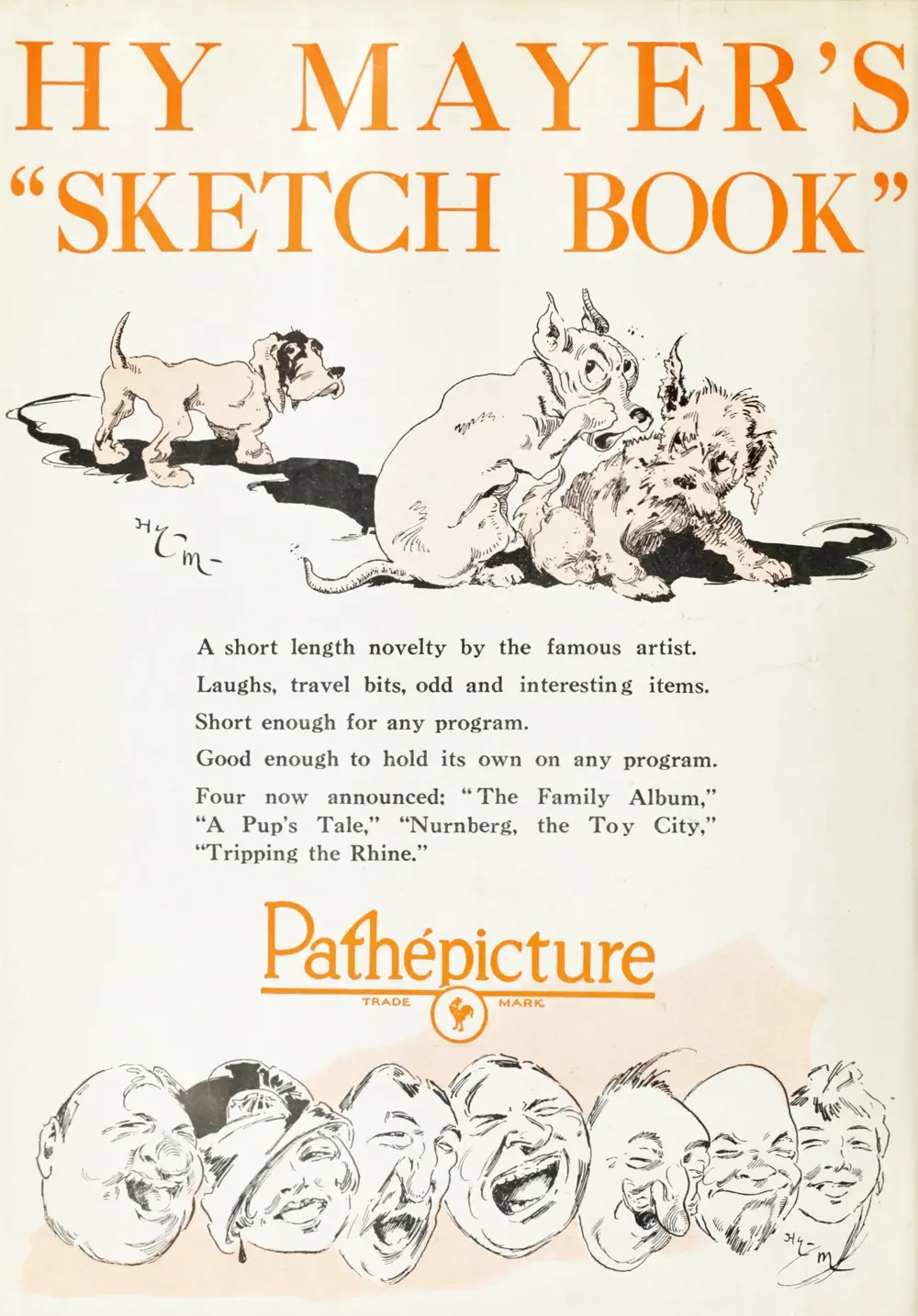
Is A Pup's Tale a hidden gem of the silent era or a dusty relic of a forgotten technique? Short answer: Yes, it is a vital piece of cinematic DNA, but it is strictly for viewers who appreciate the historical evolution of the medium over modern narrative complexity.
This film is for the animation enthusiast who wants to see the roots of the 'breaking the fourth wall' trope and the historian who finds beauty in the primitive. It is absolutely not for the casual viewer seeking a high-stakes plot or polished character arcs. It is a sketch brought to life, literally and figuratively.
Before we dissect the ink and celluloid, let us be direct about what this film offers. It is a product of its time, carrying both the charm and the limitations of 1921.
Henry 'Hy' Mayer was not just a filmmaker; he was a caricaturist with a sharp eye for the absurdities of life. In A Pup's Tale, he steps in front of the camera to play God. This isn't just a technical exercise; it's a philosophical one. When Mayer’s hand enters the frame to draw a bone, only to snatch it away, he is commenting on the cruelty of the creator. It is a trope we see later in Looney Tunes' Duck Amuck, but Mayer was laying the groundwork here.
Unlike the melodrama found in Wild Primrose, A Pup's Tale avoids emotional weight in favor of kinetic energy. The pup doesn't have a motivation beyond survival and play. This lack of depth is actually the film's secret weapon. It allows the viewer to focus entirely on the craft. When the pup interacts with real-world objects, the 'trick' photography is surprisingly clean. You can see the seeds of what would become the massive spectacles in The Isle of Lost Ships.
To appreciate this film, you have to understand the labor involved. There were no digital layers. Every interaction required precise timing and double exposure. When the pup hides behind a real-life inkwell, the alignment had to be perfect. It is a testament to Mayer’s patience. In an era where films like The Carter Case were pushing the boundaries of detective fiction, Mayer was pushing the boundaries of what the eye could believe.
The cinematography is static, which is expected. The camera acts as a proscenium arch, a stage where the magic happens. However, the 'internal' movement—the pup’s frantic scurrying—is where the life is. Compared to the more grounded, documentary style of Life in the Sudan, A Pup's Tale feels like a fever dream of a bored artist. It is pure escapism.
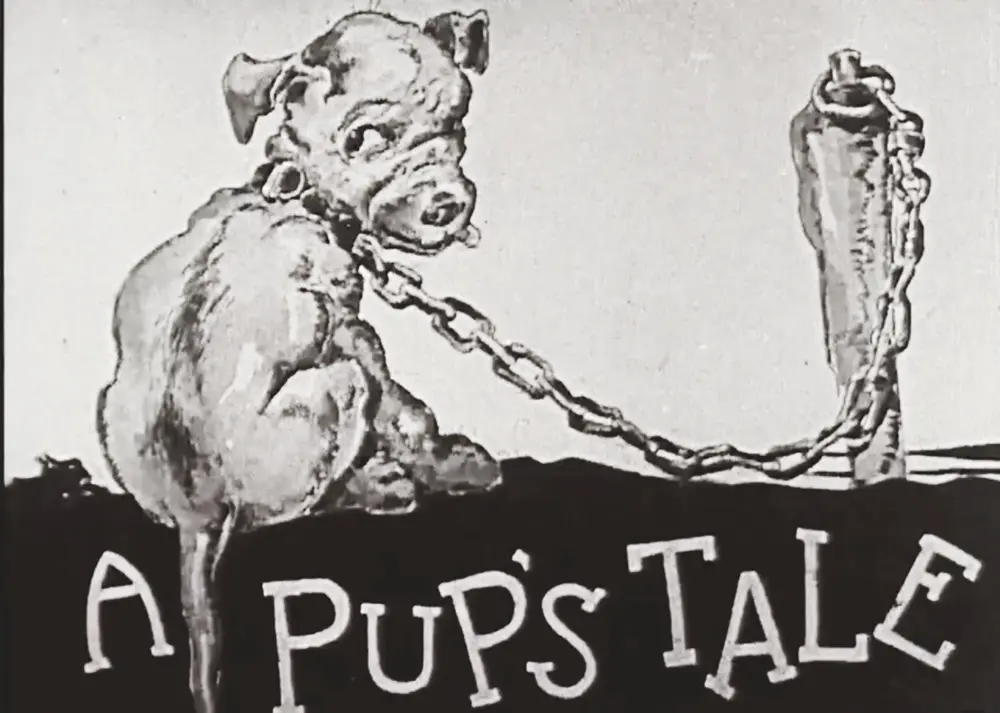
If you are asking if you should clear your Friday night for it, the answer is a nuanced no. However, if you are asking if it deserves ten minutes of your undivided attention as a student of art, the answer is an emphatic yes. It provides a window into the 'Such is Life' series and Mayer’s unique worldview. It’s a curiosity that rewards the patient.
Simple answer: It is a historical artifact. It works as a visual palate cleanser between heavier features like Hypocrites or Discontented Husbands. It is short, punchy, and technically brave. But it’s flawed by its own simplicity.
Pros:
1. Innovative use of hybrid live-action and animation.
2. Historical significance in the evolution of the meta-narrative.
3. Hy Mayer’s charismatic, physical presence as the 'antagonist'.
4. Excellent preservation of early 20th-century ink styles.
Cons:
1. Lacks any real emotional stakes.
2. Pacing can feel sluggish despite the short runtime.
3. The humor is very 'of its time' and may not land for modern audiences.
One cannot discuss A Pup's Tale without addressing the 'National Rash' of similar films that hit the market in the early 20s. Films like The National Rash or Home Brew were often seen as throwaway entertainment. But Mayer’s work has a certain 'literary' quality to the drawing. The pup isn't just a dog; he’s a squiggle with a personality. This is a debatable point, but I argue that Mayer’s pup has more 'soul' than many of the human characters in contemporary dramas like A Girl at Bay.
The brutality of the humor is also worth noting. There is a sequence where the pup is nearly erased. For a modern child, this might be traumatic. For the 1921 audience, it was a riot. This shift in the 'morality of the cartoon' is fascinating. It shows a world that was just beginning to understand the power of the animated image to represent suffering without consequence. It is a stark contrast to the more serious tones of Open Your Eyes or Hush Money.
A Pup's Tale is a triumph of imagination over budget. It doesn't need a grand set or a cast of thousands to entertain. It only needs a pen, a piece of paper, and a man who refuses to grow up. While it may not have the narrative depth of Prima Vera or the suspense of Danger Within, it possesses a raw, infectious joy. It is a celebration of the artist's power to create life out of nothing. It is a minor masterpiece of the 'Such is Life' series and a mandatory watch for anyone serious about the history of the moving image. It’s a sketch. It’s a gag. It’s history.
IMDb —
1923
Community
Log in to comment.