DbcultAccessing Vault...
5.6/10
Senior Film Conservator
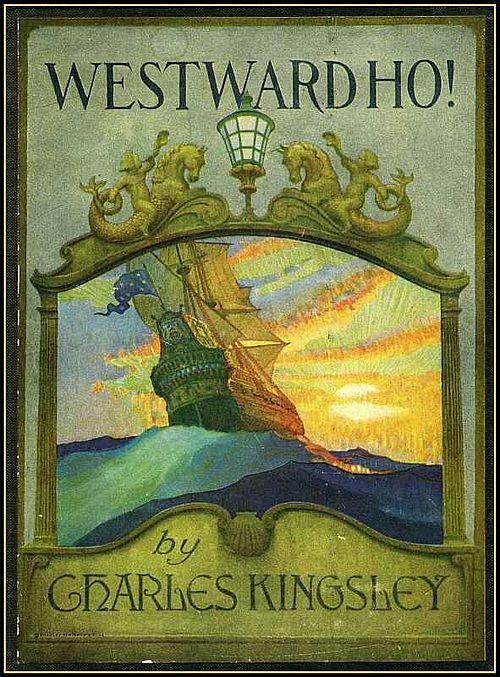
A definitive 5.6/10 rating for a film that redefined the boundaries of cult cinema. Westward Ho! remains a cornerstone of transgressive art.
In the annals of early cinema, few narratives capture the sweeping grandeur and intimate human drama quite like Westward Ho! This cinematic endeavour, a vibrant adaptation of Charles Kingsley's seminal novel, plunges viewers headlong into the tumultuous late 16th century, a period rife with geopolitical tension and individual heroism. It is a film that, despite its silent era origins, speaks volumes about love, loyalty, and the profound sacrifices demanded by both personal honour and national duty. The screen, though devoid of spoken dialogue, pulses with an emotional intensity that transcends the temporal distance, inviting contemporary audiences to witness a bygone era's passions and perils with fresh eyes.
The narrative core of Westward Ho! is deceptively simple yet profoundly resonant: a valiant English sailor, driven by an unyielding devotion, embarks on a perilous quest to rescue his beloved fiancée from the clutches of a nefarious Spanish don. However, to merely state this premise is to overlook the intricate tapestry of historical circumstance and personal stakes woven throughout the film. The abduction itself is not a mere plot device but a catalyst, propelling our protagonist, portrayed with earnest conviction by Allen Hilton, into a world where personal vengeance intertwines inextricably with the grander canvas of Anglo-Spanish conflict. His fiancée, brought to life with a captivating blend of vulnerability and inner strength by Dolly Robbins, becomes more than just a damsel in distress; she is a symbol, a prize, and ultimately, a testament to the enduring power of love in an age defined by conquest and religious strife. The Spanish don, a figure of aristocratic menace, embodies the perceived threat of Catholic Spain, making his pursuit not just a personal vendetta but a patriotic imperative.
The film masterfully builds suspense as the sailor navigates treacherous seas and hostile foreign lands, his resolve unwavering despite the formidable obstacles. The stakes are perpetually elevated, each close call and narrow escape serving to heighten the audience's investment in his arduous journey. This relentless pursuit, a common trope in adventure cinema, is elevated here by the genuine emotional depth invested in the characters and the palpable sense of historical authenticity that underpins their struggle. It’s a classic tale of good versus evil, yet imbued with a nuanced understanding of the era’s complex political and religious dynamics, adding layers to what could otherwise be a straightforward action piece.
The narrative reaches its crescendo amidst the thunderous clash of the Spanish Armada. This epochal naval engagement, a pivotal moment in English history, serves as the dramatic backdrop for the sailor's ultimate confrontation. The film's depiction of the Armada, while necessarily constrained by the technological limitations of early cinema, nonetheless conveys a powerful sense of scale and impending doom. The sheer audacity of the English fleet, outmanoeuvring and outfighting the supposedly invincible Spanish force, is presented with a patriotic fervour that would have resonated deeply with contemporary audiences. It's here, in the maelstrom of cannon smoke and splintering timber, that our hero's personal struggle converges with the fate of a nation. His participation in the battle is not merely incidental; it is integral to his quest, a testament to his commitment to both his country and his beloved. The film brilliantly interweaves the personal and the political, making the rescue feel like an extension of England's triumph over tyranny.
It is within this chaotic ballet of destruction and heroism that the film delivers its most poignant and devastating blow. In a moment of intense combat, a blinding injury befalls our protagonist, forever altering his perception of the world. This sacrifice, rendered with stark emotional impact, elevates the film from a simple adventure story to a profound meditation on the cost of heroism. The loss of sight is not merely a physical affliction; it is a symbolic wound, representing the indelible scars left by war and the ultimate price paid for freedom and love. The raw vulnerability displayed by Allen Hilton in these moments is particularly striking, conveying a depth of despair and resilience that transcends the lack of spoken words. This pivotal event firmly establishes Westward Ho! as more than just a historical epic; it's a character study of profound personal transformation under duress. The thematic resonance here might bring to mind the emotional weight seen in films like Pesn torzhestvuyushchey lyubvi, where triumphant love often comes hand-in-hand with immense personal sacrifice, highlighting the bittersweet nature of victory.
The success of any silent film hinges significantly on the expressive capabilities of its cast, and Westward Ho! is no exception. The ensemble delivers performances that are both grand in their theatricality and intimate in their emotional honesty. Dolly Robbins, as the imperilled fiancée, imbues her character with a quiet dignity and fierce spirit. Her portrayal avoids the pitfalls of passive victimhood, instead suggesting a woman of considerable inner fortitude, even when facing dire circumstances. Her expressions, her gestures, and her very presence on screen convey a complex internal life, making her rescue feel genuinely urgent and meaningful. This nuanced approach to a female character in a historical adventure is noteworthy for its era, perhaps even echoing the strong, resourceful women sometimes seen in action serials like The Hazards of Helen, albeit in a vastly different genre context.
Allen Hilton, in the central role of the determined sailor, carries the film's emotional weight with remarkable skill. His physical acting — the determined stride, the anguished gaze, the resolute set of his jaw — communicates volumes without a single spoken word. His journey from passionate lover to valiant rescuer to scarred hero is rendered with a compelling arc, making his ultimate sacrifice all the more impactful. The chemistry between Robbins and Hilton, though expressed through the conventions of silent cinema, feels authentic and deeply felt, providing the emotional anchor for the entire epic. Their shared glances and desperate embraces are imbued with a yearning that transcends the limitations of the medium.
The supporting cast also contributes significantly to the film's rich texture. Irene Rooke, J.H. Barnes, Ernest Wallace, Booth Conway, Eric Harrison, and Charles Quatermaine each carve out memorable impressions, whether as loyal comrades, nefarious adversaries, or figures of authority. The Spanish don, in particular, is played with a theatrical villainy that perfectly suits the era, providing a clear and compelling antagonist for our hero. His swagger and malevolent glares are quintessential silent film villainy, adding a necessary dramatic foil to the earnest heroism of Hilton's character. The collective effort of the cast ensures that the film's grand ambitions are grounded in believable, if heightened, human emotion and conflict.
The directorial vision behind Westward Ho! is commendable, particularly in its ability to translate the sprawling scope of Kingsley's novel into a compelling visual narrative. W. Courtney Rowden, credited with the adaptation alongside Kingsley himself, clearly understood the essence of the source material. The screenplay, or rather, the scenario, effectively distills the novel's intricate plot and character motivations into a series of impactful visual sequences and poignant intertitles. These intertitles, far from being mere explanations, often serve as lyrical bridges, enhancing the emotional resonance and providing crucial historical context, much like a well-penned blog post guides its reader through complex ideas.
Visually, the film makes the most of the available technology. While we are far from the CGI spectacles of today, the sets, costumes, and practical effects employed to depict Elizabethan England and the naval battles are surprisingly effective. The ship models, the simulated ocean battles, and the period attire all contribute to a convincing historical tableau. The filmmakers understood the power of composition and dramatic lighting to evoke mood and emphasize character emotion, a hallmark of silent era cinematography. The staging of the rescue sequences and the climactic Armada battle, in particular, demonstrates a keen understanding of action choreography, keeping the audience engaged despite the absence of sound. The sense of urgency and determination, reminiscent of the relentless pursuit in films like The Rescue, is palpable in every frame, ensuring that the audience is swept along with the unfolding drama.
Beyond the swashbuckling adventure, Westward Ho! is a powerful exploration of enduring human themes. At its core, it is a testament to the indomitable spirit of love, capable of spurring individuals to extraordinary acts of courage and self-sacrifice. The bond between the sailor and his fiancée is the narrative's beating heart, giving meaning to every perilous journey and every hard-won victory. This romantic zeal, coupled with the fervent patriotism of the Elizabethan era, creates a potent emotional cocktail. The film celebrates English valour and resilience in the face of foreign aggression, tapping into a deep vein of national pride that would have resonated strongly with audiences during its initial release and arguably continues to do so.
The theme of sacrifice, particularly the sailor's blinding, elevates the film beyond mere escapism. It forces a contemplation of the true cost of heroism and the enduring impact of conflict. This is not a sanitised vision of warfare; it acknowledges the profound, life-altering consequences for those who stand on the front lines. Yet, even in the face of such a devastating personal loss, the film ultimately champions resilience. The hero’s spirit, though physically diminished, remains unbroken, a powerful message about human fortitude. This exploration of individual determination against overwhelming odds finds a thematic echo in films like Wo ein Wille, ist ein Weg (Where There's a Will, There's a Way), underscoring the universal appeal of stories about unwavering resolve.
As a product of its time, Westward Ho! offers invaluable insight into the filmmaking techniques and storytelling conventions of the silent era. It demonstrates how filmmakers, without the aid of synchronous sound, could still craft narratives of immense emotional power and visual spectacle. The film's enduring appeal lies not just in its historical setting or its thrilling plot, but in its ability to tap into universal human experiences: love, loss, courage, and the relentless pursuit of justice. It stands as a testament to the foundational strengths of cinematic storytelling, proving that a compelling narrative, well-acted characters, and a clear vision can transcend technological limitations.
Comparing it to other films of its period, Westward Ho! holds its own as a robust example of historical adventure. While perhaps not possessing the avant-garde experimentation of some European contemporaries, or the grand budgets of later Hollywood epics, it delivers a solid, engaging, and emotionally resonant experience. Its focus on a national historical event, much like the broader conflict depicted in Over There (albeit a different war), underscores the power of cinema to reflect and shape national identity. The film is a valuable piece for historians of cinema and casual viewers alike, offering a window into both a pivotal moment in history and a formative period in the art of moviemaking. Its accessibility today, despite its age, speaks volumes about the timeless quality of its central themes and the skillful execution of its creators. It is a reminder that even without the bells and whistles of modern blockbusters, a truly captivating story can still seize the imagination and stir the soul, leaving an indelible mark long after the final intertitle fades from view.
In conclusion, Westward Ho! is far more than a mere historical curiosity. It is a robust, emotionally charged epic that deftly combines personal drama with national destiny. The performances are compelling, the narrative gripping, and its thematic explorations of love, sacrifice, and resilience continue to resonate. It invites us to consider the enduring power of human spirit in the face of overwhelming adversity, making it a film that, despite its silent nature, speaks with a voice that echoes across the centuries. It’s a film that demands to be seen, not just appreciated for its historical significance, but embraced for its timeless storytelling prowess.
IMDb 6.8
1933
Community
Log in to comment.