DbcultAccessing Vault...
Cult Review
Senior Film Conservator
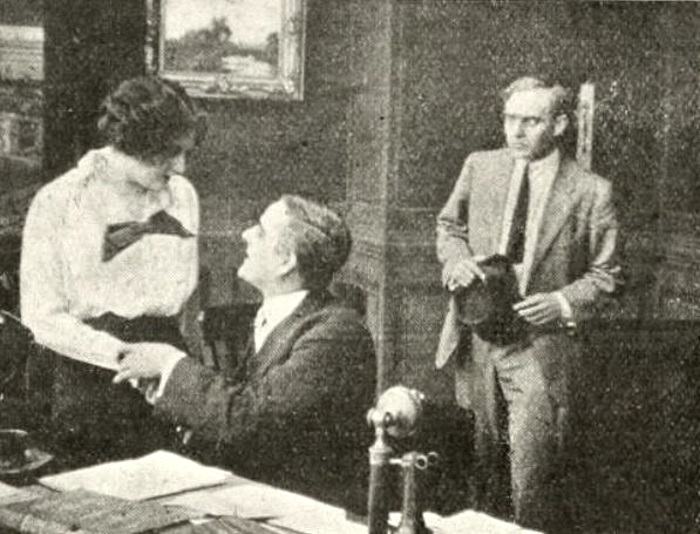
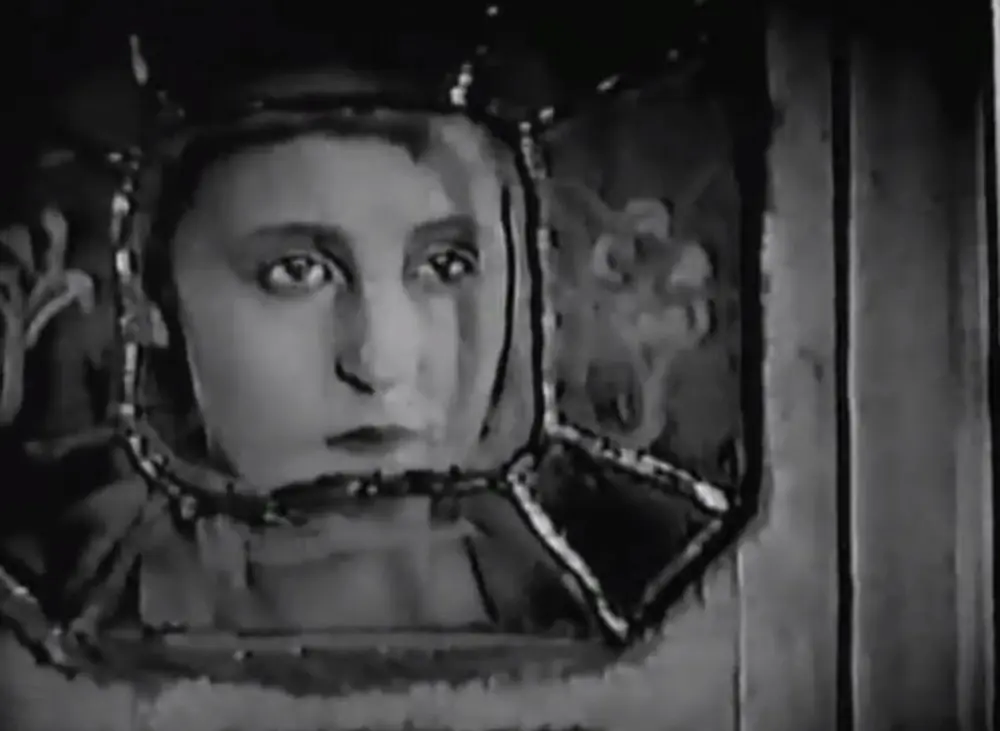
The first time we see Louise Gray she is framed against a stained-glass transom, daylight fractured into ecclesiastical shards across her cheekbones—an ironic halo for a woman about to marry the city’s most sanctified crook. Director Harry Myers (doubling as the venal Hogan) stages this meet-cute like a sacrament, letting the organ swell while the camera glides in a halo-destroying push that whispers “brace for the fall.” It’s the kind of visual premonition silent cinema adored: morality encoded in marble staircases and backlit lace.
Shannon Fife’s screenplay treats the marriage as a civic merger: Louise brings rectitude, Hogan brings a campaign fund so swollen it creaks. Their townhouse—an empire of flocked wallpaper, mahogany wainscoting, and a library that breathes cigar ash—becomes the film’s central organ, pumping secrets through hollow walls. Note how Myers repeatedly blocks scenes so that Louise is foregrounded against mirrors while Hogan speaks to her reflection; the duplicity is literalized in silvered glass, a trick borrowed from Fantasma yet sharpened here into political shiv.
Enter Rosemary Theby, whose Louise radiates the brittle valor of a woman raised on Fourth-of-July speeches but unprepared for the grease-smoke of machine politics. Theby’s eyes perform their own close-ups: pupils dilating from marital rapture to carnal disgust in a single lighting cue when she spies Hogan palming the bribe. She’s flanked by Earl Metcalfe as Detective Vance—angular trench-coat, felt hat tilted like a question mark—delivering a performance calibrated somewhere between chivalry and surveillance state. The chemistry is less swoon than low-voltage current; you feel it may electrocute either of them at any moment.
The bribery sequence—shot on an actual parapet above downtown L.A.—is the film’s bravura aria. Cinematographer Kempton Greene toggles between a god-shot of the city’s incandescent grid and a claustrophobic two-shot where the satchel changes hands. The cash inside isn’t merely paper; it’s future streetcar lines, rigged zoning, and a cemetery of broken promises. Hogan’s fingers drum the leather like a virtuoso counting kickbacks, while Vance—camouflaged behind a chimney—records the exchange with a pocket mirror, a shard of reflected moonlight slicing across his eye. The moment is proto-noir, a decade before the term existed.
Cut to the re-nomination rally: confetti cannons, brass bands, and a sea of straw boaters pumping the air like pistons. Hogan’s speech is pure Gilded-Age cant—“I stand for the honest graft that keeps the gutters clean!”—yet Myers delivers it with such huckster glee you almost admire the shamelessness. Louise’s interruption is staged as a coup de théâtre: she ascends the grand staircase, white gown trailing like a surrender flag, and denounces him with a tremor that betrays both horror and liberation. The crowd’s reaction—a collective inhale followed by a riotous boo—turns the mise-en-scène into a living woodcut of democracy curdling into mob.
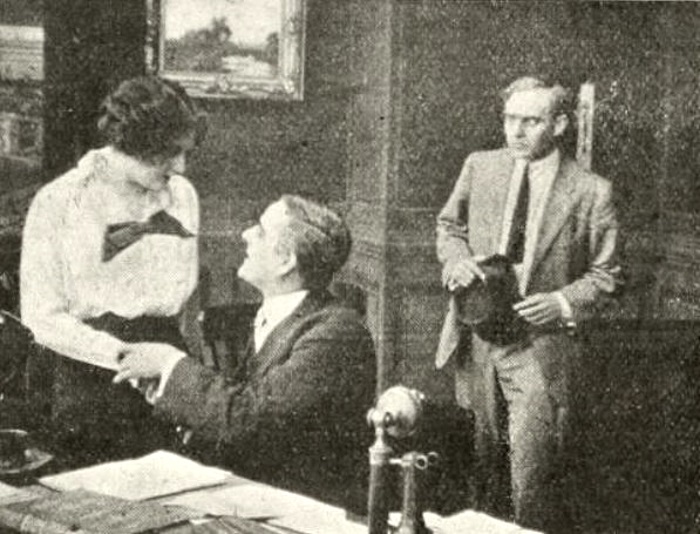
Once Hogan’s corpse is discovered—face down in a pool of ink-dark blood that soaks the Persian rug into a Rorschach of guilt—A Question of Right pivots from marital exposé to proto-procedural. Vance’s third-degree is less a search for truth than a public ritual of patriarchal vengeance. He circles Louise like a wolf beneath a single swinging gaslight, shadows jittering across her cheekbones. The intertitles grow sparse, letting Theby’s silent convulsions carry the scene: her fingers knotting a handkerchief until the linen surrenders, her shoulders folding inward as if ribs could cradle the soul. When she finally signs the false confession, the ink smears like a bruise—an image that anticipates the moral fog of The Mystery of Edwin Drood.
Jim Gray’s emergence from the closet—literally and morally—feels like something out of Grand Guignol. Played by Kempton Greene with the twitchy magnetism of a man who’s sold his reflection for morphine, Jim confesses in a single unbroken take: the camera dollies inward until his sweat-slick face fills the frame, every pore a crater of desperation. His motive is contemptibly simple: Hogan shorted him on hush money. Yet Fife’s script grants him a sliver of tragic dimension—he killed not just for cash, but for the illusion that cash could cauterize his own self-loathing.
Myers’ visual grammar borrows the chiaroscuro of Samson yet grafts it onto urban realism: brick alleyways glistening with rain, newsboys hawking extra editions, the silhouette of a hanged effigy in the civic square. The result is a civic horror tale that feels eerily predictive of Watergate-era cynicism five decades early. Compare it to the pastoral innocence of ’Neath Austral Skies and you’ll appreciate how ruthlessly the film strips romanticism from the American political imagination.
Theby’s final close-up—absolved but hollow-eyed—lingers for a full four seconds, an eternity in 1923 syntax. She doesn’t smile; instead her lower lip trembles like a curtain in a draft, suggesting that exoneration cannot refurbish trust. Metcalfe’s Vance, meanwhile, closes the film with a proposal delivered off-frame, his voice implied by a tender intertitle: “Will you let me guard the city—and your heart—henceforth?” The ambiguity is delicious; we’re unsure whether Louise accepts or merely collapses into his arms, too exhausted to refuse.
Released the same year as Officer 666, yet eclipsed by its slapstick contemporaries, A Question of Right survives only in a 35mm nitrate print at the Library of Congress, its tints faded to bruise-purple and jaundice-amber. What endures is its brazen thesis: that marriage and municipal government alike can be bought, and that the cost is measured not in dollars but in the slow hemorrhage of ideals. Watch it back-to-back with When Fate Leads Trump and you’ll detect the same cynicism toward institutions, though Myers’ film arrives without the safety valve of melodramatic fate.
In the end, the title itself—A Question of Right—feels like a taunt. Right by what metric? Legal, moral, conjugal? The film refuses a verdict, leaving us in the gray zone where Louise’s name becomes both identity and existential condition. Perhaps that ambiguity is why the picture haunts the periphery of silent-era studies, a half-remembered nightmare scuttling like a rat in the walls of American optimism. Seek it out, should the nitrate ever blaze again on a repertory screen, and brace yourself for a final image devoid of redemption: a woman walking into dawn while the city behind her—her husband’s city—spins on its axis of graft, indifferent to her survival.
IMDb 6.7
1935
Community
Log in to comment.