DbcultAccessing Vault...
6.4/10
Senior Film Conservator
A definitive 6.4/10 rating for a film that redefined the boundaries of cult cinema. A Regiment of Two remains a cornerstone of transgressive art.
Lights up on a drawing-room that smells faintly of lilac and pre-war complacency. Sidney Drew—silent cinema’s velvet-sneered chronicler of marital skirmishes—unfurls a plot so light it floats, yet so sharply hinged it could sever a finger. The premise is deliciously small: two men who love their wives but love their Friday nights more. The gag is not that they lie; it is that the lie grows epaulettes, bugles, battle-crests, and finally a counterfeit widow’s weeds.
The film clocks in at a brisk one-reel sprint—barely twelve minutes of celluloid—but inside that corset it crams a miniature social revolution. Ira Wilton, patriarch and complacent capitalist, sports the convex waistcoat of a man who believes the world has finished inventing surprises. Harry Bennett, his son-in-law by the slender thread that marries Laura, is younger, sleeker, still elastic enough to dream of freedom. Together they draft the Thirteenth Regiment, a regiment of air, and parade it before their credulous spouses like a coat-rack dressed in glory.
Watch how Drew’s camera, stationary yet cunning, frames the domestic spaces: parlors upholstered in floral chintz, mahogany radiating moral certainty, maids whose curves are corseted into geometric obedience. Every cushion, every lace doily, is a bar in the invisible cage these husbands rattle. The regiment—non-existent yet vividly detailed—becomes their open sesame. One wonders if the wives, had they been born a generation later, might have enlisted for real and left them to the dishes.
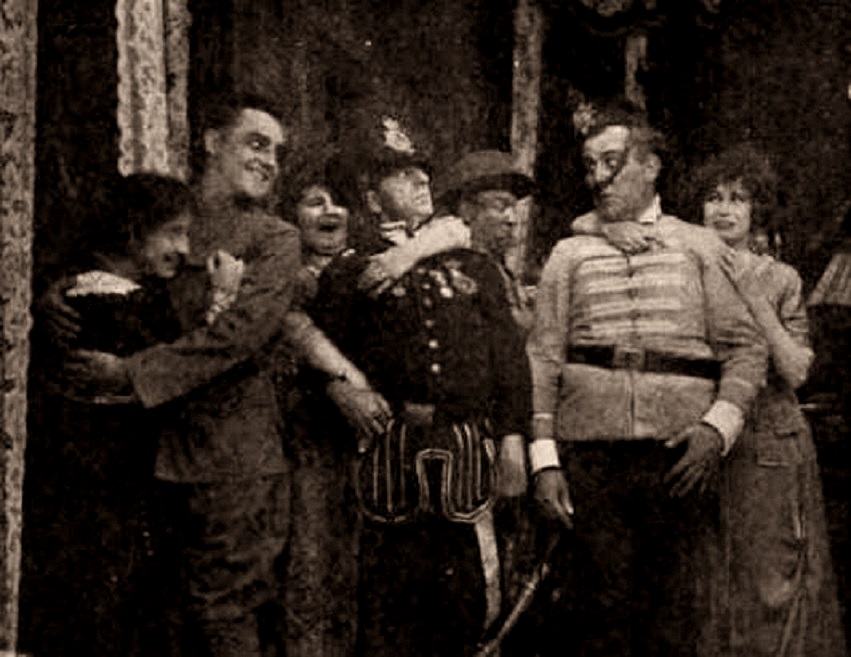
Friday night is the pressure-valve. The men swagger out in regimental caps bought from a costumer’s dusty shelf, buttons polished to a fraudulent gleam. Meanwhile Jack Brent, flesh-and-blood soldier, salutes them in the street—an accidental benediction that seals the illusion. The comedy here is not slapstick but social: the ease with which authority can be counterfeited, the willingness of bystanders to salute any stitched-on stripe.
Then the pipe bursts—an orgiastic gush that baptizes the dining-room in muddy prophecy. Water, that unruly element, invades the sanctuary of cut crystal and heirloom silver; it is the return of repressed chaos, the household’s subconscious sloshing up through the floorboards. Laura’s frantic telephone call—cords tangling like plot-lines—propels the husbands from clubroom nirvana back to sodden domesticity. They arrive, trouser-cuffs wicking up water, to find Lord Dudley—an English interloper whose moustache alone deserves separate billing—already staunching the flow. Dudley desires Laura; Laura desires Jack; Jack desires battlefield immortality. The geometry is Shakespearean, compressed into the square inches of a nickelodeon reel.
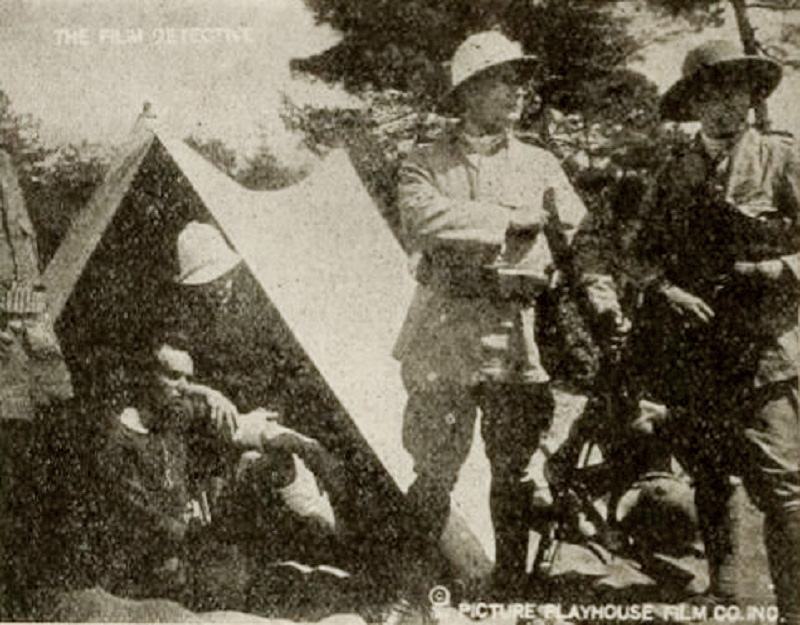
Enter the newspaper: Thirteenth Regiment wiped out. A misprint, a linotype gremlin, but to Ira and Harry it reads like emancipation. They purchase second-hand uniforms—wool still reeking of another man’s sweat—and insert themselves into the departing column, a maneuver executed with the brazen simplicity of children sneaking into a circus. Three blocks later they peel away, ghosts slipping out of history. In a barn smelling of hay and larceny they shuck the military skins, don flannels, and light out for the lake, where mosquitoes and guilt take turns feasting on their hides.
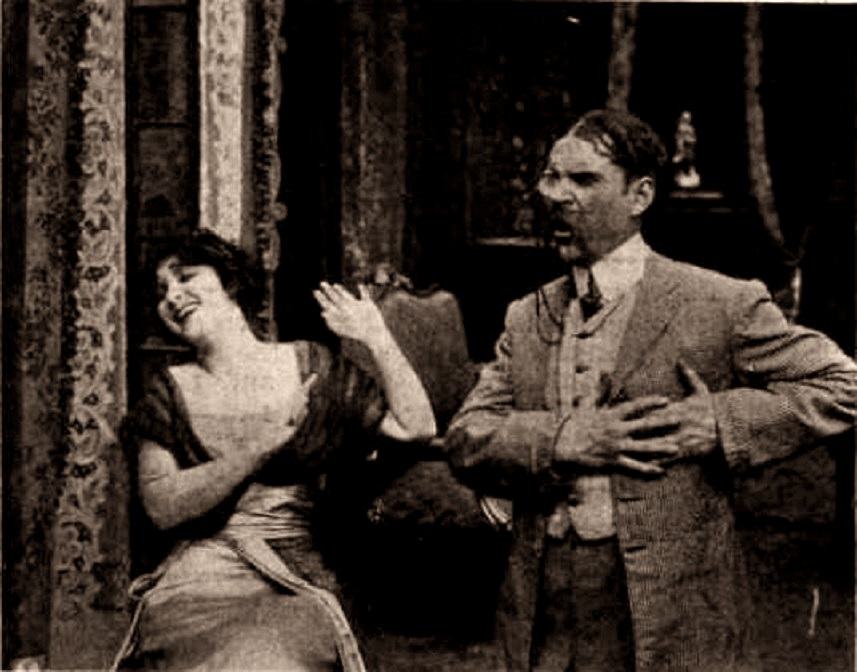
Vacation idyll lasts exactly twenty-four hours. The newspaper correction—regiment safe—arrives like a pardon they never wanted. Now the comedy pivots on the optics of resurrection. How does one return from the dead without exciting inconvenient questions? Simple: one stages a second death, this time in reverse. They slash their uniforms, smear themselves with garden soil, practice limps borrowed from Civil War amputees. The barn becomes a theatrical wardrobe; the mirror reflects two men rehearsing tragedy for an audience of hens.
Homecoming is a masterpiece of social semaphore. The widows—dry-eyed yet decorous—receive the prodigals with the brittle tenderness reserved for survivors of calamity. Uncle Tom, a windbag from the West, swaggers with promise of lifelong support now redundant. Lena the cook, rotund and volcanic, demands news of Conrad, her private infantry of one. Jack, bless his earnest heart, strolls in alive, triggering a rewrite of the entire script. Cigars—fat, fragrant, illegally Cuban—are pressed into Uncle Tom’s palm; inquiry is quietly asphyxiated. Conrad, it turns out, was never in peril; the newspaper giveth and the newspaper taketh away.
Drew’s direction keeps the tone buoyant, but beneath the froth runs a briny critique of martial myth-making. The ease with which civic gratitude can be mined by anyone with a torn tunic and a rueful grin feels eerily predictive of twentieth-century propaganda. One thinks of biblical pageants that sanctify suffering, or prizefight actualities that turn blood into box-office. Here the battlefield is imaginary, the medals counterfeit, yet the applause is thunderously real.
Performances are calibrated to the intimate scale of early cinema. Sidney Drew’s Ira exudes the self-satisfied chuckle of a man who has never met a consequence he couldn’t outrun. Harry T. Morey’s Harry provides the younger, sprightlier foil—eyebrows perpetually aloft, shoulders forever shrugging what, me worry? Rose Tapley, as the wife Mrs. Wilton, communicates suspicion with the tiniest compression of her lips, a master-class in micro-expression. Anita Stewart, luminous even in monochrome, gives Laura the glow of a woman whose loyalty is instinctive yet negotiable.
Anthony E. Wills’s script is a Swiss watch of interlocking deceptions: every lie demands a second, every alibi a corroborating uniform. The dialogue—conveyed through intertitles—crackles with polite venom. “Regiment called to the front,” reads one card, the words floating like a death sentence yet landing as a holiday pass. Another card, soaked in irony: “Entire regiment annihilated.” The letters jitter on the screen, black against white, like coffin-nails.
Technically the film is modest even for 1913: a handful of interiors, an exterior street shot, a lakeside tableau that could be New Jersey pretending to be Adirondack. Yet the economy becomes artistry. The flood is achieved by simply soaking the carpet and letting the actresses hike their skirts; the battlefield is evoked by a hat with a bullet-hole. Spectacle is outsourced to the viewer’s imagination, that most reliable of projectionists.
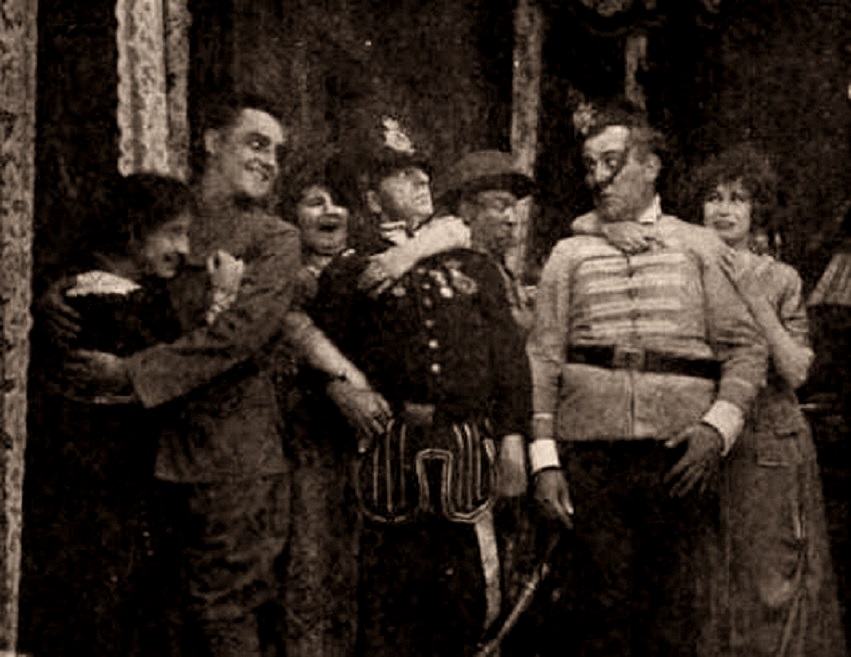
Compare it, briefly, with the grandiose canvases of the era—Quo Vadis’s imperial orgies, Cleopatra’s gilded barges, Les Misérables’ barricades. A Regiment of Two is the pocket-sized counterargument: history not as epic but as backyard farce, war not as crucible but as alibi for a fishing trip. It anticipates Keystone’s anarchic velocity, yet retains the drawing-room politeness of its era.
Gender politics, inevitably, are double-edged. The wives are dupes, yet their domestic sovereignty is absolute: one burst pipe brings the mighty regiment of male freedom trudging home. Laura, meanwhile, navigates between filial duty and erotic autonomy, her gaze sliding from Jack to Dudley with the pragmatic calculation of a stockbroker. If the film fails the Bechdel test it is only because every conversation—silent or otherwise—circles back to the masculine shell-game. Yet the women’s power to pardon or punish lends the comedy its ticking tension.
And the cigars—those fat, shameless silencers of inquiry—what a metaphor for the transactional hush money of domestic peace. One puff and Uncle Tom’s inconvenient questions dissolve into fragrant smoke, the same smoke that must have curled from the lips of studio executives when audiences swallowed the film’s cheerful amorality.
Restoration prints circulate mostly in 16-mm transfers, jittery and speckled like a lantern show. Yet even through the scratches the humor lands intact, proving that human gullibility—like human appetite—transcends the blemishes of time. The tinting, where it survives, blooms amber during hearthside scenes, sea-green during the lake idyll, rose during the homecoming—mood rings applied by hand a century ago.
To watch A Regiment of Two today is to eavesdrop on an America rehearsing its future myths: the citizen-soldier as celebrity, the battlefield as photo-op, the newspaper as gospel until contradicted by the next headline. It is also to witness the birth of the buddy-comedy DNA that will spiral through Flying Circuses and road movies yet unborn.
So, seekers of pre-war whimsy, track down this brittle reel. Let its twelve minutes remind you that every empire begins as a private joke, every war as an excuse to escape the wife, every resurrection as a well-timed bribe. Just remember: if the pipe bursts, answer the telephone—because the Thirteenth Regiment is always marching, and tomorrow’s newspaper may declare you a ghost.
IMDb 5.2
1929
Community
Log in to comment.