DbcultAccessing Vault...
Cult Review
Senior Film Conservator

There are films that merely tell a story, and then there are those that etch themselves onto the cultural consciousness, speaking volumes beyond their frames. 'Erstwhile Susan' (1919), a silent film directed by the visionary Kathryn Stuart, is undeniably in the latter category. It's not just a period piece; it's a profound meditation on liberation, social mobility, and the indomitable spirit of a woman breaking free from the shackles of expectation. In an era often romanticized for its perceived innocence, this film delves into the raw, often brutal realities faced by women, particularly those trapped by tradition and circumstance. It's a narrative that, despite its age, resonates with a startling contemporary relevance, reminding us that the fight for self-determination is a timeless human endeavor.
The story’s true heart lies in Barnabetta Dreary, portrayed with a poignant earnestness by Leslie Hunt. Barnabetta's existence is initially a stark tableau of relentless labor and filial submission within a rigid Amish household. Her days are a monotonous cycle, dictated by the demands of her autocratic father, Barnaby, and her two equally demanding brothers. It’s a life devoid of personal agency, intellectual stimulation, or even basic comfort. The film masterfully establishes this oppressive atmosphere without a single spoken word, relying on visual cues and Hunt’s expressive performance to convey the weight of Barnabetta’s burden. One can almost feel the dust of the farm, the calluses on her hands, and the quiet desperation in her eyes. This is not the bucolic serenity often associated with Amish life in popular culture; it is a portrayal of arduous, soul-crushing toil, a stark reminder of the often-unseen sacrifices made by women in patriarchal societies.
The narrative’s pivotal turning point, its veritable deus ex machina, arrives in the formidable persona of Juliet Miller, better known as Erstwhile Susan. Clare Verdera embodies Susan with a commanding presence, a woman of independent means and an unyielding will. Her marriage to Barnaby is not one born of conventional romance, but rather a strategic maneuver, and crucially, she retains absolute control over her substantial fortune. This financial autonomy becomes her most potent weapon, a lever to pry open the rigid confines of the Dreary household. Susan, with an almost revolutionary zeal, discerns Barnabetta's plight and, through a shrewd deployment of her financial influence, begins to dismantle the patriarchal structure that has long enslaved the young woman. It’s a remarkable subversion of societal norms for its time, where a woman’s wealth is not merely a dowry but a tool for social justice within her own domestic sphere. This early display of female solidarity and strategic empowerment is one of the film’s most compelling aspects, distinguishing it from many contemporary melodramas.
The ensuing conflict, a battle of wills between tradition and progress, reaches its crescendo when Susan proposes the radical idea of sending Barnabetta to school. This suggestion, an affront to Barnaby’s ingrained conservatism, precipitates a stroke, an almost biblical consequence for his intransigence. This event, while tragic, ironically becomes Barnabetta’s ultimate liberation. Released from the immediate demands of her family, she embarks on a journey of intellectual and personal awakening at a prep school. Here, the film transitions from a domestic drama to a coming-of-age narrative, showcasing Barnabetta’s burgeoning charm and intellect. Leslie Hunt's portrayal of this transformation is subtle yet profound, depicting a young woman shedding her timidity and embracing her potential. It's a testament to the power of education, not just as a means of acquiring knowledge, but as a catalyst for self-discovery and social advancement.
At the school, Barnabetta’s newfound radiance attracts the attention of two influential men: Doctor Barrett, the school's president (Jere Austin), and State Senator Jordan (Anders Randolf), a prominent trustee. Their admiration highlights Barnabetta's remarkable ascent, but it also introduces a new layer of social complexity. This burgeoning affection, however, ignites the bitter jealousy of Jordan's sister, a character who embodies the societal constraints and petty rivalries often faced by women of the era. Her attempts to thwart Barnabetta's post-graduation ambitions within the school reveal the insidious nature of entrenched privilege and the challenges faced by those attempting to climb the social ladder. This subplot, while seemingly a romantic entanglement, serves as a sharp commentary on the gatekeeping mechanisms of elite institutions and the often-unseen obstacles placed in the path of ambitious women. It echoes themes explored in films like The Market of Souls, where societal expectations and personal ambitions frequently clash.
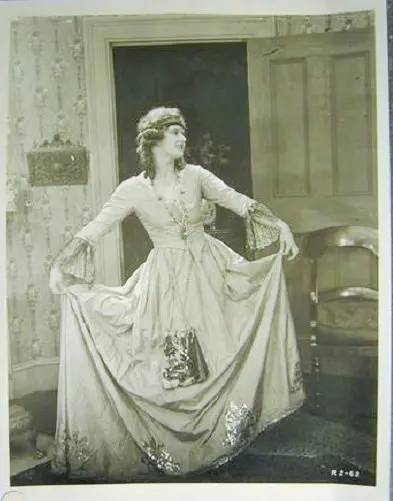
Barnabetta, no longer the timid girl from the farm, demonstrates a surprising political astuteness. She throws her support behind Senator Jordan's gubernatorial campaign, leveraging her newfound charm and intellect to aid his cause. This strategic alliance is not merely a romantic ploy; it signifies Barnabetta's burgeoning understanding of power dynamics and her willingness to engage with the world on her own terms. Her involvement in the political sphere, even if initially motivated by personal necessity, positions her as an active agent in shaping her destiny, a stark contrast to her earlier passivity. The film subtly suggests that true empowerment comes not just from individual transformation, but from active participation in the wider societal landscape. This engagement with political machinations brings to mind the intricate power plays seen in features like Graft, though 'Erstwhile Susan' focuses more on personal agency within those systems.
One of the most memorable and audacious scenes unfolds as Barnabetta, having helped Jordan secure his political victory, orchestrates a deliberate encounter between him and her still-unreformed family. She exposes him to their crude table manners, a raw, unflinching display of her origins. This act is not one of shame, but rather a powerful assertion of self, a refusal to completely abandon her roots even as she ascends to a different social stratum. It's a moment of profound authenticity, a challenge to Jordan to accept her entirely, rough edges and all. This bold move transcends typical romantic tropes, transforming a marriage proposal into a statement on class, identity, and unconditional acceptance. It is a moment that showcases the film’s willingness to tackle uncomfortable truths about social stratification, a theme often explored with less subtlety in other works like American Aristocracy.
Ultimately, Barnabetta accepts Jordan’s marriage proposal, symbolizing not just a personal triumph, but a symbolic bridging of social divides. Her journey from Amish drudgery to political influence and a respectable marriage is a testament to the transformative power of education, mentorship, and sheer will. It's a narrative that champions the individual's ability to redefine their circumstances, regardless of their birthright. Simultaneously, Erstwhile Susan's arc culminates in the successful, if gradual, reformation of Barnaby and his sons. This parallel narrative thread underscores the broader theme of progress and the potential for even the most entrenched traditions to yield to the forces of enlightenment and compassionate influence. It’s a satisfying resolution, suggesting that change, even in the most resistant environments, is possible through persistent, empathetic effort.
Kathryn Stuart’s direction, while perhaps not as overtly flamboyant as some of her contemporaries, is marked by a quiet strength and an acute understanding of visual storytelling. The film's pacing is deliberate, allowing the audience to fully absorb Barnabetta’s plight and transformation. The use of close-ups, particularly on Leslie Hunt's face, effectively conveys her internal struggles and burgeoning confidence without the need for intertitles to spell out every emotion. The cinematography, though characteristic of the era, manages to capture both the bleakness of the Amish farm and the burgeoning sophistication of the prep school and political arenas. There's a subtle but effective contrast in settings that visually reinforces Barnabetta's journey.
The screenplay, adapted by Marian De Forest and Helen Riemensnyder Martin from Helen Riemensnyder Martin's own work, is remarkably nuanced for a silent film. It avoids simplistic hero-villain dynamics, instead presenting characters with complex motivations. Barnaby, for instance, is not merely a cruel father but a man steeped in tradition, fearful of change, and ultimately, capable of reform under Susan's steadfast guidance. Erstwhile Susan herself is a fascinating character – a woman who uses her privilege not for self-aggrandizement, but for the betterment of others, a true pioneer of compassionate activism. Her character could be seen as a more proactive and empowered version of the strong female leads found in films like Alexandra or The Secret of Eve, using her agency to directly impact those around her.
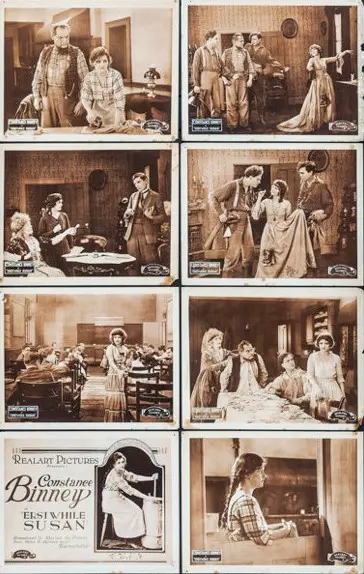
The performances across the board are commendable. Leslie Hunt’s Barnabetta is a revelation, evolving from a downtrodden servant to a self-assured woman of the world. Her physical transformation, from drab attire to elegant gowns, mirrors her internal growth, but it is her eyes that truly convey the depth of her character. Clare Verdera's Erstwhile Susan is a force of nature, a woman whose quiet determination speaks louder than any dialogue. Anders Randolf as Senator Jordan manages to convey both a certain political shrewdness and a genuine affection for Barnabetta, making their eventual union feel earned rather than merely convenient. The supporting cast, including Alfred Hickman as the rigid Barnaby, effectively grounds the story in its specific social milieu.
The film’s exploration of class distinction is particularly astute. Barnabetta’s journey is not just about personal growth, but about navigating the treacherous waters of social stratification. Her initial exposure to the refined world of the prep school, and later to the political elite, highlights the vast chasm between her origins and her aspirations. The scene where she presents her crude family to Jordan is a powerful act of defiance against the pressure to assimilate completely, a demand for acceptance on her own terms. It challenges the notion that upward mobility necessitates a complete shedding of one’s past. This nuanced approach to class and identity sets 'Erstwhile Susan' apart, giving it a depth that many contemporary films, even those with similar themes like Lombardi, Ltd., sometimes struggled to achieve.
Moreover, 'Erstwhile Susan' serves as a subtle yet potent feminist statement. It champions education as a tool for female empowerment, demonstrates the power of female mentorship, and portrays a woman who actively shapes her destiny rather than passively accepts it. In an era when women had only recently gained the right to vote in many places, a film depicting a woman's journey from domestic servitude to political influence and a marriage of choice was not just entertainment; it was a societal mirror, reflecting aspirations and challenging norms. It quietly advocates for a world where women are not merely wives or daughters, but agents of change, capable of intellectual and social contribution. This progressive outlook aligns it with the spirit of other early films that subtly pushed boundaries, such as When Love Was Blind, though 'Erstwhile Susan' leans more into direct societal impact.
'Erstwhile Susan' is more than a historical curiosity; it is a vital piece of cinematic heritage that continues to speak to modern audiences. Its themes of personal liberation, the importance of education, the complexities of class, and the transformative power of compassionate intervention are timeless. It reminds us that stories of female empowerment are not a recent phenomenon but have been woven into the fabric of cinema from its nascent stages. The film’s quiet strength lies in its ability to tell a deeply personal story within a broader social context, making it both intimately relatable and historically significant. It stands as a testament to the talent of Kathryn Stuart and her collaborators, who crafted a narrative that is both engaging and thought-provoking, resisting the urge for easy answers or simplistic resolutions.
For those interested in the evolution of storytelling, the portrayal of women in early cinema, or simply a compelling drama, 'Erstwhile Susan' is an essential viewing experience. It's a film that encourages reflection on our own societal structures and the ongoing journey towards true equality and self-determination. Its legacy is not just in its individual narrative but in its contribution to a cinematic tradition that continually challenges, inspires, and illuminates the human condition. While other films of the era like Riddle Gawne focused on adventure or Fatherhood on domestic roles, 'Erstwhile Susan' carved out a distinct niche by meticulously detailing a woman’s dramatic ascent, making it an invaluable entry in the canon of silent-era cinema. It deserves to be rediscovered, celebrated, and discussed for its profound insights and enduring artistic merit.

IMDb 7.4
1934
Community
Log in to comment.