DbcultAccessing Vault...
Cult Review
Senior Film Conservator
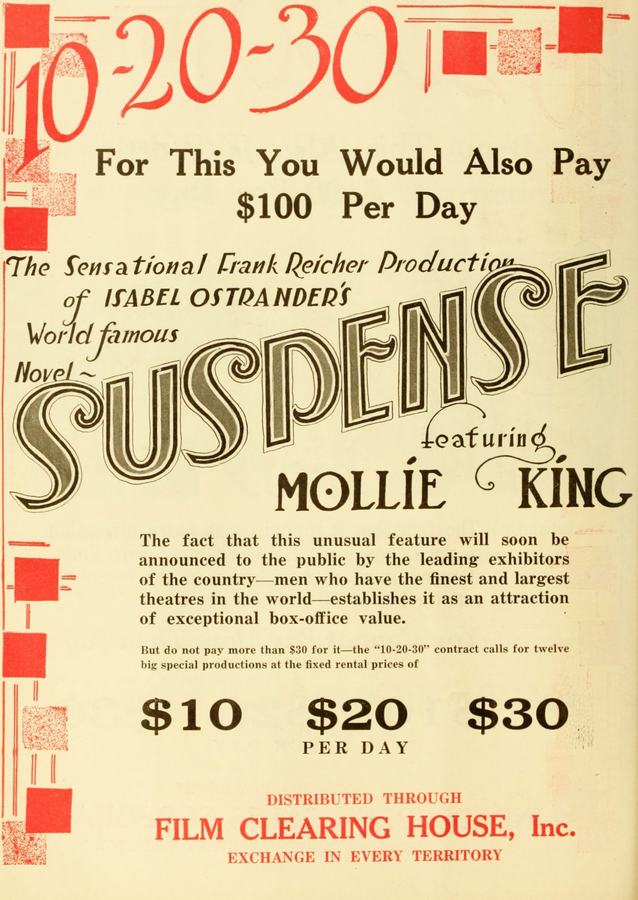
In the annals of early cinema, where narratives were often painted with broad strokes and emotional resonance relied heavily on pantomime and dramatic close-ups, there emerges a film like 'Suspense' (1913) – a veritable masterclass in the nascent espionage thriller genre. Directed with a keen eye for tension and propelled by a plot that twists and turns with surprising agility for its era, this silent gem, penned by Eve Unsell and Isabelle Ostrander, transcends its chronological confines to deliver a surprisingly potent and engaging experience. It's a testament to the enduring power of a well-crafted mystery, even when conveyed without a single spoken word.
At its core, 'Suspense' is a story of filial loyalty intersecting with national security, a daughter's unwavering devotion pitted against a shadowy cabal threatening the very fabric of the state. The film opens with a premise that immediately grabs attention: the ignominious downfall of Rear Admiral Jeremy West, portrayed with a gravitas that hints at a distinguished career unjustly tarnished. His dismissal, a direct consequence of the inexplicable disappearance of critical security plans, is not merely a professional setback; it's a catastrophic blow that shatters his spirit, leading to a profound mental collapse and subsequent institutionalization. This initial tragedy sets a somber, high-stakes tone, establishing the profound personal cost of the conspiracy at hand.
Enter Ruth West, the Rear Admiral's daughter, brought to life by the compelling performance of Iseth Munro. Ruth is no damsel in distress; she is a protagonist forged in the crucible of adversity, embodying a fierce independence and an investigative acumen that would make many a seasoned detective proud. Her journey begins not with a formal investigation, but with a fortuitous eavesdropping – a stolen whisper between her father's former secretary, Alfred Trimble (Howard Truesdale), and the enigmatic Wolvert (Harris Gordon). This overheard snippet of treachery, a subtle yet damning clue, becomes the catalyst for her audacious quest for justice and vindication. Ruth's resolve is immediate and absolute, charting a course that will take her deep into the heart of a dangerous criminal enterprise.
Ruth's subsequent actions are a masterclass in covert operations. Tracking the conspirators to the lavish Fifth Avenue residence of Mrs. Marcia Vanderhold (Isabel O'Madigan), she understands that direct confrontation is not an option. Instead, she crafts a meticulous disguise, adopting the identity of 'Betty,' a fabricated friend, and deftly maneuvers her way into Mrs. Vanderhold's orbit. Her initial infiltration as a stenographer for the Associated War Charities – an organization led by the very woman she suspects – is a stroke of narrative genius, placing her in close proximity to her target without arousing suspicion. This sequence highlights the film's intelligent plotting, demonstrating how early filmmakers could build tension through strategic character placement and the gradual unveiling of secrets.
The arrival of Herbert Ross (Frank Stefansky), a young detective hired by Ruth's concerned aunt (Mollie King), introduces an interesting dynamic. While Ross represents a more conventional path to solving the mystery, Ruth's unwavering self-reliance is emphasized by her initial refusal of his aid. This decision not only underscores her formidable character but also allows the narrative to maintain its focus on her individual agency. Her subsequent promotion to Mrs. Vanderhold's personal secretary – conveniently following the suspicious death of the previous incumbent – further entrenches her in the heart of the conspiracy. This twist, while perhaps a touch melodramatic, serves to heighten the stakes and solidify Ruth's precarious position, drawing parallels to the serials of the era, where a heroine might continually find herself in escalating peril, much like in Zudora, where the protagonist often faced dire circumstances with remarkable resilience.
The narrative's shift to Mrs. Vanderhold's secluded Long Island villa marks a significant escalation in tension. The isolated setting amplifies the sense of danger, creating an atmosphere of claustrophobic intrigue. The arrival of Trimble, accompanied by the ominously titled 'His Excellency,' confirms Ruth's gravest suspicions, revealing the broader scope and hierarchical nature of the criminal organization. This moment is crucial, transforming a personal vendetta into a full-blown national security crisis, a theme that would resonate deeply in the pre-World War I anxieties of the period, much like the concerns over national documents and loyalty found in films such as Draft 258.
Ruth's discovery of the hidden wall safe, the repository of the stolen plans, is the culmination of her meticulous espionage. The subsequent act – chloroforming Wolvert to retrieve the documents – is a moment of breathtaking audacity, showcasing her courage and resourcefulness under extreme pressure. This scene, executed in the silent medium, relies on precise blocking and expressive performances to convey the high stakes and the character's ingenuity. It's a thrilling sequence that proves silent cinema was more than capable of delivering visceral action.
However, triumph is swiftly followed by peril. Trimble's recognition of Ruth shatters her carefully constructed facade, plunging the villa into chaos. The ensuing struggle, the overturned lamp casting the scene into disorienting darkness, and the chilling flash of gunfire, are expertly choreographed to maximize suspense. This chaotic climax is a testament to the film's ability to maintain a relentless pace, building to a dramatic crescendo that leaves the audience on the edge of their seats. The use of darkness and sudden light changes is a particularly effective technique, demonstrating early cinematic innovation in visual storytelling to enhance dramatic impact.
The timely intervention of Herbert Ross, who restores light and order to the chaotic scene, provides the much-needed resolution. His arrival, while fulfilling the trope of the male rescuer, does not diminish Ruth's prior achievements. Rather, it serves to complete the narrative arc, allowing for the apprehension of the conspirators and the full restoration of Rear Admiral West's honor. The embrace between Ruth and Herbert is not merely a romantic conclusion; it symbolizes the triumph of justice and the reward for unwavering courage. Their ensuing engagement offers a satisfying personal resolution to the grander national drama, cementing the film's status as a well-rounded narrative, much like the satisfying conclusions often found in romantic adventures like The Wood Nymph, though with a decidedly more thrilling journey.
The performances in 'Suspense' are uniformly strong, particularly from Iseth Munro as Ruth. Her ability to convey determination, fear, and intelligence through silent acting is truly remarkable. Frank Stefansky provides a solid, dependable presence as Herbert Ross, a foil and eventual partner to Ruth's more audacious character. The villains, Howard Truesdale and Harris Gordon, manage to project menace and deceit without resorting to overt caricature, a subtle achievement in an era often prone to exaggerated villainy. Isabel O'Madigan as Mrs. Vanderhold perfectly embodies the veneer of respectability masking sinister intentions, a common, yet effective, trope in thrillers of the period.
From a technical standpoint, 'Suspense' is remarkably sophisticated for 1913. The camera work, while perhaps not as overtly experimental as some contemporaries, is effective in building mood and guiding the viewer's eye. The use of intertitles is judicious, providing necessary exposition without bogging down the visual flow. The pacing is relentless, a testament to the writers Eve Unsell and Isabelle Ostrander's understanding of how to construct a compelling thriller narrative. Their collaboration resulted in a script that, even in its silent form, communicates complex motivations and high-stakes drama with clarity and impact. The film effectively uses its limited palette to paint a vivid picture of intrigue and danger, proving that even without sound, a story can be profoundly immersive. This meticulous attention to narrative structure and visual storytelling is a hallmark of well-executed silent films and contributed significantly to the evolution of film as an art form.
'Suspense' stands as an important artifact in the history of cinema, not just as an early example of the spy genre, but as a demonstration of the power of strong female protagonists in an era that often relegated women to more passive roles. Ruth West is a proactive, intelligent, and courageous character who drives the plot forward through her own initiative, a refreshing departure from many contemporaries. Her journey from concerned daughter to daring espionage agent is genuinely inspiring and showcases the burgeoning potential for diverse characterizations in film. This film illustrates that even in the nascent stages of the medium, creators were exploring complex themes and pushing boundaries in character development, paving the way for the rich tapestry of cinematic heroines we see today.
The film's exploration of national security, betrayal, and redemption resonates even today. While the specific context of disappearing plans and sanitariums might feel dated, the underlying themes of trust, loyalty, and the fight against hidden evils are timeless. It reminds us that the foundational elements of compelling storytelling – a sympathetic protagonist, formidable antagonists, and a clear objective – have remained constant throughout cinematic history. The tension created by the high stakes, the personal and national implications of the stolen documents, keeps the viewer invested from start to finish. This narrative strength ensures its enduring appeal, making it more than just a historical curiosity.
For enthusiasts of silent cinema, 'Suspense' offers a compelling glimpse into the genre's formative years, showcasing how filmmakers experimented with narrative complexity and visual dynamism to captivate audiences. It serves as a vital touchstone for understanding the evolution of the thriller, demonstrating how early techniques laid the groundwork for the more elaborate spy narratives that would follow in subsequent decades. The film's influence, while perhaps not overtly documented, can be seen in the continued development of plots centered around infiltration, espionage, and the race against time to recover vital secrets, themes that would become staples of the genre.
Moreover, the film's portrayal of Ruth West is particularly noteworthy. She is not merely an object of affection or a passive recipient of events; she is the architect of her own destiny, a proactive agent in a world dominated by men. Her courage, intelligence, and unwavering determination make her a truly memorable character, a precursor to the strong, independent female protagonists who would eventually populate the silver screen. In an era where female characters were often relegated to domesticity or romantic pursuits, Ruth West stands out as a beacon of female agency, a testament to the pioneering spirit of early cinematic storytelling. Her journey is one of self-discovery and empowerment, proving that even within the constraints of early filmmaking, complex and inspiring female roles could emerge.
In conclusion, 'Suspense' is far more than a historical curiosity; it is a vibrant, engaging thriller that holds up remarkably well, even over a century after its release. Its intricate plot, compelling characters, and innovative use of silent film techniques make it a must-see for anyone interested in the origins of the espionage genre or the burgeoning power of female protagonists in early cinema. It reminds us that true suspense, skillfully crafted, transcends the limitations of its medium and era, leaving a lasting impression on all who encounter its shadowy depths. The film is a powerful reminder of the ingenuity and creative spirit that defined the formative years of motion pictures, an era where every frame was an opportunity to innovate and enthrall. It truly earns its title, delivering a consistent and palpable sense of 'Suspense' from start to finish, solidifying its place as a significant piece of cinematic history.

IMDb —
1924
Community
Log in to comment.