DbcultAccessing Vault...
Cult Review
Senior Film Conservator
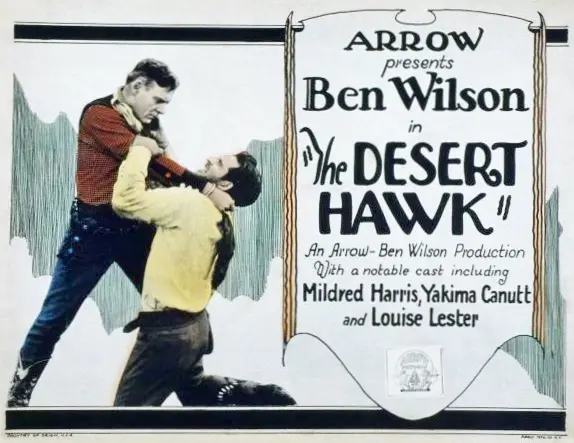
In the vast, often overlooked annals of early cinema, certain films, despite their age and relative obscurity, manage to capture a raw, unvarnished essence of their time. The Desert Hawk, a 1920 silent Western, stands as one such artifact, a fascinating glimpse into the nascent stages of a genre that would come to define American cinema. It’s a narrative steeped in the stark morality and rugged individualism that characterized the frontier, offering a compelling, if simplistic, tale of redemption, survival, and unexpected alliances. For those of us who cherish the foundational myths of the West, this film, with its straightforward premise and earnest execution, offers a rich vein for exploration, reminding us that even in the absence of spoken dialogue, powerful stories can resonate across a century.
The film introduces us to "Hawk" Hollister, a man living on the fringes, burdened by the heavy hand of the law. His past is painted with the indelible mark of a wanted man, accused of a grave transgression: the killing of a sheriff’s brother. This isn't merely a detail; it's the very crucible of his character, shaping his interactions and forcing him into a life of perpetual vigilance. The desert itself, rendered in the stark black and white of the era, becomes more than just a backdrop; it's a character in its own right—a vast, indifferent expanse mirroring Hawk's own internal wilderness. It’s a place where justice is often swift and brutal, where survival hinges on instinct and cunning, and where the lines between right and wrong blur under the relentless sun. The silent era, ironically, often amplified the power of such landscapes, forcing audiences to project their own understanding onto the visual cues, making the environment feel even more oppressive or liberating.
Into this harsh tableau tumbles Marie Nicholls, a woman whose journey takes an unexpected and perilous turn when she falls from a passing train. Her predicament, a classic trope of vulnerability in a dangerous world, immediately sets the stage for conflict and potential heroism. Marie is not merely a damsel in distress; she carries with her the weight of an inheritance, a ranch left by her uncle, which represents both her hope for a new beginning and a magnet for potential adversaries. Her arrival disrupts Hawk’s solitary existence, forcing him to confront not only external threats but also the moral compass within himself. This sudden intrusion of innocence and purpose into his life of flight and self-preservation forms the narrative's core, presenting a fascinating dynamic between two disparate souls thrown together by fate.
The decision by Hawk to assist Marie is the pivotal moment, a turning point that elevates the film beyond a simple chase narrative. It speaks to a deeper human impulse, perhaps a flicker of the 'good' that still resides within the 'outlaw.' This isn't a calculated move; it feels like an act of genuine compassion, a defiance of his own self-imposed isolation. As they journey together, the silent film medium excels in conveying their evolving relationship through gesture, expression, and the careful framing of their shared experiences. The struggles they face—the harsh elements, potential pursuers, the inherent dangers of the frontier—serve to forge an unbreakable bond, transforming an initial act of chivalry into a partnership of necessity and, perhaps, burgeoning affection.
William Bailey, in the role of Hawk Hollister, embodies the stoic, conflicted Western hero with a quiet intensity. His performance, reliant entirely on physicality and facial expression, conveys the weight of his past and the nascent stirrings of his conscience. It's a masterclass in silent film acting, where every glance, every subtle shift in posture, tells a story. Similarly, Mildred Harris, as Marie Nicholls, brings a vulnerability combined with an underlying resilience that makes her character more than just a plot device. Her portrayal is crucial in lending credibility to Hawk's sudden change of heart, making her plight genuinely compelling. The supporting cast, including the legendary Yakima Canutt, whose unparalleled stunt work would later influence generations of filmmakers, adds authentic texture to the film’s action sequences, even if his role here might be more understated. The raw, physical performances are a hallmark of this era, a testament to the actors' ability to communicate complex emotions without a single spoken word. In many ways, the visceral performances here recall the directness seen in films like Ruth of the Rockies, where the action and the actors' physical prowess were central to the storytelling.
One of the most remarkable aspects of The Desert Hawk is its ability to build tension and convey narrative progression through purely visual means. The direction, likely a collaborative effort given the era's production methods (Robert McKenzie is credited as a writer and often acted in and directed films of this type), focuses on clear storytelling, utilizing wide shots to establish the desolate grandeur of the West and closer frames to capture the emotional nuances of the characters. The editing, while perhaps not as sophisticated as later decades, is effective in maintaining a steady pace, allowing the audience to absorb the unfolding drama. Intertitles, the textual inserts that convey dialogue or crucial plot information, are used judiciously, acting as signposts rather than crutches, ensuring that the visual narrative remains paramount. This reliance on visual storytelling is a unique art form, one that modern cinema, with its often verbose scripts, could learn a great deal from.
The action sequences, while not as explosive as those in sound films, possess a grounded realism. The stunts, likely performed by cast members like Canutt, are less about impossible feats and more about believable struggles against the environment and other human adversaries. There’s a palpable sense of danger in the train fall, the horseback chases, and the inevitable confrontations that pepper their journey. This authenticity lends a grittiness to the film that feels genuinely earned. Comparing this to the more stylized slapstick of something like The Essanay-Chaplin Revue of 1916 highlights the vast stylistic differences even within the silent era; while Chaplin sought laughter through physical comedy, The Desert Hawk pursued drama through realistic action.
At its heart, The Desert Hawk grapples with timeless themes. The question of justice, particularly in a landscape where official law enforcement is often distant or compromised, is central. Hawk's status as a wanted man immediately places him in a moral gray area. Is he truly guilty? Or is he a victim of circumstance, a man perhaps forced to act in self-defense? The film doesn't offer easy answers, instead allowing the audience to ponder the complexities of his situation. His eventual decision to help Marie can be seen as a path towards personal redemption, an opportunity to atone for past wrongs or to prove his inherent goodness despite his reputation. This moral ambiguity is a powerful element, suggesting that even outlaws can possess a code of honor. This thematic exploration of law and morality finds echoes in other films of the period, such as God's Law and Man's, which similarly delved into the conflicts between societal rules and personal ethics.
The film also celebrates the enduring spirit of the frontier, a rugged individualism tempered by an unexpected capacity for community and aid. The vastness of the West, while dangerous, also represents freedom and the chance for reinvention. Marie’s quest for her inherited ranch embodies the pioneering spirit, the drive to carve out a life in a challenging environment. Her resilience, combined with Hawk’s protective instincts, paints a picture of humanity's enduring struggle and triumph against overwhelming odds. This spirit is what makes these early Westerns so compelling—they tap into a deep-seated American mythos of self-reliance and the promise of a new beginning.
While The Desert Hawk may not be as widely celebrated as some of its contemporaries, its significance lies in its contribution to the evolving Western genre. It helped solidify tropes and character archetypes that would be revisited and refined for decades to come. The silent Western, in particular, was a crucible for cinematic innovation, forcing filmmakers to be ingenious with visual storytelling and physical performance. The performances by William Bailey and Mildred Harris, along with the action choreography, serve as excellent examples of the craft required for this unique form of cinema. It’s a film that, despite the passage of time, still manages to evoke the dust and drama of the Old West, drawing viewers into its world through the sheer power of its imagery and the compelling nature of its central conflict.
Revisiting films like The Desert Hawk offers more than just historical curiosity; it provides a valuable lesson in the fundamentals of storytelling. Stripped of dialogue and intricate sound design, these films rely on the purity of their visual language, the expressiveness of their actors, and the universality of their themes. They remind us that the core elements of engaging cinema—character, conflict, and resolution—transcend technological advancements. The journey of Hawk and Marie, from strangers to allies against a formidable landscape, is a testament to the enduring power of human connection and the perennial allure of the open frontier. It may not possess the complex psychological depth of later Westerns, but its straightforward heroism and stark portrayal of survival are undeniably effective. For enthusiasts of early cinema, and particularly for those fascinated by the origins of the Western, The Desert Hawk is a journey well worth taking, a silent echo from a bygone era that still speaks volumes.
The collaborative writing effort of Jay Inman Kane, Daniel F. Whitcomb, and Robert McKenzie likely contributed to the film’s tight pacing and clear narrative arc. In an era where production roles often overlapped, the ability to craft a coherent story that could be effectively translated into visual sequences was paramount. Their work here demonstrates an understanding of what made early audiences connect with these frontier tales: relatable struggles, clear heroes and villains (even if the hero is morally ambiguous), and the promise of adventure. This foundational storytelling paved the way for more sophisticated narratives, yet retains a charm in its simplicity. One can draw parallels to the directness of storytelling found in other silent films of the period, like A Soul Enslaved, where character motivations, though sometimes melodramatic, were always clear.
The film’s portrayal of the Western landscape, while limited by the photographic technology of the time, still manages to convey a sense of vastness and isolation. The desert is not just a setting; it's an active participant in the characters' struggles. The relentless sun, the endless horizons, and the sparse vegetation all contribute to the feeling of a world where humanity is but a small, fragile presence. This environmental determinism, a common trope in early Westerns, emphasizes the grit and resilience required for survival. It's a stark contrast to the more domesticated settings seen in films like Distilled Love, underscoring the genre's unique appeal.
Ultimately, The Desert Hawk serves as a compelling reminder of the silent film era's power to captivate and transport audiences. It is a testament to the skill of its cast and crew who, without the benefit of spoken word, crafted a narrative rich in tension, emotion, and thrilling action. It’s a film that asks us to look beyond the technological limitations and appreciate the artistry in its purest form. For anyone interested in the evolution of the Western, or simply curious about the foundational works of cinema, this film offers a valuable and engaging experience. Its enduring legacy, though perhaps not as loudly proclaimed as some, is evident in the archetypes it helped solidify and the narrative paths it helped forge. It’s a silent whisper from the past, echoing the timeless tales of the wild frontier.
The journey with Hawk and Marie is a microcosm of the larger American narrative—one of seeking new beginnings, confronting adversity, and finding unexpected connections in the most desolate of places. The film’s simplicity is its strength, allowing the fundamental human drama to shine through without distraction. It’s a vital piece of cinematic history, demonstrating how the nascent medium could convey complex ideas and emotions with just images and intertitles. As we look back, films like The Desert Hawk offer profound insights into the cultural landscape of their time, and indeed, into the enduring human condition. The stark portrayal of good versus perceived evil, the inherent dangers of the unknown, and the glimmer of hope found in human connection—these are themes that resonate far beyond the silent era. It's a film that, despite its age, still has much to say about the resilience of the human spirit and the allure of the frontier myth, proving that some stories, told well, are truly timeless. The legacy of actors like Ben F. Wilson, who also often directed and wrote, reminds us of the versatility required in early filmmaking, where individuals often wore multiple hats to bring these compelling stories to the screen. Their collective efforts, from the writing to the performances, contribute to making The Desert Hawk a fascinating and worthwhile watch for anyone interested in the foundational elements of American cinema. It’s not just a film; it’s a living piece of history, a testament to the power of visual storytelling, and a thrilling ride across the dusty plains of a bygone era.
IMDb —
1929
Community
Log in to comment.