DbcultAccessing Vault...
Cult Review
Senior Film Conservator
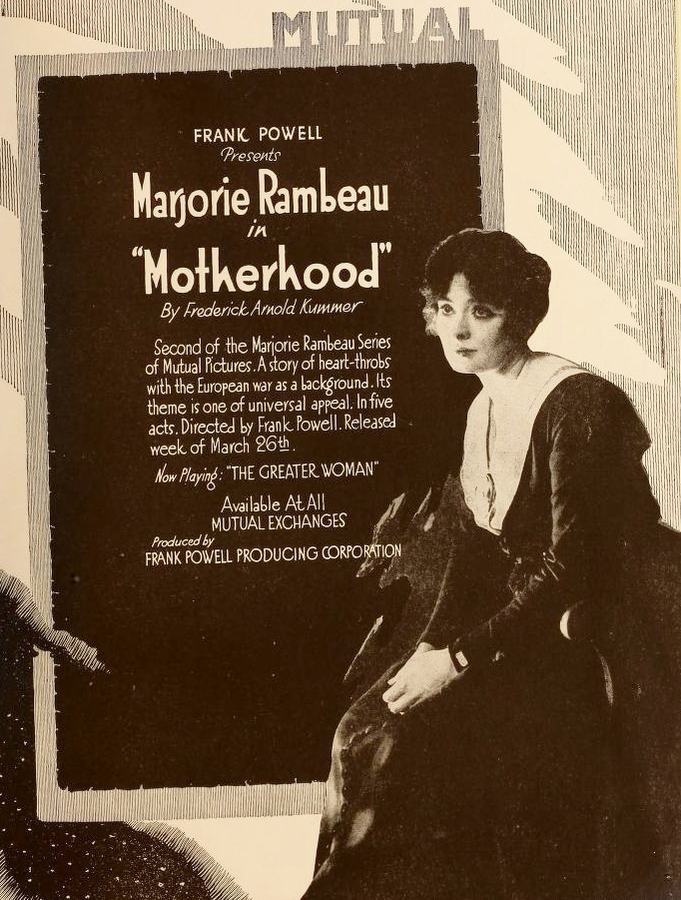
There are films that whisper, and there are films that slap. Motherhood—released in the exhausted aftermath of the Great War—does both, often in the same breath. It is a morality play soaked in moral rot, a pastoral fable that suddenly pulls back the curtain to reveal a trench full of corpses. You come expecting D. W. Griffith-style sentiment; you leave with the taste of iron on your tongue.
Director Frederic Arnold Kummer and scenarist Clara Beranger adapt a stage sketch into a Russian-doll narrative: an American frame story whose sole purpose is to drop us, like Alice through the looking-glass, into a Breton farmhouse where the wheat grows high and the morals lie trampled in the mud. The device is creaky, yet perversely effective—every time we return to the cozy stateside nursery we feel the vertigo of privilege, the insulation of an ocean.
Shot on location in northern New Jersey during the winter of 1919, the European passages are bathed in pewter skies that bruise into charcoal. Cinematographer Robert Elliott (who also plays the enemy captain) uses low horizons so that the ploughed fields resemble scar tissue. When Albert—played with clenched-jaw earnestness by Robert Eaton—marches off, the camera lingers on Louise’s back as she grips a wooden gate, her knuckles bone-white against the weathered grey. It is a portrait of foreboding so economical it could be hung in a gallery alongside War and Peace stills.
Intertitles, usually the Achilles heel of silent melodrama, here achieve terse poetry. When the captain first corners Louise, the card reads: “The war entered by the front door; shame crept up the back stairs.” One could write a dissertation on that single line—how it externalises national trauma as domestic assault, how it prefigures the home-front anxieties that would bloom again in 1940s noir.
Robert Elliott’s captain is no moustache-twirling villain. He is courteous, multilingual, fatally bored—a flâneur of occupation who plays Schumann on Louise’s cracked upright and leaves coffee-stained maps on the parlour table. The seduction, therefore, is bureaucratic before it becomes corporeal: he requisitions her bedroom, her pantry, her time, and finally her body. The film never shows the assault; instead we see Louise re-enter the room, candle trembling, while the camera tracks past a shattered mirror. Reflections, after all, are impossible once innocence is auctioned off.
Compare this restraint to the flamboyant sadism of The Black Chancellor or the penny-dreadful antics of The Mystery of a Hansom Cab; Motherhood trusts the audience to supply the horror, thereby achieving a nastier afterglow that clings to the ribs.
Silent-era acting often flirts with hieratic exaggeration, but Ruth Byron opts for micro-gestures: the flutter of a pulse beneath the ear, the way her shoulders collapse inward as if the collarbones themselves were ashamed. When Albert demands to know why the cradle rocks untouched, she lifts her eyes—two burnt holes in a sheet of parchment—and whispers (in intertitle) that motherhood can be both instinct and abyss. The line lands like a slap because Byron has spent the previous reels signalling revulsion: she recoils from the infant as though he were a ticking grenade.
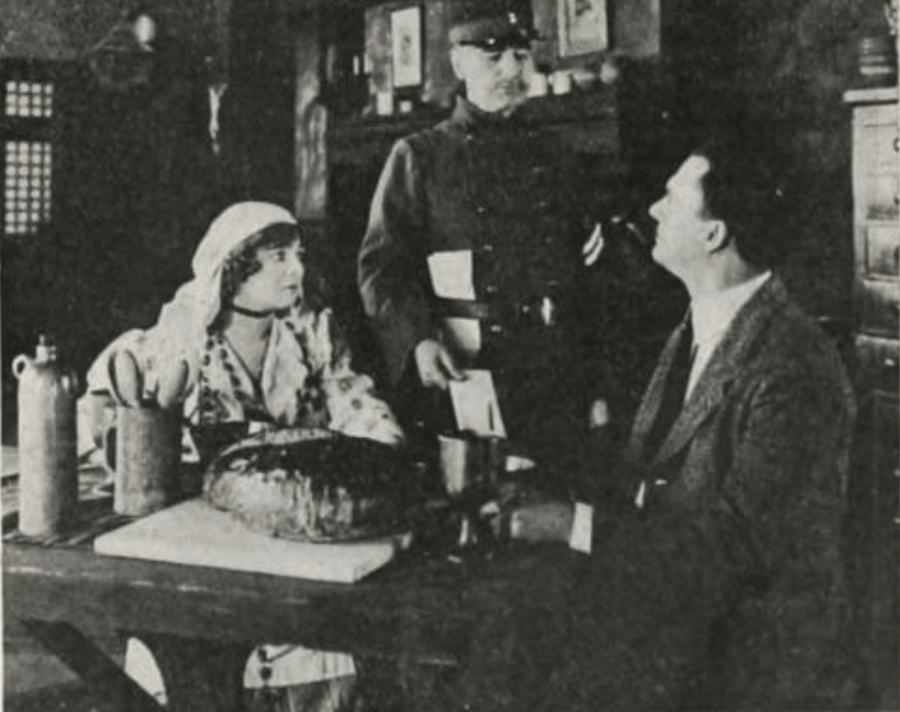
The film’s boldest conceit is that Louise’s eventual embrace of the child is not redemption but resignation. She does not forgive; she simply refuses the perpetuation of murder. In 1920 this qualified, almost reluctant maternalism felt dangerously modern—closer to the ambiguous endings of Scandinavian fiction than to the hymnal closure of Dimples.
Robert Eaton has the square-jawed look of a recruitment poster, and the film weaponises that iconography. When Albert hovers over the cradle with a raised belt, the silhouette combines the punitive father, the vengeful soldier, and the Judaeo-Christian deity all at once. His hesitation—filmed in a lingering close-up back-lit by firelight—renders masculinity as a brittle construct, liable to shatter under the weight of its own mythology. The audience of 1920, many of them veterans, would have recognised that flicker of self-doubt; it is the same tremor that runs through Our American Boys in the European War, though that picture preferred patriotic balm to psychological incision.
Every twenty minutes we yank back to a suburban reading room where Lillian Paige and Frank A. Ford exclaim over the European tragedy like spectators at a bear-baiting. Their final burst of jubilation—“Thank God America is at peace!”—is so jarringly smug that modern viewers want to hurl something at the screen. Yet the film needs that acidic aftertaste; it implicates the viewer in geographical luck, suggesting that peace is not a moral achievement but a lottery ticket. The device anticipates the meta-narratives of post-modern cinema by seven decades.
Original exhibitors were encouraged to accompany Motherhood with a medley of Schumann (echoing the captain) and the folk lullaby “By the Low Road.” Surviving cue sheets reveal a macabre instruction: when Louise confesses, the pianist should slow the tempo to 60 bpm and switch to minor chords in the lower register—effectively turning the audience’s own heart into a subwoofer of dread. Contemporary restorations sometimes substitute generic piano, but a thoughtful accompanist can resurrect the film’s seismic unease. Try hearing that lullaby after watching; it crawls under the skin and nests there.
Place it beside Ein Ehrenwort and you see two nations grappling with dishonour through opposite prisms: Germanic stoicism versus American sensationalism. Pair it with The Awakening of Helena Ritchie and you discern a shared fascination with fallen women who refuse to fall quietly. Yet Motherhood outflanks both in moral convolution: there is no wedding-ring payoff, no church-bell absolution, only the uneasy truce of two adults sharing a roof with a child who is reminder and relic.
For decades the picture was presumed lost, a casualty of nitrate rot and archival apathy. Then in 2018 a 35 mm dupe surfaced in the crawlspace of a defunct Vermont church, mis-labelled as “European War Scenes.” The Library of Congress oversaw a 4 K restoration, and the resultant Blu-ray—available through Kino Classics—reveals textures previously unseen: the fuzz of homespun linen, the calico pattern on the infant’s blanket, the cracked lip of Louise’s porcelain washbasin where Captain von Lüneville once laid his revolver. Streaming platforms have been sluggish to license it, but boutique labels report steady back-orders; apparently cinephiles crave moral disquiet as much as caped superheroes.
Motherhood is not a comfortable watch, nor was it meant to be. It is a cracked family heirloom—pick it up and you risk cutting your palms on its jagged edges. Yet the cut is instructive: it reminds us that wars do not end when treaties are signed; they migrate into bedrooms, into cradles, into the marrow of the next generation. The film’s greatest subversion is to deny catharsis: the American couple close the book, the European couple limp onward, the child survives without ever being told he was once condemned. Somewhere between those truths lies the unsettling genius of a picture that dared to suggest motherhood is not a halo but a battlefield—and the enemy might be the man you once kissed goodbye.
Grade: A- for audacity, B+ for execution. Watch it once for history, twice for penance, three times because silence, too, can scream.
IMDb —
1928
Community
Log in to comment.