DbcultAccessing Vault...
Cult Review
Senior Film Conservator
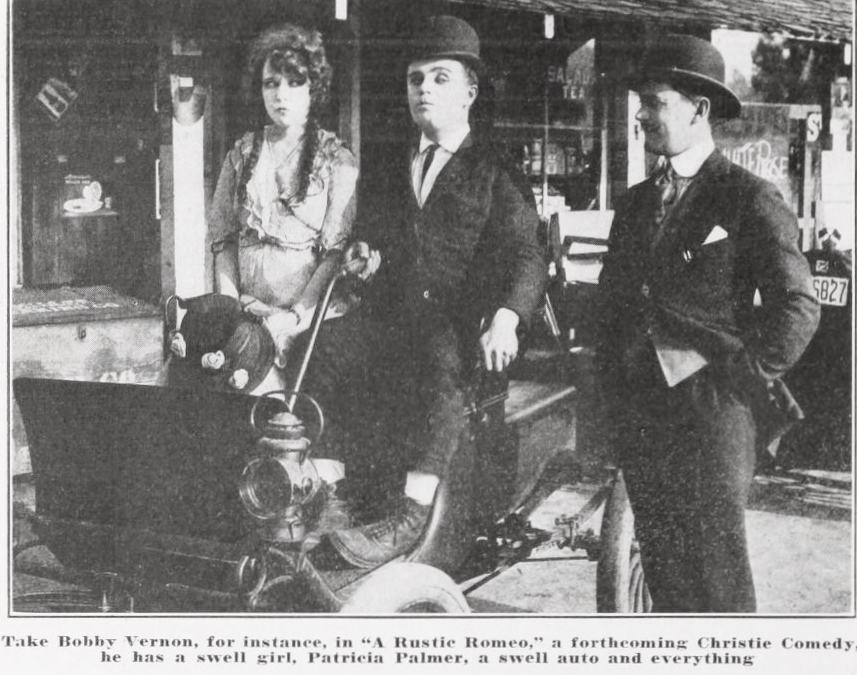
In the bustling, formative years of silent cinema, when the language of storytelling was still being codified through movement and expression, a delightful little picture like Al Christie’s 'A Rustic Romeo' emerged as a testament to the enduring appeal of simple, heartfelt narratives. This unassuming gem, featuring the talents of Patricia Palmer, Vera Steadman, and the inimitable Bobby Vernon, offers a charming glimpse into an era where comedy often sprang from the juxtaposition of societal norms and the earnest desires of the human heart. It’s a film that, despite its brevity, carves out a memorable space in the annals of early cinematic romance, proving that a compelling story, even without spoken dialogue, can resonate deeply across generations.
Christie, a prolific director and producer of countless shorts, possessed an uncanny knack for distilling universal truths into accessible, often uproarious, vignettes. 'A Rustic Romeo' is no exception, presenting a narrative that, while ostensibly straightforward, is imbued with a nuanced understanding of character and situation. The premise, an age-old tale of mismatched lovers from disparate worlds, is elevated by the performers’ commitment and Christie’s skillful orchestration of comedic timing. It’s a film that speaks volumes not through words, but through the eloquent language of silent-era performance, where every gesture, every facial contortion, and every physical gag contributes to a rich tapestry of emotion and mirth.
At the core of 'A Rustic Romeo' lies Bobby Vernon’s masterful portrayal of Jebediah, the titular country swain whose earnest attempts at courtship form the comedic backbone of the film. Vernon, a veteran of silent comedies, brings a palpable authenticity to the role, eschewing caricature for a character who is genuinely clumsy yet undeniably endearing. His physical comedy is a particular highlight; it’s not merely slapstick for its own sake, but rather an extension of Jebediah’s guileless nature. Whether he is tripping over his own feet in an attempt to bow gracefully, or inadvertently causing mayhem with farm equipment in a misguided romantic gesture, Vernon’s movements are always purposeful, serving to deepen our understanding of Jebediah’s character. He navigates the delicate balance between absurdity and pathos with remarkable dexterity, ensuring that while we laugh at his predicaments, we also empathize with his sincere desire for affection. His performance anchors the film, providing a relatable entry point into its whimsical world. Without such a compelling central figure, the narrative might risk descending into mere caricature, but Vernon ensures Jebediah remains a figure to root for, a testament to the enduring power of genuine, if unpolished, affection.
Complementing Vernon’s rustic charm are the elegant presences of Patricia Palmer and Vera Steadman, whose roles, though perhaps less overtly comedic, are crucial in establishing the narrative’s central conflict. Palmer, as Eleanor, the sophisticated urbanite, embodies the very ideal that Jebediah so awkwardly strives to impress. Her initial reactions to his rustic overtures are a delightful blend of bemusement and polite disdain, perfectly capturing the societal chasm between their worlds. Yet, Palmer subtly allows glimpses of Eleanor’s inner world, hinting at a growing curiosity and eventual softening towards Jebediah’s genuine nature. Her performance is a masterclass in understated emotional progression, allowing the audience to witness her gradual shift from amusement to genuine affection. Steadman, perhaps in a supporting role as a friend or rival, would have added another layer to this dynamic, potentially serving as a foil or a catalyst for Eleanor’s changing perceptions. The interplay between these performers creates a dynamic tension, highlighting the societal expectations of the era while simultaneously challenging them through the power of authentic human connection. This contrast is not unlike the thematic undercurrents explored in films such as The City, albeit with a lighter, comedic touch, where the clash of urbanity and different social strata often drives the narrative forward.
Al Christie’s directorial hand is evident throughout 'A Rustic Romeo,' guiding the narrative with a light touch and an acute understanding of visual storytelling. Christie was a master of the comedic short, and his work here showcases his ability to extract maximum humor from simple situations. The pacing is brisk, never lingering unnecessarily, yet allowing each gag to land with precision. His use of the rural setting is particularly effective, transforming everyday farm life into a fertile ground for comedic mishaps. The contrast between Jebediah’s familiar environment and Eleanor’s unfamiliarity with it provides a rich source of visual gags and character-driven humor. Christie’s camera work, while perhaps not groundbreaking for its era, is always functional and serves the story, focusing on the expressive faces of his actors and the unfolding chaos of Jebediah’s romantic endeavors. He understands that in silent film, the visual is paramount, and he orchestrates each scene to convey emotion and narrative progression without the need for intertitles to explain every beat. This economy of storytelling is a hallmark of his best work, much like the directness seen in other contemporary shorts, though perhaps with more levity than, say, the dramatic intensity of L'assassino del corriere di Lione.
'A Rustic Romeo' delves into several timeless themes, most prominently the idea of love transcending social and cultural divides. Jebediah and Eleanor represent two distinct worlds: the unadorned simplicity of rural life versus the polished sophistication of urban society. The film playfully explores the notion that true affection can blossom even amidst profound differences, suggesting that authenticity ultimately triumphs over superficiality. Jebediah’s repeated failures to impress Eleanor through conventional, city-slicker means only highlight his genuine character, which slowly but surely wins her over. This thematic core resonates deeply, reminding viewers that the most profound connections are often forged not through grand gestures or material wealth, but through sincerity and a willingness to see beyond initial impressions. It's a charming exploration of how sometimes, the 'underdog' can win, not by changing who they are, but by simply being themselves. This sentiment, though presented humorously, touches upon deeper societal questions of class and acceptance, much like the more dramatic explorations in films such as Charity Castle, where social standing and genuine character are often at odds.
The enduring appeal of films like 'A Rustic Romeo' lies in their universal language. Without dialogue, these stories rely entirely on visual cues, exaggerated expressions, and physical comedy, making them accessible to audiences across linguistic barriers and cultural divides. The humor is often broad, yet it stems from relatable human experiences: the awkwardness of first love, the desire to impress, and the inevitable mishaps that accompany any grand endeavor. This simplicity is its strength, allowing the film to communicate directly with the viewer’s emotions, eliciting laughter and empathy in equal measure. In an age saturated with complex narratives and high-tech special effects, there’s a refreshing honesty to silent comedies that reminds us of the foundational power of storytelling. The inventiveness required to convey intricate plots and character motivations without sound forced filmmakers to be incredibly creative, leading to a visual vocabulary that remains influential to this day. It’s a stark contrast to more overtly dramatic or action-oriented silent films such as The Last Days of Pompeii, demonstrating the vast range within the silent era itself.
'A Rustic Romeo' also serves as a fascinating cultural artifact, offering a glimpse into early 20th-century American rural life. The setting, with its farm animals, simple dwellings, and open landscapes, provides a picturesque backdrop for the narrative. It subtly contrasts with the implied sophistication of Eleanor’s urban origins, highlighting the societal expectations and class distinctions that were prevalent at the time. The film, in its own lighthearted way, touches upon the evolving social dynamics of a nation transitioning from an agrarian past to an increasingly industrialized future. The humor often arises from the clash of these two worlds, with Jebediah’s rural sensibilities clashing hilariously with Eleanor’s urban expectations. This juxtaposition, while played for laughs, offers a subtle commentary on the changing face of America and the universal human desire for connection, regardless of one’s background. It’s a cinematic time capsule, showing us not just how people entertained themselves, but also how they perceived the social fabric of their world. One could even draw a thematic, if not tonal, comparison to films like Mother Love and the Law, which also explored societal structures and personal struggles within a specific cultural context, albeit with a far more serious tone.
The success of 'A Rustic Romeo' as a comedy hinges on the meticulous crafting and execution of its gags. Each comedic set piece, from Jebediah’s ill-fated serenade to his disastrous attempt at a romantic picnic, is carefully constructed to build anticipation and deliver a satisfying punchline. The physical comedy, a staple of the silent era, is performed with precision, ensuring that every pratfall, every spilled item, and every animal-induced chaos contributes to the overall hilarity. Christie understands the rhythm of comedy, allowing moments to breathe before delivering the payoff. This attention to detail elevates the film beyond mere silliness, imbuing it with a cleverness that still holds up today. It’s a testament to the skill of both the director and the performers that these visual jokes remain engaging, even to a modern audience accustomed to vastly different comedic sensibilities. The film’s ability to elicit genuine laughter without relying on verbal wit is a powerful reminder of the universal language of physical humor. The careful build-up and payoff of gags can be seen as a precursor to the more elaborate comedic sequences in later films, distinguishing it from simpler, documentary-style shorts like Your Fighting Navy at Work and at Play, which prioritized information over narrative comedy.
While 'A Rustic Romeo' might not possess the grand scale or revolutionary techniques of some of its more celebrated contemporaries, its charm is undeniable and its place in the tapestry of silent film significant. It represents the everyday artistry of a bustling industry, consistently delivering entertainment to eager audiences. The film’s enduring appeal lies in its simplicity and its sincere portrayal of human connection. It reminds us that even in the absence of sound, compelling characters and a well-told story can capture the imagination and warm the heart. For aficionados of early cinema, and indeed for anyone seeking a delightful and unpretentious cinematic experience, 'A Rustic Romeo' offers a charming escape into a bygone era, proving that sometimes, the most profound romantic gestures are found in the most unexpected places and delivered by the most unlikely of heroes. Its gentle humor and heartwarming narrative continue to resonate, reminding us of the timeless nature of love and laughter. It’s a small, vibrant piece of film history that deserves to be rediscovered and appreciated, much like other lesser-known but equally charming silent features such as Nedra or Fauvette, which similarly focused on character-driven narratives and emotional journeys.
The film’s focus on the sincerity of emotion over societal polish offers a refreshing perspective that remains relevant. In an increasingly complex world, the straightforward honesty of Jebediah’s affections, despite his numerous blunders, provides a comforting narrative. It speaks to the universal desire for genuine connection, a desire that transcends social strata and cultural sophistication. The performances of Vernon, Palmer, and Steadman, under Christie’s assured direction, create a microcosm of human experience that is both specific to its time and universally understandable. It’s a reminder that the fundamentals of good storytelling—engaging characters, clear conflict, and satisfying resolution—are eternal. The film’s ability to evoke such a range of emotions, from laughter to tender empathy, without a single spoken word, is a profound testament to the power of the visual medium. It stands as a delightful example of how silent cinema, far from being primitive, was a sophisticated art form capable of nuanced expression and broad appeal. This unpretentious yet deeply resonant quality is what allows 'A Rustic Romeo' to continue to captivate, long after its initial release, securing its place as a cherished, albeit perhaps understated, classic of its genre.
IMDb 5.4
1929
Community
Log in to comment.