DbcultAccessing Vault...
Cult Review
Senior Film Conservator
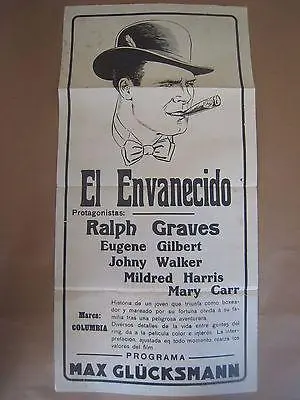
Is 'The Swell-Head' worth watching today? Short answer: yes, but with significant caveats. This 1920s silent drama offers a fascinating glimpse into early cinematic storytelling, particularly for those with an appreciation for the era's unique acting styles and moralistic narratives.
It's a film for silent era aficionados, boxing history enthusiasts, and anyone interested in the foundational elements of character-driven drama. However, it's definitively not for viewers seeking modern pacing, nuanced character development by contemporary standards, or high-octane action sequences that define today's sports dramas.
At its core, 'The Swell-Head' is a surprisingly relevant exploration of ambition, the corrupting influence of sudden fame, and the timeless struggle between superficial allure and genuine connection. It's a morality play dressed in boxing gloves, and while its delivery is distinctly of its time, the message resonates.
This film works because of its clear, compelling moral arc and a central performance that, while theatrical, effectively conveys the protagonist's descent and eventual awakening. Its historical value as a document of early cinema is also undeniable.
This film fails because its pacing can feel sluggish to modern eyes, and the supporting characters, particularly the 'femme fatale,' are often one-dimensional archetypes rather than fully fleshed-out individuals. Some silent film tropes, like overly exaggerated expressions, occasionally detract from its dramatic impact.
You should watch it if you appreciate the artistry of silent cinema, enjoy character studies focused on redemption, or have a particular interest in the early portrayal of sports in film. It offers a valuable window into how narratives were constructed before the advent of sound.
The plot, penned by Robert Lord, is straightforward: Lefty Malone, a businessman, decides to enter the brutal world of professional boxing. His initial success is swift, intoxicating, and ultimately, his undoing. As his victories mount, so too does his ego, transforming him from a grounded individual into a 'swell-head' – a term that perfectly encapsulates his newfound arrogance.
This transformation is the film's central focus. Malone's entanglement with Kitty, played by Mildred Harris, is portrayed as the quintessential 'wrong woman' scenario. Kitty is depicted as a glamorous, materialistic figure who revels in Lefty's fame and fortune, further fueling his self-importance. In stark contrast stands Molly O'Rourke, portrayed by Eugenia Gilbert, the wholesome, steadfast sweetheart who represents the values Lefty abandons.
The film’s strength lies in its unambiguous moral compass. There's no grey area; Kitty is bad, Molly is good, and Lefty's journey is a clear path from virtue to vice and back again. While this can feel simplistic by today's standards, it was a common and effective storytelling device for the era, designed to deliver a clear message to audiences.
Ralph Graves as Lefty Malone carries the film, and his performance is a masterclass in silent screen acting. Graves uses his physicality and facial expressions to communicate Lefty's emotional arc – from earnest ambition to arrogant swagger, and finally, to humbled regret. There's a particularly memorable sequence where Lefty, after a major win, struts around with an almost cartoonish air of superiority, perfectly embodying the 'swell-head' moniker.
However, his performance, like many of the era, occasionally veers into the realm of exaggerated pantomime. While this was necessary for conveying emotion without dialogue, modern viewers might find it a barrier to fully connecting with Lefty's internal struggle. It’s a delicate balance between historical authenticity and contemporary resonance.
Mildred Harris, as Kitty, delivers a performance that, while effective in establishing her character's manipulative nature, lacks much depth. She is the archetypal femme fatale, beautiful and dangerous, but little else. Her character serves primarily as a plot device to illustrate Lefty's moral decline, rather than a fully realized individual. This is a common flaw in many silent melodramas, where supporting characters often exist solely to propel the protagonist's journey.
Eugenia Gilbert's Molly O'Rourke is the epitome of wholesome goodness. Her quiet strength and unwavering loyalty provide a stark contrast to Kitty's flashiness. Gilbert conveys Molly's heartbreak and enduring hope with a subtlety that occasionally outshines the more overt performances around her, particularly in scenes where she watches Lefty from afar, her face a canvas of quiet despair.
The direction, typical of the period, relies heavily on visual cues, intertitles, and the actors' expressions to convey the story. Cinematography, while not groundbreaking, effectively captures the grit of the boxing world and the contrasting glamour of the high society Lefty enters. The fight sequences themselves are staged with a certain raw energy, though they lack the sophisticated choreography of later boxing films.
One notable aspect is the use of close-ups to emphasize emotional moments, a technique that was still evolving in the silent era. These moments, often focusing on Lefty's changing expressions or Molly's sorrowful gaze, are where the film truly shines, allowing the audience to glimpse the internal lives of the characters despite the lack of dialogue.
The pacing is deliberate, building up Lefty's rise and fall with a methodical approach. This can be a double-edged sword. While it allows for a gradual immersion into his character arc, it can also lead to stretches where the narrative feels slow, particularly during the social scenes that illustrate Lefty's 'swell-headedness' but don't always advance the plot with urgency.
The tone shifts from optimistic ambition to cautionary drama, with moments of romantic longing and eventual redemption. It’s a consistent tone that, despite its occasional theatricality, maintains its moral conviction throughout. The film never wavers from its central message: hubris has consequences, and true love endures.
Absolutely, for the right audience. 'The Swell-Head' is more than just a historical curiosity; it's a window into early cinematic morality plays and the evolving craft of silent acting. It offers a valuable lesson in the perils of ego, a theme that remains timeless, perhaps even more so in our celebrity-obsessed culture.
It serves as an excellent comparison point for other silent dramas exploring similar themes, such as the struggles of ambition seen in The Conquest of Canaan or the moral quandaries presented in The Silence of Dean Maitland. Observing how Robert Lord frames the story without dialogue is a fascinating study in screenwriting craft.
'The Swell-Head' may not be a cinematic masterpiece on par with a Disraeli or a Open Your Eyes of its time, but it certainly holds its own as a compelling moral drama. Its exploration of hubris, redemption, and the deceptive nature of fame predates the talkies, proving these themes are universal and timeless. While its silent era conventions might require a shift in viewing expectations, the film offers a rewarding experience for those willing to engage with its unique charm and profound message. It's a solid, if occasionally slow, journey into the heart of a man led astray by success, ultimately finding his way back to what truly matters. Give it a watch if you're prepared for a cinematic step back in time; you might find its punches still land with surprising resonance.
IMDb —
1917
Community
Log in to comment.