DbcultAccessing Vault...
Cult Review
Senior Film Conservator
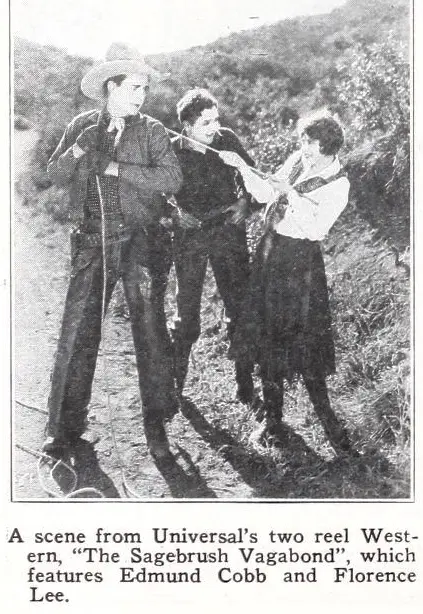
The American West, within the flickering celluloid of the silent era, functioned as a moral laboratory where the constituents of character were distilled through hardship and isolation. A Sagebrush Vagabond stands as a quintessential artifact of this period, a film that leverages the archetypal 'drifter' to explore themes of prejudice, redemption, and the deceptive nature of appearances. While many contemporary viewers might dismiss the 1919 Western as a simplistic morality play, a closer inspection reveals a sophisticated manipulation of genre tropes that predates the psychological complexity of the later Revisionist Westerns.
Edmund Cobb, an actor whose face would become synonymous with the rugged reliability of the B-Western, delivers a performance here that is remarkably restrained. In an age where theatrical over-acting was often the default, Cobb utilizes his physicality to convey a sense of weary nobility. He is the 'vagabond' not by lack of character, but by choice of lifestyle—a theme we see echoed in films like Ragged Robin. His arrival in the narrative is not heralded by trumpets but by the dust of the trail, positioning him as a liminal figure who exists on the fringes of civilization.
The screenplay, penned by the collaborative force of Frank Howard Clark and Adeline Grace, understands the power of the silent protagonist. By stripping away dialogue, the film forces the audience to engage with Cobb’s gaze and his deliberate movements. When he saves the heroine (played with a delicate yet resilient charm by Florence Lee) from the runaway carriage, the action is captured with a kinetic energy that rivals the set pieces in Channing of the Northwest. This isn't merely a stunt; it is the visual manifestation of his inherent goodness, a stark contrast to the suspicion he later faces.
No Western hero is complete without a foil, and W.E. Lawrence provides a masterclass in the 'rascally foreman' archetype. His character represents the internal rot that can exist within established structures—a theme that resonates through other period pieces such as At Piney Ridge. Lawrence plays the foreman with a calculating coldness, using his position of trust to mask his criminal machinations. The robbery he orchestrates is not just a theft of capital, but a theft of the vagabond's burgeoning reputation.
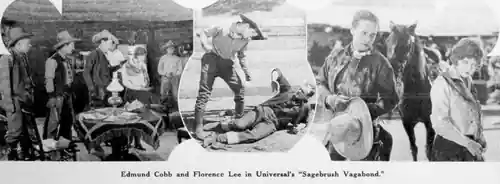
"The brilliance of the Clark-Grace script lies in its understanding of social hierarchy. The townspeople are quick to blame the nomad because he lacks the 'anchor' of property, a recurring motif of injustice that we see examined with even more tragic consequences in Moral Suicide."
The cinematography in A Sagebrush Vagabond utilizes the vastness of the sagebrush plains to emphasize the isolation of its characters. The landscape is not merely a backdrop; it is a character in itself, indifferent to the moral struggles of the humans traversing it. This use of environment to mirror internal conflict is a hallmark of high-quality silent cinema, reminiscent of the atmospheric tension found in Nearing the End. The framing of the chase sequences, particularly the final pursuit of the foreman, demonstrates a keen understanding of depth and motion, ensuring the audience remains tethered to the stakes of the hunt.
Furthermore, the lighting—though limited by the technology of 1919—effectively uses shadow during the robbery sequence to heighten the sense of dread. The director (often uncredited or working under studio mandates of the time) manages to create a sense of claustrophobia even in the wide-open spaces, a feat that distinguishes this film from more mundane entries like A Champion Loser.
While the climax involves the requisite physical confrontation, the true resolution of A Sagebrush Vagabond is emotional and social. The hero doesn't just win the girl; he wins the right to be seen. This transition from 'the suspect' to 'the savior' is handled with a nuanced pacing that avoids the rushed conclusions of lesser films like Open the Bars. The moment of recognition from the heroine is not one of mere gratitude, but of profound apology for the community's collective blindness.
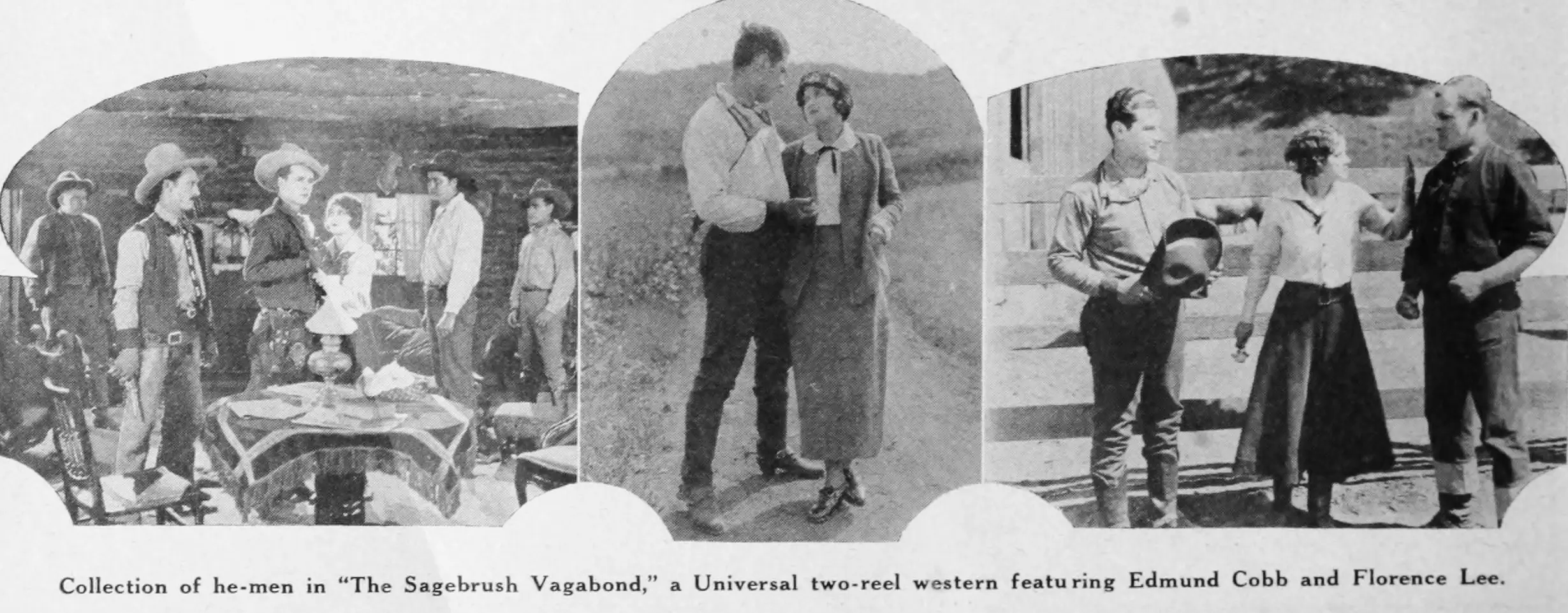
Florence Lee’s performance in these final scenes is crucial. She provides the bridge between the vagabond and the town, her belief in his innocence acting as the catalyst for his eventual vindication. This dynamic of the 'woman as the moral compass' is a trope that appears frequently in the era, but here it feels earned rather than forced. It lacks the melodramatic excess of Maddalena Ferat, opting instead for a grounded, sincere connection.
To fully appreciate A Sagebrush Vagabond, one must view it through the lens of 1919 America. The country was emerging from the shadow of the Great War, and the Western offered a return to a perceived simplicity where right and wrong were as clear as the horizon line. However, by introducing the element of the 'untrusted hero,' the film acknowledges the growing cynicism of the modern age. It is a far cry from the grand historical pageantry of Famous Battles of Napoleon or the rigid formality of Fridericus Rex. Instead, it focuses on the micro-politics of a small ranching community, making the stakes feel personal and immediate.
Comparing this to Vanity's Price, we see a similar fascination with how society judges the individual based on superficial traits. In 'Vagabond,' the 'price' is the hero's freedom, nearly lost to the prejudice of the crowd. The film serves as a cautionary tale against the 'mob mentality' that would later be explored in much darker tones during the Noir era.
The writing of Frank Howard Clark and Adeline Grace deserves significant praise for its economy of storytelling. In a silent film, every intertitle must carry weight, and every gesture must advance the plot. They manage to weave a complex narrative of betrayal and false accusation without the benefit of verbal exposition. This level of narrative efficiency is often missing in contemporary cinema, where dialogue is frequently used as a crutch for poor visual storytelling. Their work here is as vital as the scripts for A Sister to Salome, though focused on the rugged frontier rather than the biblical or exotic.
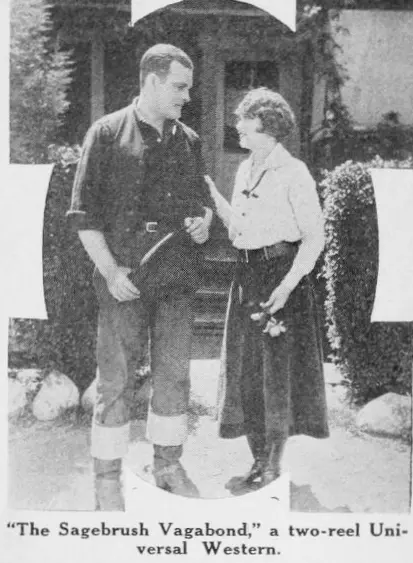
The pacing of the film is particularly noteworthy. It begins with the slow, rhythmic life of the trail, accelerates during the runaway carriage sequence, simmers during the period of suspicion, and finally boils over in the climactic capture of the foreman. This rhythmic control keeps the audience engaged, preventing the 'middle-act slump' that plagues so many silent features. Even a film like The Man Who Saw Tomorrow struggles to maintain such a consistent narrative tension.
A Sagebrush Vagabond is more than just a relic of a bygone era; it is a testament to the enduring power of the Western myth. It captures a moment in time when the genre was finding its voice, moving away from simple spectacle toward meaningful character study. Edmund Cobb’s portrayal of the wandering hero provides a blueprint for the icons that would follow, from Gary Cooper to Clint Eastwood. The film’s message—that true character is revealed through action rather than status—remains as relevant today as it was in 1919.
For those interested in the evolution of the silent Western, this film is an essential watch. It lacks the pretension of the European avant-garde like Hei de Vencer, but it possesses a raw, honest energy that is uniquely American. It is a film about the dirt, the dust, and the difficult path to justice, delivered with a cinematic flair that belies its humble origins. In the vast landscape of silent cinema, this vagabond truly finds a home.
*** This review was crafted by an enthusiast of the silent era, dedicated to preserving the legacy of early 20th-century filmmaking. ***
IMDb 4
1916
Community
Log in to comment.