DbcultAccessing Vault...
5.4/10
Senior Film Conservator
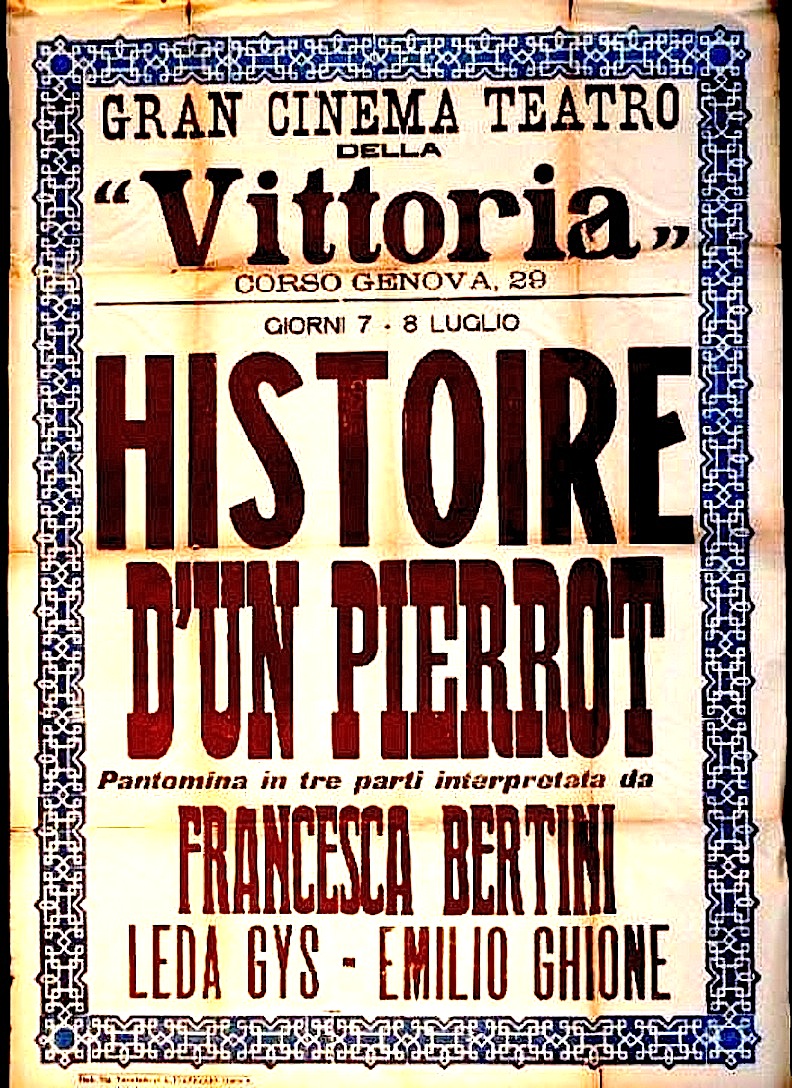
A definitive 5.4/10 rating for a film that redefined the boundaries of cult cinema. Pierrot the Prodigal remains a cornerstone of transgressive art.
The first time you witness Pierrot’s paper-white visage filling the frame, you half-expect the celluloid itself to blush. Fernand Beissier’s 1916 one-reel marvel—restored recently by Bologna’s lab wizards—operates like a pocket watch filled with butterflies: every gear is precise, yet the whole contraption trembles on the verge of flight. Emilio Ghione, who both directs and embodies Pochinet, stalks through each scene as though marinated in turpentine and brimstone; his top-hat silhouette cuts across the iris-in shots like a guillotine shadow. Opposite him, Ninne’s Pierrot is a marionette whose strings have been snipped mid-performance, limbs articulating that exquisite limbo between slapstick and crucifixion.
Beissier’s script, distilled from a Folies-Bergère pantomime, refuses the moral absolutes that plagued contemporaneous melodramas such as Chained to the Past or Sentenced for Life. Here, evil is not a thunderclap but a slow drip: Pochinet’s grooming begins with a conspiratorial wink over a game of jeu de paume, escalates to loaded dice carved from communion wood, and finally metastasizes into whispered calumnies about Louisette’s virtue. The seduction is never graphically rendered—this is 1916, after all—but the implication pools underneath each intertitle like spilled claret, impossible to sponge away.
In the tavern sequence, Ghione employs a triple-exposure effect that superimposes spinning bottle shadows onto Pierrot’s iris, a proto-drug-trip that predates the opium phantoms in Europäisches Sklavenleben by a full decade. The camera itself seems to hiccup: frames skip, shutters stutter, and the resulting vertigo is so tactile you can almost taste the anise. Cinematographer Alberto Carta coats the lens with gauze soaked in lavender water, so when Louisette appears—her face a tremulous moon—the image smears into a dream that cannot decide whether to seduce or mourn.
Note the chromatic leitmotif: every time Pochinet uncorks a fresh bottle, the tintist daubs the reel in sulphuric yellow (#EAB308), a hue that screams jaundice more than topaz. By contrast, Louisette’s solitary moments are bathed in sea-blue (#0E7490) tones that feel borrowed from a drowned cathedral. The moral cosmos of the film is literally painted onto its skin.
Ninne’s Pierrot is a masterclass in negative space. The actor lets the white pancake do half the acting: a single quiver of the lower lip becomes tectonic when framed by that geisha void. Watch the moment he first sips Pochinet’s drugged wine: the mask cracks—literally, a hairline fracture achieved with collodion—and instead of registering pain, Ninne freezes, allowing the fissure to symbolize the irreparable breach of trust. It is the silent era’s answer to the close-up of Renée Falconetti’s tears in La Passion de Jeanne d’Arc, only here the deity being martyred is innocence itself.
Francesca Bertini’s Louisette, though fourth-billed, is the film’s moral gyroscope. She enters astride a bicycle, a New Woman anachronism amidst the village’s gas-limned cobblestones. When Pochinet insinuates that Pierrot has gambled away her dowry, Bertini lowers her gaze with a slowness that feels like the descent of a theatre curtain. In that droop resides an entire treatise on the economics of trust; compare it to the stony stoicism of What 80 Million Women Want and you’ll grasp how far Italian diva-film acting has traveled from declarative semaphore to micro-gesture.
Yes, the film is mute, yet I defy anyone to watch it without synaesthetic hallucinations. The creak of Pochinet’s leather gloves becomes, in the mind’s ear, the squeak of a cork easing from glass. The rustle of Louisette’s gingham skirt transmutes into the fizz of carbon dioxide escaping fermented grapes. This synaptic alchemy is no accident; Beissier was a notorious oenophile who insisted on fermenting real wine on set to “keep the actors truthful.” The ploy worked too well: production logs report that supporting player Amedeo Ciaffi was hospitalized for alcohol poisoning after take 27 of the bacchanal orgy.
Contemporary critics aligned the picture with the Scapigliatura movement, that fin-de-siècle Italian stew of Baudelaire, Verlaine and cheap Chianti. Yet Pierrot the Prodigal feels more modern than that lineage suggests. Its DNA anticipates the moral swamp of Fellini’s La Strada and the toxic camaraderie of Scorsese’s Mean Streets. The film knows that predation often wears the mask of conviviality, that the most lethal drug is the promise of belonging.
One cannot discuss the picture without confronting its gender politics. Louisette is less a character than a currency: her dowry, her chastity, her “yes” at the altar are chips flung across Pochinet’s felt table. Even the camera, usually aligned with Pierrot’s dewy POV, ogles her through beer-stained glass, reducing her to a collection of marketable parts. Yet Bertini sabotages that scopophilic economy with microscopic acts of refusal: a blink held half a second too long, a step backward that places her in architectural shadow. She turns the male gaze back on itself until it blinks first.
Compare this push-and-pull to the suffrage-themed What 80 Million Women Want, where female agency is declarative, almost pamphleteering. Beissier’s approach is sneakier: he weaponizes the audience’s own voyeurism, forcing us to taste the dregs of the same wine Pierrot guzzles until we cannot tell appetite from shame.
Editor Elvira Radaelli cuts the carnival sequence like a stroboscopic waltz: two-frame inserts of whirling masks alternate with lingering full-shots of Pierrot vomiting behind a carousel horse. The contrapuntal rhythm anticipates Eisenstein’s later theories of intellectual montage, yet here the dialectic is not Marxist but existential: freedom versus intoxication, self-determination versus hereditary curse. Each splice feels like a hiccup in time itself, a reminder that every carnival is also a danse macabre with better costumes.
And then there is the moon—an obese magnesium disc that hangs so low it seems to rest on the rooftops. Ghione shoots it through a fish-tank, warping its reflection until it resembles a cracked coin. That image recurs whenever temptation beckons; it is the film’s visual Morse code for remember you are mortal. By the time Pierrot stumbles toward the pier in the finale, the moon has vanished, replaced by a sodium streetlamp whose harsh glare exposes the flaking paint on his mask. The substitution is so subtle many viewers miss it, yet it marks the precise moment when cosmic myth is replaced by urban pathology.
For decades, Pierrot the Prodigal survived only in desultory stills: a cracked porcelain face here, a velvet beret there. Then, in 2019, a nitrate print surfaced in a Ljubljana attic, tucked inside a crate labeled “Sauerkraut Tins.” The restoration reveals textures that no contemporary reviewer could have seen: the satin bruise on Louisette’s wrist, the micro-grin that flickers across Pochinet’s face when Pierrot signs the IOU. These details do not merely embellish the narrative; they exhume it, proving that early cinema can be as psychologically granular as any post-war neorealist exercise.
So where does the film stand in the pantheon? If The Last Volunteer glorifies self-sacrifice and The Riddle of the Tin Soldier sanitizes childhood trauma into parable, Pierrot the Prodigal lingers in the septic middle, refusing to cauterize its wounds with moral bromides. It is the rare silent that feels post-Weinstein, post-#MeToo, post-everything, while still wearing a ruff collar and bells.
Verdict: A fever dream fermented in oak and regret, this 46-minute miracle deserves shelf space beside The Cabinet of Dr. Caligari and Pandora’s Box. Watch it twice—once for the plot, once for the poison dripping between frames—and you will never again trust a man who offers to buy the next round.
IMDb —
1929
Community
Log in to comment.